When “A Few Weeks” Turns Into Months
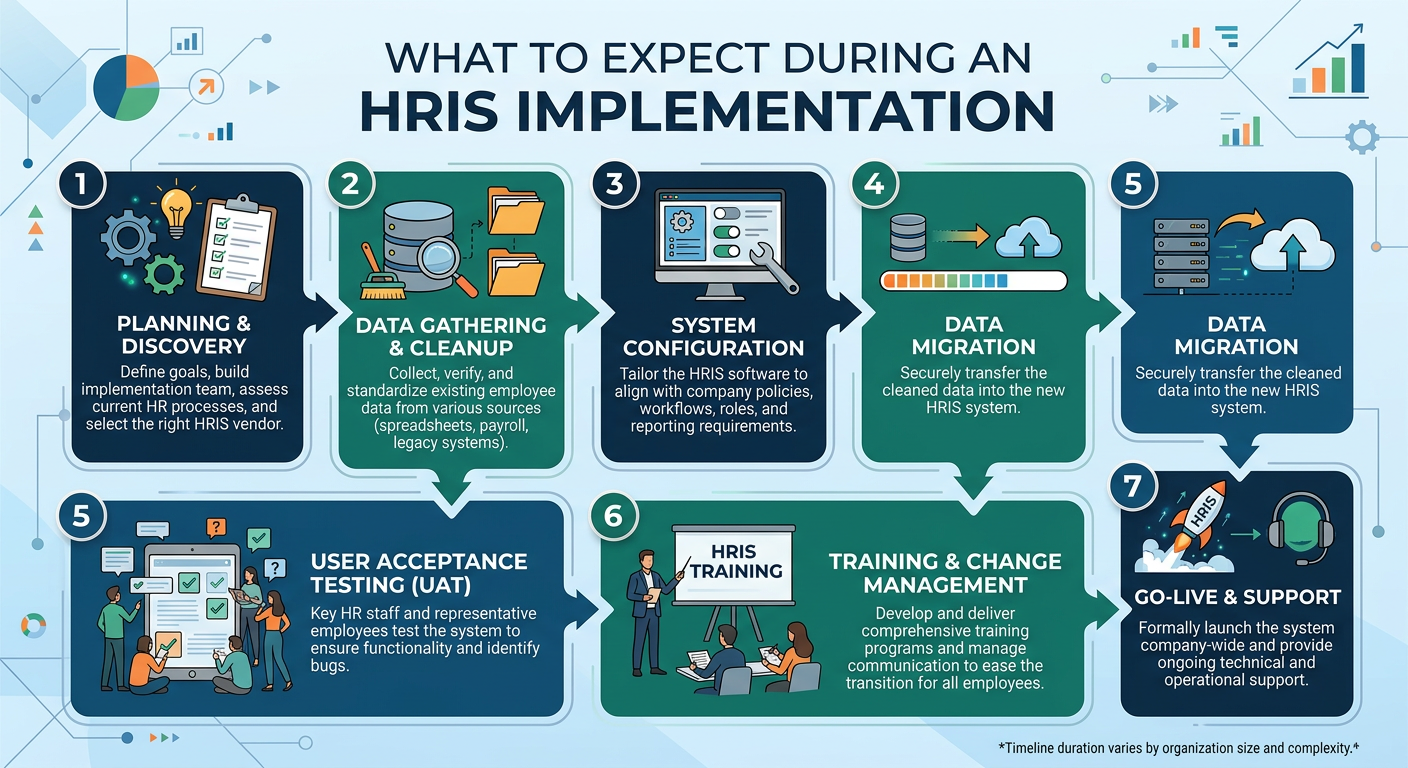
Most HRIS implementations start with a timeline.
30 days.
60 days.
Maybe 90.
The expectation is clear:
Get the system live quickly and move forward.
But in many cases, timelines stretch.
Weeks turn into months.
Milestones slip.
Go-live dates move.
At first, it feels like a delay.
In reality, it’s a signal.
Implementation Delays Are Not Random
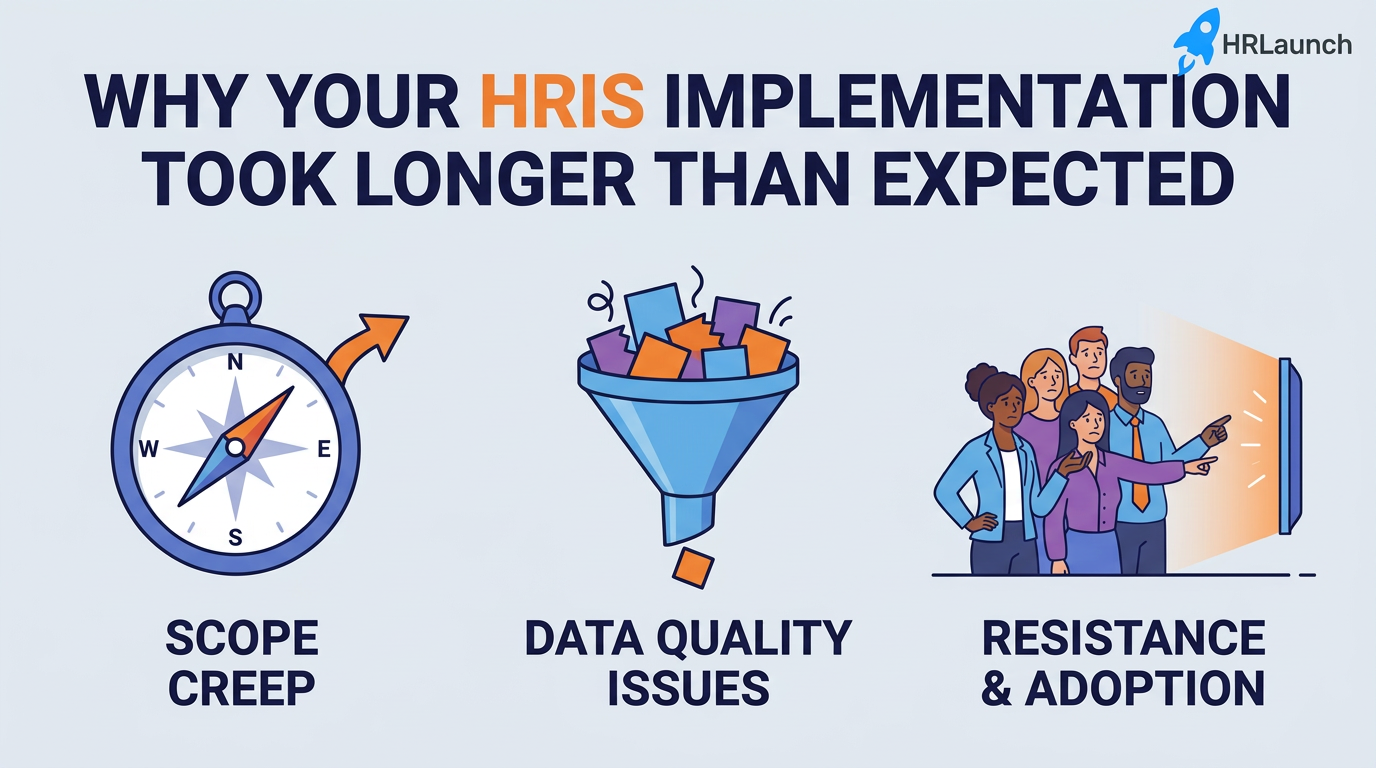
When an HRIS implementation takes longer than expected, it’s rarely due to a single issue.
It’s usually a combination of factors that were not fully understood at the start.
Common assumptions include:
- “The system will be easy to configure”
- “Our processes are already clear”
- “We can clean up data as we go”
These assumptions often don’t hold.
What Implementation Delays Are Telling You
Delays during implementation are not just obstacles.
They reveal underlying gaps.
Your Processes Aren’t Fully Defined
One of the most common causes of delays is unclear processes.
During implementation, teams are asked:
- How does onboarding work?
- What approvals are required?
- How are employee changes handled?
If the answers vary—or don’t exist—configuration slows down.
Systems require clarity.
Your Data Isn’t Structured
Data migration often takes longer than expected.
This happens when:
- employee data is inconsistent
- information is stored across multiple systems
- key fields are missing or incomplete
Cleaning and organizing data becomes a project of its own.
Ownership Is Unclear
Implementation requires coordination.
Without clear ownership:
- decisions are delayed
- responsibilities are unclear
- tasks are not completed on time
This creates bottlenecks throughout the process.
The Scope Keeps Changing
As implementation progresses, organizations often realize:
- additional workflows are needed
- requirements were not fully defined
- expectations have shifted
This leads to scope expansion, which impacts timelines.
The System Is Being Configured Before Alignment
In many cases, configuration begins before the organization is fully aligned on how processes should work.
This leads to:
- rework
- adjustments mid-implementation
- delays in finalizing setup
According to research from Deloitte, organizations that invest in upfront planning and process alignment are more likely to achieve successful technology implementations.
Source
Deloitte Human Capital Trends - https://www2.deloitte.com/us/en/insights/focus/human-capital-trends.html
What This Looks Like in Practice
Implementation delays often show up in familiar ways:
- repeated revisions to workflows
- multiple rounds of data cleanup
- ongoing questions about how processes should function
- dependencies between teams slowing progress
- extended testing cycles
The issue is not the system.
It’s the level of readiness.
If This Is Happening in Your Implementation, There Are Deeper Gaps
These are common indicators that delays are signaling larger issues:
- process decisions are being made during configuration
- data needs significant cleanup before migration
- teams are not aligned on workflows
- ownership of tasks is unclear
- timelines continue to shift
- system setup requires frequent rework
If several of these are present, the delay is not temporary.
It reflects structural gaps.
The Real Cost of Extended Implementations
Longer implementations impact more than timelines.
Organizations may experience:
- increased implementation costs
- delayed operational improvements
- frustration across teams
- reduced confidence in the system
- extended reliance on legacy processes
According to Gartner, many HR technology initiatives fail to deliver expected value due to gaps in planning and alignment.
Source
Gartner HR Technology Research - https://www.gartner.com/en/human-resources
How to Prevent Implementation Delays
Avoiding delays starts before implementation begins.
Define Processes Upfront
Ensure workflows are clearly documented before configuration.
Prepare and Clean Data
Organize and standardize employee data prior to migration.
Establish Clear Ownership
Assign responsibility for:
- decision-making
- system configuration
- data management
Set Realistic Scope and Timelines
Understand what is included in the implementation—and what is not.
Align Before Configuring
Ensure agreement on processes and requirements before building them into the system.
How HRLaunch Technology Helps
At HRLaunch Technology, we help organizations reduce implementation delays by focusing on readiness before configuration begins.
Many implementation challenges are not caused by the system, but by gaps in processes, data, and alignment.
Our approach focuses on:
- assessing current HR processes before implementation
- defining workflows and requirements upfront
- preparing and structuring data for migration
- aligning teams and ownership before execution
We work with small, mid-sized, and growing businesses to ensure implementations are built on a strong foundation.
The goal is not just to go live, but to implement systems that work effectively from the start.
Final Thoughts
When an HRIS implementation takes longer than expected, it’s easy to focus on the delay itself.
But the delay is not the real issue.
It’s a signal.
A signal that processes, data, or alignment may not be where they need to be.
Understanding that—and addressing it early—can make the difference between a system that simply goes live and one that actually works.