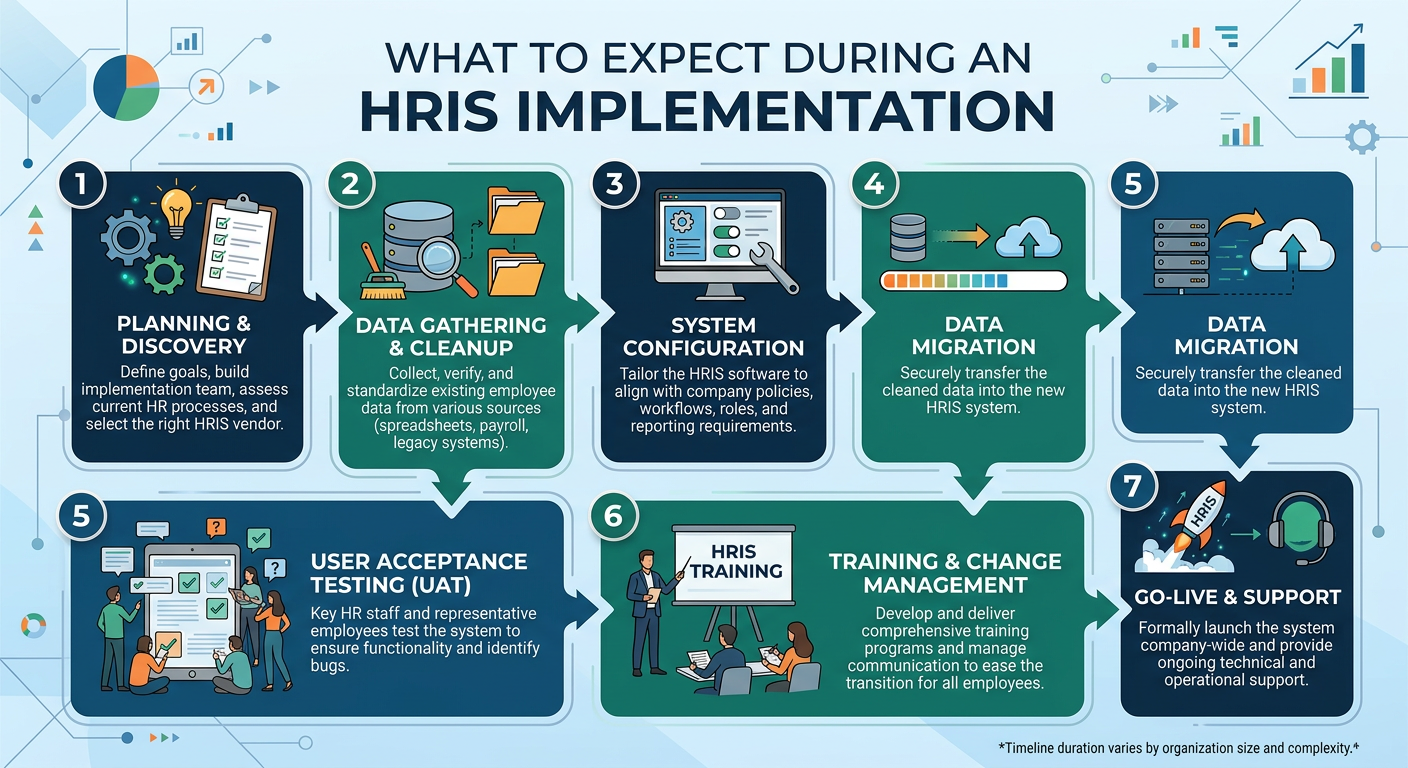
The Failure Doesn’t Happen at the End
When an HR project struggles, the assumption is usually:
“The implementation didn’t go well.”
But in many cases, the failure happens much earlier.
Before the system is selected.
Before workflows are built.
Before the project even begins.
The outcome is often determined at the start.
What Counts as an HR Project
HR projects can take many forms:
- HRIS implementations
- process redesign initiatives
- compliance improvements
- organizational structure changes
Regardless of the type, the same pattern appears.
Projects that lack structure at the beginning often struggle later.
Why HR Projects Fail Early
The causes are consistent across organizations.
Lack of Clear Objectives
Many projects begin without clearly defined goals.
This leads to:
- unclear expectations
- shifting priorities
- difficulty measuring success
Without a defined outcome, progress becomes difficult to track.
No Defined Current State
Organizations often skip evaluating how HR currently operates.
Without this understanding:
- gaps are not identified
- existing issues are carried forward
- decisions are based on assumptions
Processes Are Not Defined
If processes are unclear:
- workflows are built inconsistently
- decisions are made during execution
- rework becomes necessary
The system or project ends up reflecting the confusion.
Data Is Not Prepared
Data issues are one of the most common early risks.
Examples include:
- inconsistent job titles
- incomplete employee records
- duplicate data across systems
According to research from Gartner, poor data quality is a leading cause of challenges in HR technology initiatives.
Source
Gartner HR Technology Research - https://www.gartner.com/en/human-resources
Stakeholders Are Not Aligned
When key stakeholders are not aligned:
- decisions are delayed
- requirements change mid-project
- timelines extend
Alignment at the beginning prevents confusion later.
Ownership Is Unclear
Without clear ownership:
- responsibilities are not defined
- decisions stall
- accountability is limited
Projects lose momentum quickly.
What This Looks Like in Practice
When these issues exist, the impact becomes visible early.
Scope Keeps Changing
- new requirements are introduced
- priorities shift
- the project expands beyond its original intent
Timelines Slip
- milestones are missed
- progress slows
- deadlines move
Decisions Take Longer Than Expected
- multiple stakeholders are involved
- processes are unclear
- data is inconsistent
Frustration Builds
- teams feel unclear about direction
- confidence in the project decreases
- adoption becomes more difficult
According to research from Deloitte, projects with strong upfront planning and alignment are more likely to achieve successful outcomes.
Source
Deloitte Human Capital Trends - https://www2.deloitte.com/us/en/insights/focus/human-capital-trends.html
If This Is Happening in Your Project, It May Already Be at Risk
These are early indicators of potential failure:
- objectives are not clearly defined
- processes are still being discussed during execution
- data requires ongoing cleanup
- stakeholders are not aligned
- timelines continue to shift
If several of these are present, the issue is not execution.
It is the foundation.
How to Set HR Projects Up for Success
The key to success is not execution alone.
It is preparation.
Define Clear Objectives
Understand:
- what the project is solving
- what success looks like
- how outcomes will be measured
Assess the Current State
Evaluate:
- how HR processes currently function
- where gaps exist
- what needs to change
Define Processes Before Execution
Ensure workflows are clearly defined before building or implementing solutions.
Prepare Data
Clean, standardize, and structure data before using it in a project.
Align Stakeholders
Ensure all key decision-makers are aligned on goals, scope, and expectations.
Establish Ownership
Define who is responsible for:
- decisions
- execution
- ongoing management
How HRLaunch Technology Helps
At HRLaunch Technology, we help organizations set HR projects up for success before execution begins.
Many HR projects fail because the foundation is not clearly defined.
Our approach focuses on:
- evaluating current HR operations and identifying gaps
- defining clear objectives and success criteria
- designing structured processes and workflows
- aligning stakeholders and ownership
- preparing data and systems for execution
We work with small, mid-sized, and growing businesses to ensure HR projects are built on a strong foundation.
The goal is not just to complete a project.
It is to ensure it delivers meaningful and lasting results.
Final Thoughts
Most HR projects do not fail because of execution.
They fail because of how they start.
Without clarity, alignment, and structure, even the best tools and plans will struggle.
The organizations that succeed are the ones that invest in preparation.
Because the outcome is often decided before the project even begins.