HRIS Implementation Is More Than a System Setup
Many organizations approach HRIS implementation as a technical project.
Select the system.
Configure it.
Go live.
But in reality, implementation is not just about technology.
It is about aligning processes, data, and people with how the system will function.
Without that alignment, implementation becomes more difficult than expected.
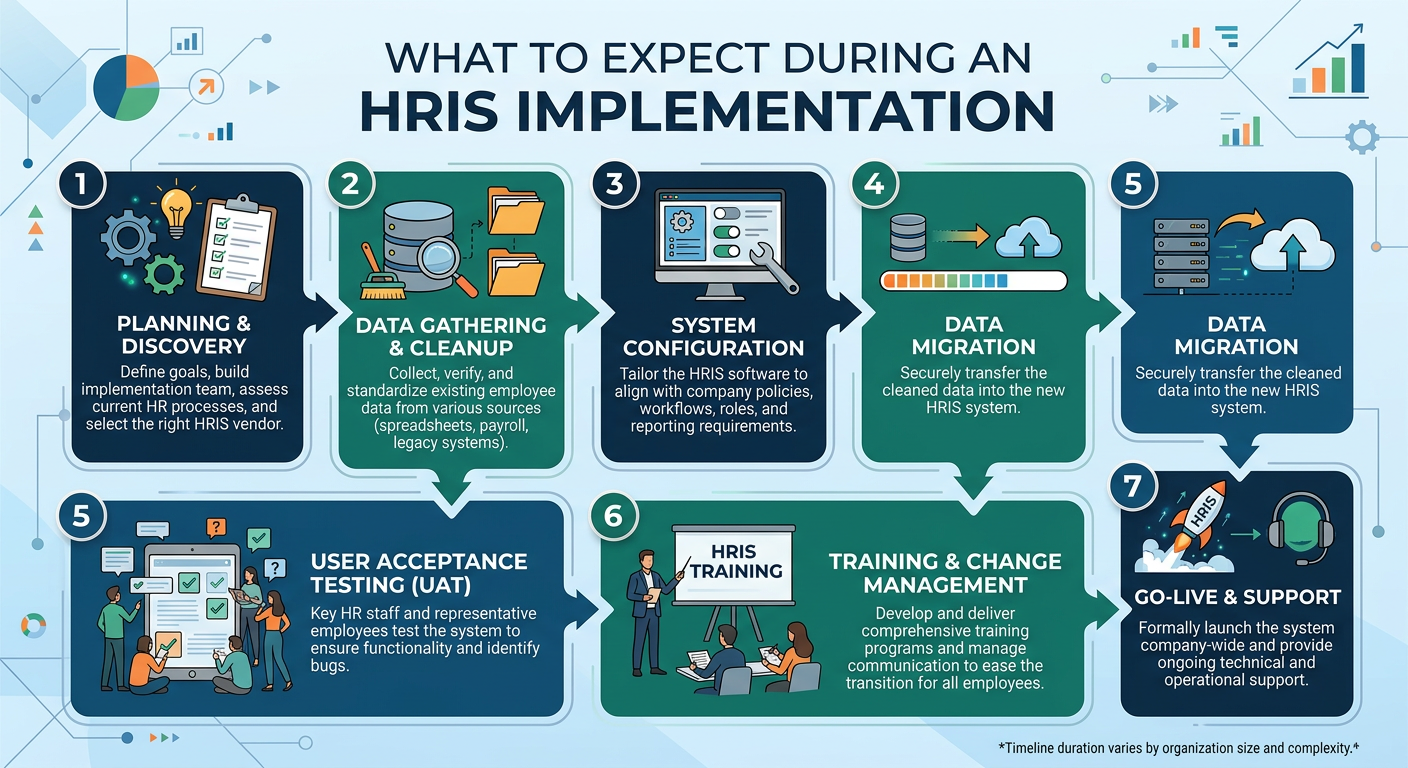
The Phases of an HRIS Implementation
Understanding each phase helps set realistic expectations and reduce surprises.
Phase 1: Discovery and Planning
This phase sets the foundation for everything that follows.
What Happens
- defining implementation goals
- identifying system requirements
- aligning stakeholders
- reviewing current HR processes
What to Expect
- detailed discussions about how HR operates today
- questions about workflows and approvals
- alignment on scope and timelines
If processes are unclear at this stage, it will impact everything that follows.
Phase 2: Data Preparation
Data is one of the most critical components of implementation.
What Happens
- auditing existing data
- cleaning and standardizing information
- preparing data for migration
What to Expect
- identifying inconsistencies and gaps
- time spent organizing and validating data
- potential delays if data is not ready
According to research from Gartner, data quality issues are a leading cause of delays in HR technology implementations.
Source
Gartner HR Technology Research - https://www.gartner.com/en/human-resources
Phase 3: System Configuration
This is where the system is built to match your organization.
What Happens
- configuring workflows and approvals
- setting up organizational structure
- defining roles and permissions
- building reporting frameworks
What to Expect
- decisions about how processes should function
- adjustments based on system capabilities
- potential rework if processes are not clearly defined
Phase 4: Testing
Before going live, the system must be tested.
What Happens
- validating workflows
- testing data accuracy
- confirming reporting functionality
What to Expect
- identifying issues that need correction
- refining configuration
- ensuring the system works as intended
Phase 5: Training and Adoption
A system is only effective if it is used correctly.
What Happens
- training HR teams, managers, and employees
- communicating new processes
- preparing users for go-live
What to Expect
- questions from users
- initial confusion or resistance
- the need for ongoing support
Phase 6: Go-Live and Stabilization
The system is launched and begins to be used.
What Happens
- transitioning from old processes to new ones
- monitoring system performance
- addressing issues as they arise
What to Expect
- adjustments during early use
- identifying gaps that need refinement
- continued support for users
Phase 7: Post-Implementation Optimization
Implementation does not end at go-live.
What Happens
- reviewing system performance
- identifying areas for improvement
- expanding functionality over time
What to Expect
- opportunities to improve workflows
- increased system utilization
- ongoing alignment with business needs
According to research from Deloitte, organizations that continue to optimize after implementation achieve better long-term outcomes.
Source
Deloitte Human Capital Trends - https://www2.deloitte.com/us/en/insights/focus/human-capital-trends.html
Common Challenges During Implementation
Even well-planned implementations face challenges.
Unclear Processes
When workflows are not defined, decisions must be made during configuration.
Data Issues
Inconsistent or incomplete data can delay progress.
Stakeholder Misalignment
Lack of alignment can slow decision-making.
Scope Changes
Adding new requirements mid-implementation increases complexity.
If This Is Happening in Your Implementation, Expect Delays
These are common indicators of challenges:
- timelines continue to shift
- workflows are being defined during configuration
- data requires ongoing cleanup
- users are unsure how processes should work
If several of these are present, delays are likely.
How to Prepare for a Successful Implementation
Preparation is the most important factor in success.
Define Processes Early
Ensure workflows are clear before configuration begins.
Clean and Structure Data
Prepare data before migration.
Align Stakeholders
Ensure everyone understands goals and responsibilities.
Set Realistic Expectations
Understand that implementation is a process, not a quick fix.
How HRLaunch Technology Helps
At HRLaunch Technology, we help organizations navigate HRIS implementation with a focus on structure, alignment, and long-term success.
Many implementation challenges are not caused by the system, but by gaps in processes, data, and preparation.
Our approach focuses on:
- preparing HR operations before implementation begins
- aligning workflows with how the business actually operates
- ensuring data is structured and ready for migration
- supporting configuration, testing, and adoption
- guiding post-implementation optimization
We work with small, mid-sized, and growing businesses to ensure implementation is not just completed, but successful.
The goal is not just to go live.
It is to go live with a system that works.
Final Thoughts
HRIS implementation is not just about technology.
It is about aligning processes, data, and people.
Understanding what to expect at each stage helps reduce surprises and improve outcomes.
The organizations that succeed are the ones that prepare early, stay aligned, and focus on long-term value.
That is what turns implementation into a success instead of a challenge.