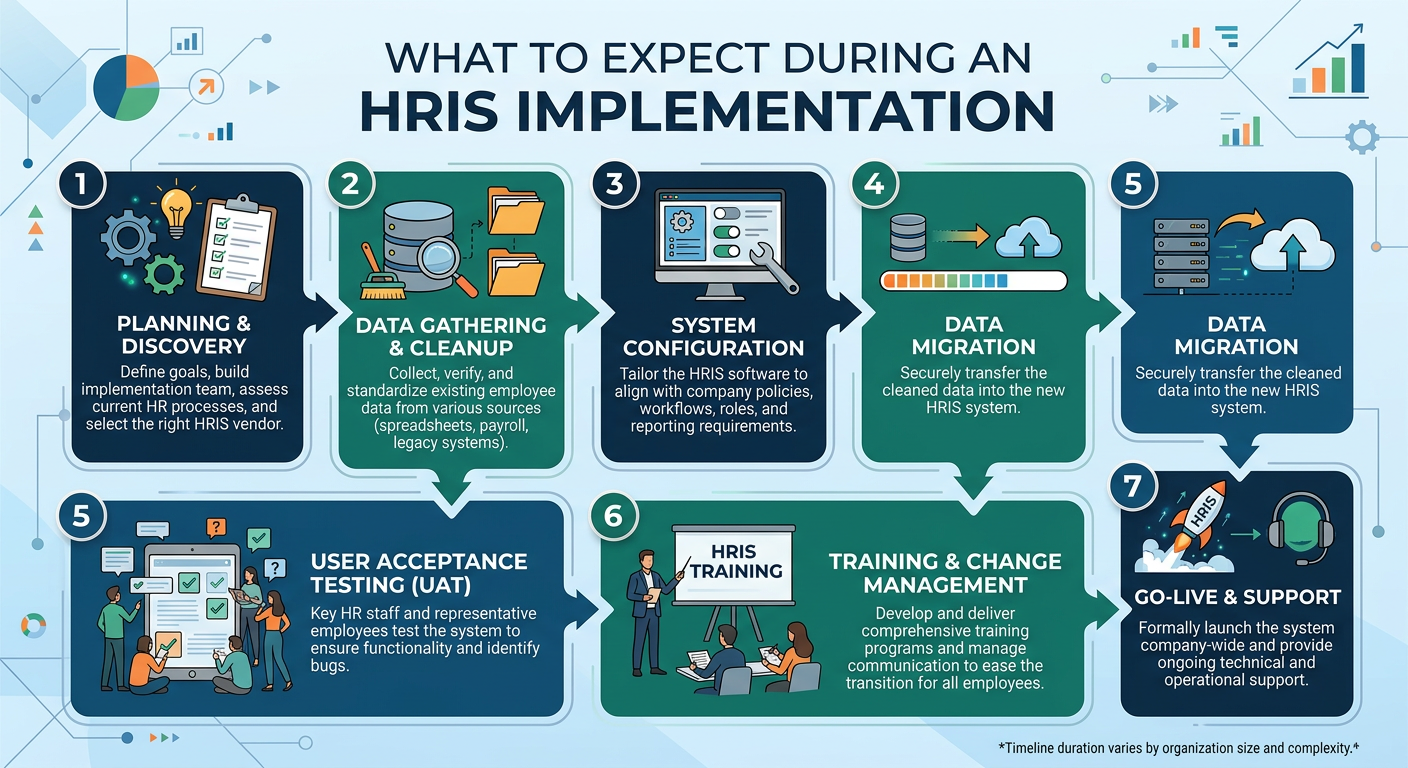
Why HRIS Implementations Often Miss the Mark
Many organizations invest in a new HR system expecting immediate improvement.
Better processes.
Cleaner data.
More efficiency.
But after implementation, they often find:
- workflows are still inconsistent
- reporting is unreliable
- manual work continues
The issue is not always the system.
It is the lack of preparation before implementation begins.
What Is an HRIS Readiness Assessment?
An HRIS readiness assessment is a structured evaluation of your current HR environment before selecting or implementing a system.
It focuses on understanding:
- how HR processes currently function
- how data is structured and managed
- how systems are being used
- where gaps and inefficiencies exist
The goal is to identify what needs to be addressed before moving forward.
What an HRIS Readiness Assessment Evaluates
A comprehensive assessment looks at several key areas.
HR Processes
This includes:
- hiring workflows
- onboarding processes
- employee lifecycle management
- approval structures
The goal is to determine whether processes are:
- clearly defined
- consistent across teams
- aligned with how the business operates
Data Structure and Quality
Data is critical to system success.
An assessment reviews:
- data accuracy and completeness
- consistency in job titles and structures
- duplication across systems
- reporting capabilities
According to research from Gartner, poor data quality is one of the leading causes of challenges in HR technology implementations.
Source
Gartner HR Technology Research - https://www.gartner.com/en/human-resources
Systems and Tools
This includes evaluating:
- current HR systems
- how they are being used
- gaps in functionality
- overlap between tools
The goal is to determine whether existing systems can be optimized or need to be replaced.
Workflow Alignment
Workflows are assessed to determine:
- how processes are executed in practice
- where inconsistencies exist
- where manual work is required
Misalignment between workflows and systems is a common source of inefficiency.
Ownership and Governance
An assessment identifies:
- who owns HR processes
- who manages systems
- how decisions are made
Without clear ownership, systems and processes often become inconsistent.
Why an HRIS Readiness Assessment Matters
Skipping this step can lead to significant challenges.
Prevents Rework
When gaps are identified early:
- processes can be defined before implementation
- data can be cleaned and structured
- workflows can be aligned
This reduces the need for changes later.
Improves Implementation Outcomes
Organizations that are prepared are more likely to:
- stay on schedule
- avoid unnecessary complexity
- achieve better system adoption
According to research from Deloitte, organizations that invest in upfront planning and alignment achieve better outcomes in technology implementations.
Source
Deloitte Human Capital Trends - https://www2.deloitte.com/us/en/insights/focus/human-capital-trends.html
Reduces Cost
Preparation helps avoid:
- extended timelines
- additional consulting costs
- post-implementation fixes
Aligns Systems With Business Needs
Instead of forcing processes into a system, an assessment ensures:
- systems support how the business operates
- workflows are aligned
- reporting meets organizational needs
What Happens Without a Readiness Assessment
When organizations skip this step:
- processes are defined during implementation
- data issues surface late
- workflows require rework
- timelines extend
- system adoption suffers
These challenges are often preventable.
If This Is Happening in Your Business, You May Need an Assessment
These are common indicators that readiness has not been established:
- processes are unclear or inconsistent
- data is fragmented or unreliable
- systems are underutilized or misaligned
- manual work exists alongside systems
- stakeholders are not aligned
If several of these are true, an assessment can provide clarity.
How to Approach an HRIS Readiness Assessment
A structured approach is key.
Start With Current-State Evaluation
Understand how HR operates today, not how it is expected to operate.
Identify Gaps
Look for inconsistencies, inefficiencies, and areas of risk.
Define Future-State Goals
Determine what HR should look like after improvements are made.
Create a Plan
Develop a roadmap for:
- process alignment
- data improvement
- system selection or optimization
How HRLaunch Technology Helps
At HRLaunch Technology, we help organizations assess their readiness before investing in HR systems.
Many companies move directly into system selection or implementation without fully understanding their current state.
Our approach focuses on:
- evaluating HR operations, processes, and systems
- identifying gaps in structure, consistency, and ownership
- defining clear workflows and data standards
- creating a roadmap for system alignment and implementation
We work with small, mid-sized, and growing businesses to build strong HR foundations before introducing or changing technology.
When systems are involved, we ensure they are selected and implemented in a way that supports real operational needs.
The goal is not just to prepare for a system.
It is to ensure the system works from day one.
Final Thoughts
An HRIS readiness assessment is not an extra step.
It is a critical one.
Organizations that invest time in preparation are more likely to see successful outcomes.
Those who skip it often face delays, rework, and inefficiencies.
The goal is not just to implement a system.
It is to implement it on a foundation that supports long-term success.