The Question Everyone Asks
When companies start considering a new HR system, one of the first questions is:
“How much is this going to cost?”
It seems like a straightforward question.
But the answer is rarely simple.
That is because the cost of an HRIS implementation goes far beyond the software itself.
The Biggest Misconception About Cost
Many organizations assume the cost is primarily:
- the software subscription
- initial setup fees
While those are part of the investment, they are not the full picture.
In many cases, the largest costs come from:
- time
- internal resources
- process alignment
- data preparation
Understanding this upfront helps avoid surprises later.
What Impacts HRIS Implementation Cost
The total cost of implementation depends on several factors.
Company Size and Complexity
Larger organizations typically have:
- more employees
- more complex workflows
- more data to manage
This increases the effort required for implementation.
Number of Modules and Features
The more functionality included, the more complex the implementation.
This can include:
- core HR
- payroll
- performance management
- recruiting
- benefits administration
Each module adds time and cost.
Data Quality and Structure
Data is one of the biggest cost drivers.
If data is:
- inconsistent
- incomplete
- spread across multiple systems
additional time is required for cleanup and migration.
According to research from Gartner, poor data quality significantly increases implementation effort and reduces the value of HR technology.
Source
Gartner HR Technology Research - https://www.gartner.com/en/human-resources
Process Clarity
If HR processes are not clearly defined before implementation:
- decisions are made during configuration
- workflows require rework
- timelines extend
Clear processes reduce cost.
Internal Resources
Implementation requires time from:
- HR teams
- leadership
- IT or operations
Limited availability can slow progress and increase cost.
Vendor and Implementation Support
Costs vary depending on:
- vendor pricing models
- level of implementation support
- use of external consultants
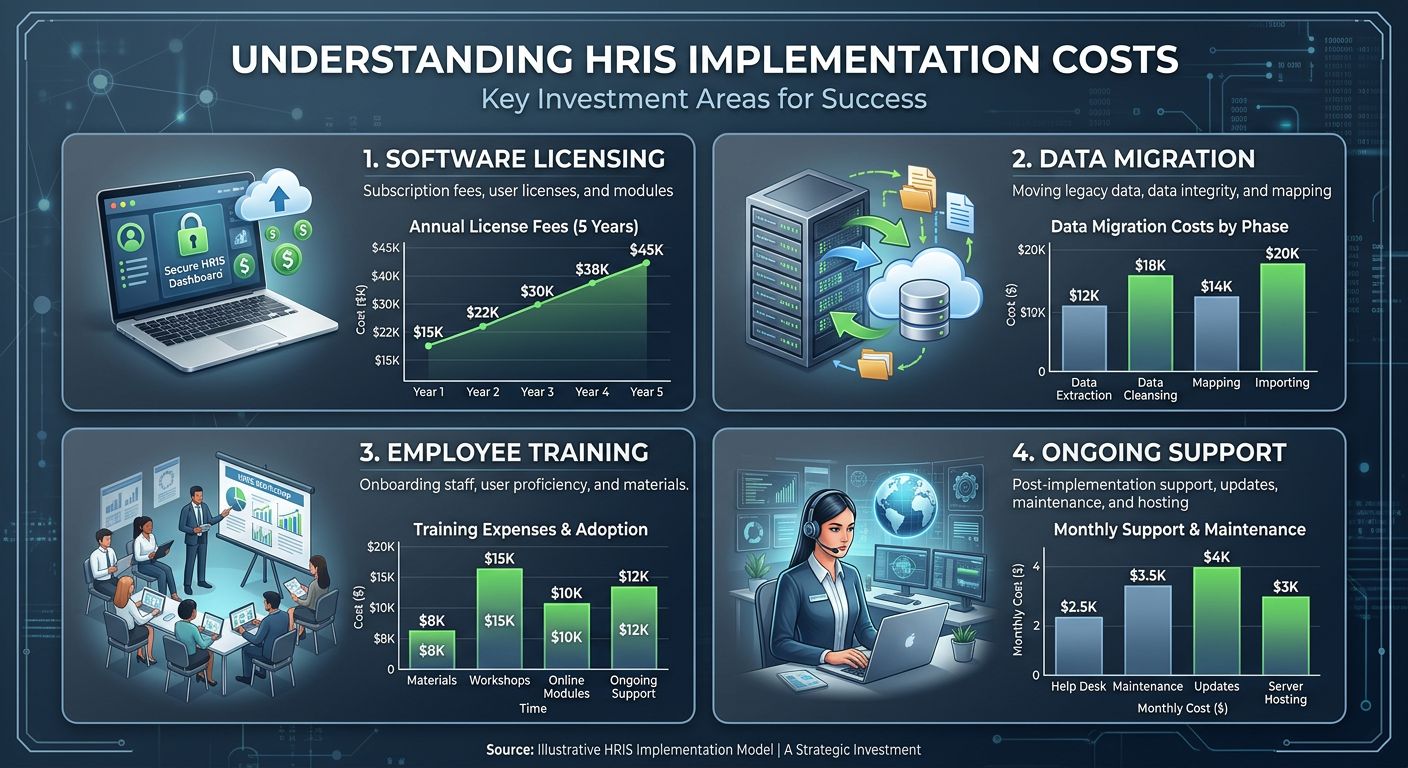
Typical Cost Ranges
While costs vary, general ranges can provide context for small and mid-sized businesses.
Software Costs
- $6 to $15 per employee per month (basic systems)
- $15 to $30+ per employee per month (more advanced systems)
Implementation Costs
- $5,000 to $20,000 for smaller implementations
- $20,000 to $75,000+ for more complex implementations
Internal Time and Resource Costs
Often overlooked, but significant:
- HR team time spent on implementation
- data cleanup and preparation
- training and adoption
Ongoing Costs
After implementation:
- subscription fees
- system maintenance
- ongoing optimization
According to research from Deloitte, organizations that underestimate total cost of ownership often face challenges in adoption and long-term value.
Source
Deloitte Human Capital Trends - https://www2.deloitte.com/us/en/insights/focus/human-capital-trends.html
The Hidden Costs Most Companies Miss
Some of the most impactful costs are not immediately visible.
Rework After Go-Live
If processes and data are not aligned before implementation:
- workflows may need to be reconfigured
- data may require additional cleanup
- users may need retraining
Delayed Adoption
If users are not properly trained or processes are unclear:
- system usage is inconsistent
- manual work continues
- value is delayed
Productivity Impact
During implementation:
- HR teams spend significant time on the project
- normal operations may slow down
If This Is Happening in Your Business, Costs May Increase
These are common indicators that implementation costs may be higher than expected:
- processes are still being defined
- data requires significant cleanup
- stakeholders are not aligned
- timelines continue to shift
- system requirements change during implementation
If several of these are present, cost increases are likely.
How to Control HRIS Implementation Costs
While costs can vary, they can be managed with the right approach.
Start With Readiness
Ensure processes, data, and ownership are clearly defined before implementation.
Limit Initial Scope
Focus on core functionality first, then expand.
Align Stakeholders Early
Ensure all decision-makers are aligned before starting.
Invest in Data Preparation
Clean and structure data before migration.
Focus on Long-Term Value
Avoid making decisions based only on short-term cost.
How HRLaunch Technology Helps
At HRLaunch Technology, we help organizations approach HRIS implementation with a clear understanding of both cost and value.
Many companies underestimate implementation costs because they focus only on the system, not the structure behind it.
Our approach focuses on:
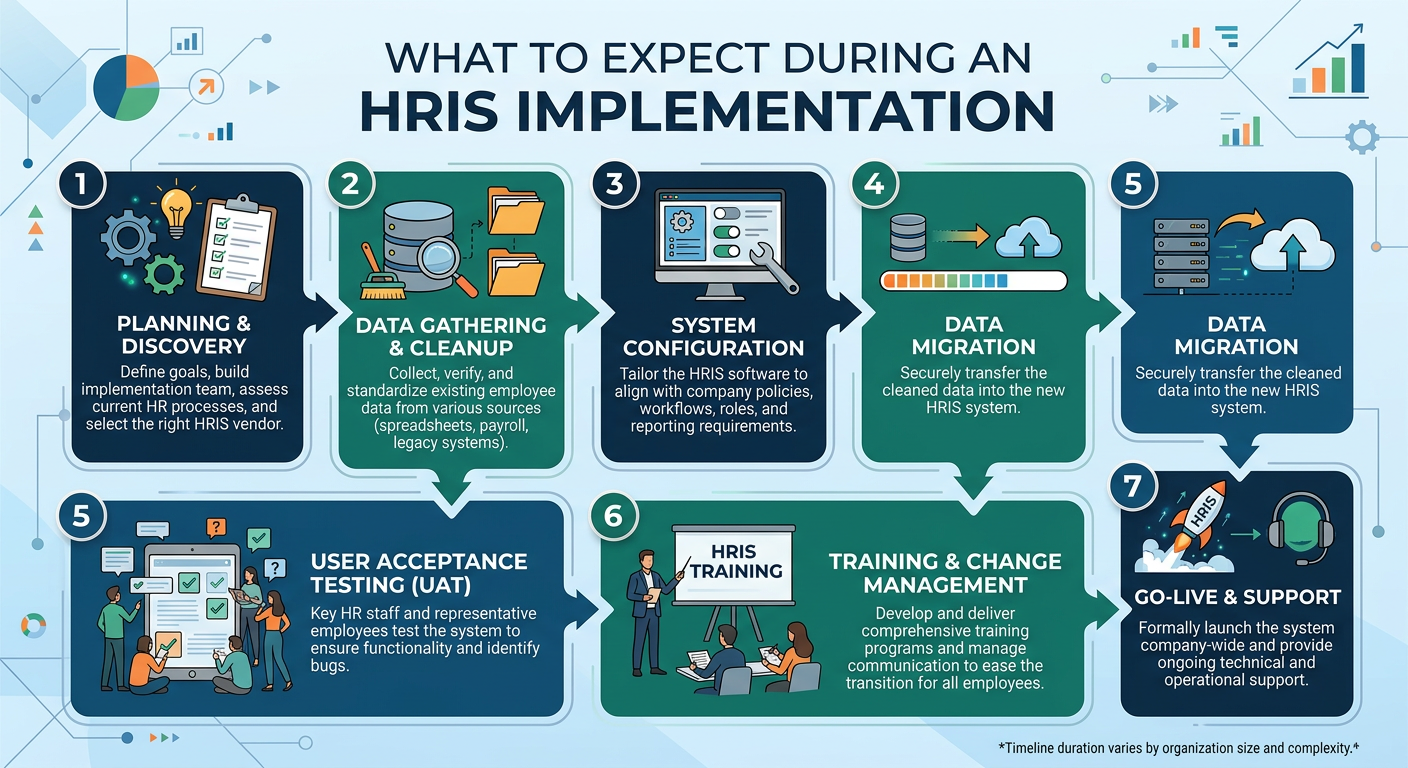
- evaluating current HR operations and identifying gaps
- preparing processes, workflows, and data before implementation
- helping define realistic scope and timelines
- guiding system selection based on operational needs
- supporting implementation and post-go-live optimization
We work with small, mid-sized, and growing businesses to ensure they are fully prepared before investing in a new HR system.
The goal is not just to manage cost.
It is to ensure the investment delivers long-term value.
Final Thoughts
The cost of an HRIS implementation is not just about the system.
It is about the preparation, alignment, and execution behind it.
Organizations that focus only on software cost often underestimate the full investment.
Those that take a structured approach are more likely to see long-term value.
The goal is not to find the cheapest option.
It is to make the right investment—and get the return from it.