The Illusion of Being “Compliant”
Most organizations do not think of themselves as non-compliant.
Policies exist.
Processes are in place.
Nothing has gone wrong.
From the outside, everything appears to be working.
But compliance is not just about the absence of problems.
It is about consistency, documentation, and alignment.
Why Compliance Can Look Fine on the Surface
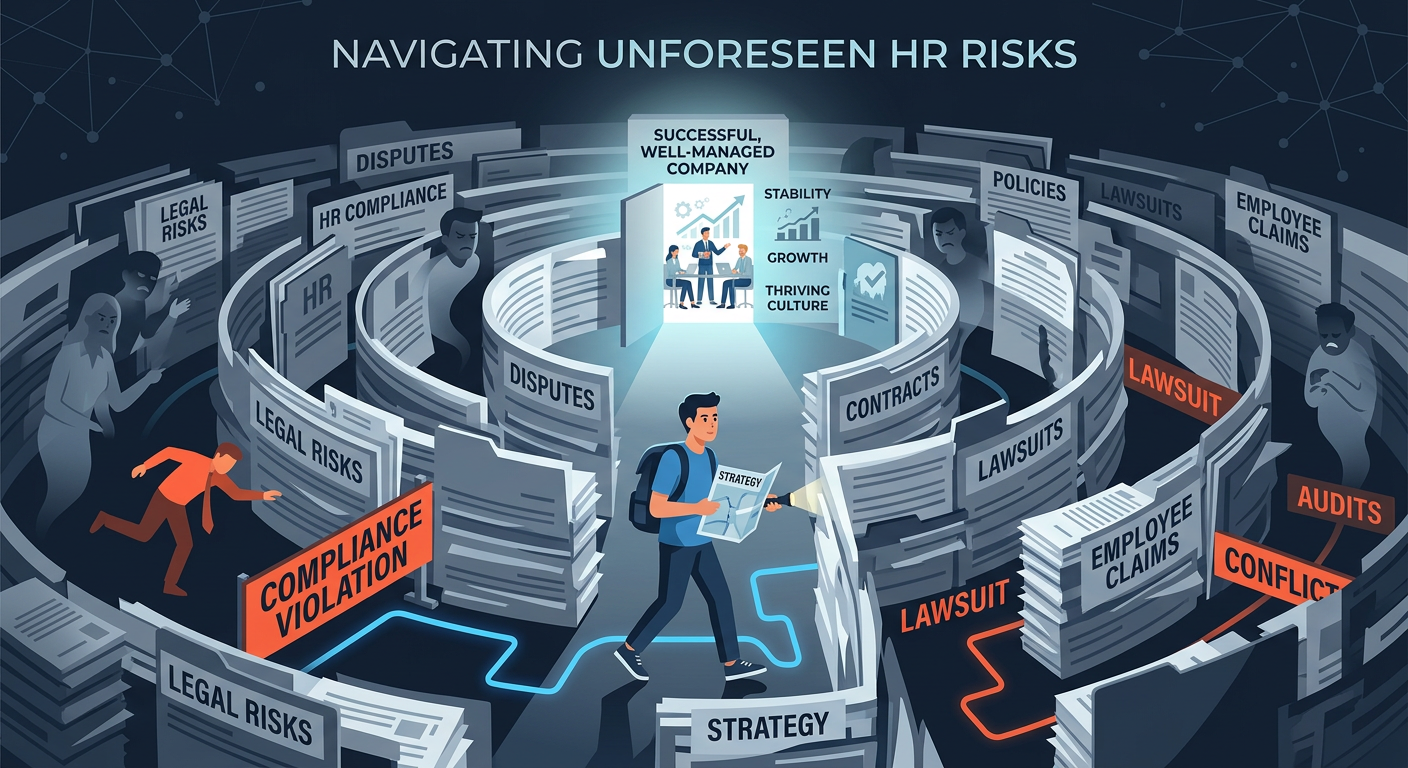
Compliance gaps are rarely obvious.
They tend to stay hidden because:
- issues have not yet been challenged
- processes appear to be working
- documentation exists, even if incomplete
- no audit or complaint has exposed the gaps
This creates a false sense of security.
According to the U.S. Department of Labor, employers are responsible for maintaining compliance at all times, not just when issues arise.
Where Hidden Compliance Gaps Exist
Even in organizations that appear compliant, gaps often exist in specific areas.
Policies Exist But Are Not Applied Consistently
Many companies have documented policies.
But in practice:
- managers interpret policies differently
- exceptions are made without documentation
- similar situations are handled in different ways
Inconsistency creates risk.
Documentation Is Incomplete or Inconsistent
Documentation may exist, but it is not always reliable.
Examples include:
- missing records for employee actions
- inconsistent performance documentation
- incomplete compliance tracking
Without complete records, it is difficult to demonstrate compliance.
Training Is Delivered But Not Tracked
Organizations may provide training such as:
- anti-harassment
- safety
- role-specific training
But if completion is not tracked consistently, there is no clear record of compliance.
Processes Exist Outside the System
Some HR processes may be handled outside formal systems.
This includes:
- approvals managed through email
- compliance tracking in spreadsheets
- manual reminders for deadlines
These processes create gaps between what is happening and what is recorded.
Job Roles and Classifications Are Outdated
Roles evolve over time.
But job descriptions and classifications may not.
This can impact compliance under the Fair Labor Standards Act (FLSA), which requires proper classification based on actual job duties.
Source
U.S. Department of Labor FLSA Guidance - https://www.dol.gov/agencies/whd/flsa
Leave Is Managed Informally
Even when companies are aware of laws like the Family and Medical Leave Act (FMLA), leave may still be managed inconsistently.
Examples include:
- tracking leave manually
- applying policies differently across teams
- missing eligibility details
This creates exposure as the organization grows.
Source
U.S. Department of Labor FMLA Overview - https://www.dol.gov/agencies/whd/fmla
What This Looks Like in Real Organizations
When compliance gaps exist, they do not always show up immediately.
Instead, they appear as:
- inconsistent answers to the same question
- difficulty finding documentation
- uncertainty around policies
- reliance on individual knowledge
The issue is not visible until something challenges it.
When “Fine” Turns Into a Problem
Compliance issues often surface during specific events.
Employee Complaints
An employee raises a concern about:
- fairness
- treatment
- policy application
Without consistency and documentation, the organization may struggle to respond.
Audits
During an audit, gaps in:
- documentation
- tracking
- processes
become visible.
Rapid Growth
As the organization scales:
- inconsistencies increase
- manual processes break down
- compliance becomes harder to manage
Leadership Questions
When leadership asks for clarity on:
- workforce data
- compliance status
- policy application
uncertainty becomes more apparent.
If This Is Happening in Your Business, Compliance May Not Be as Strong as It Appears
These are common indicators of hidden compliance gaps:
- policies exist but are applied differently across teams
- documentation is incomplete or difficult to find
- processes rely on manual tracking
- training completion is not consistently recorded
- job roles have evolved without updates
- leave tracking varies by manager or location
If several of these are true, compliance is not fully aligned.
Why This Matters
Compliance is not just about avoiding penalties.
It impacts:
- employee trust
- consistency across the organization
- risk management
- operational efficiency
According to the U.S. Equal Employment Opportunity Commission, employers are expected to maintain consistent and fair workplace practices supported by proper documentation.
How to Identify and Address Hidden Gaps
Improving compliance starts with visibility.
Assess Current Processes
Understand how compliance is actually being managed, not how it is expected to work.
Standardize Policy Application
Ensure policies are applied consistently across teams and managers.
Centralize Documentation
Maintain complete and accessible records for all HR processes.
Track Training and Compliance Activities
Ensure all required activities are recorded and monitored.
Align Systems With Processes
Use HR systems to support consistent workflows and tracking.
How HRLaunch Technology Helps
At HRLaunch Technology, we help organizations move beyond perceived compliance to actual, structured compliance.
Many companies believe they are compliant because policies exist or issues have not surfaced. In reality, compliance depends on consistency, documentation, and repeatable processes.
Our approach focuses on:
- aligning policies with real-world practices
- standardizing how policies are applied across teams
- improving documentation and audit readiness
- building workflows that support ongoing compliance
We work with small, mid-sized, and growing businesses to ensure compliance is not dependent on individuals, but built into how HR operates every day.
The goal is to create a compliance structure that is consistent, trackable, and scalable as the organization grows.
Final Thoughts
Compliance that “looks fine” can be misleading.
The absence of issues does not mean the absence of risk.
Organizations that take a proactive approach to identifying and addressing hidden gaps are better positioned to maintain compliance as they grow.
The goal is not just to appear compliant.
It is to be consistent, structured, and prepared.