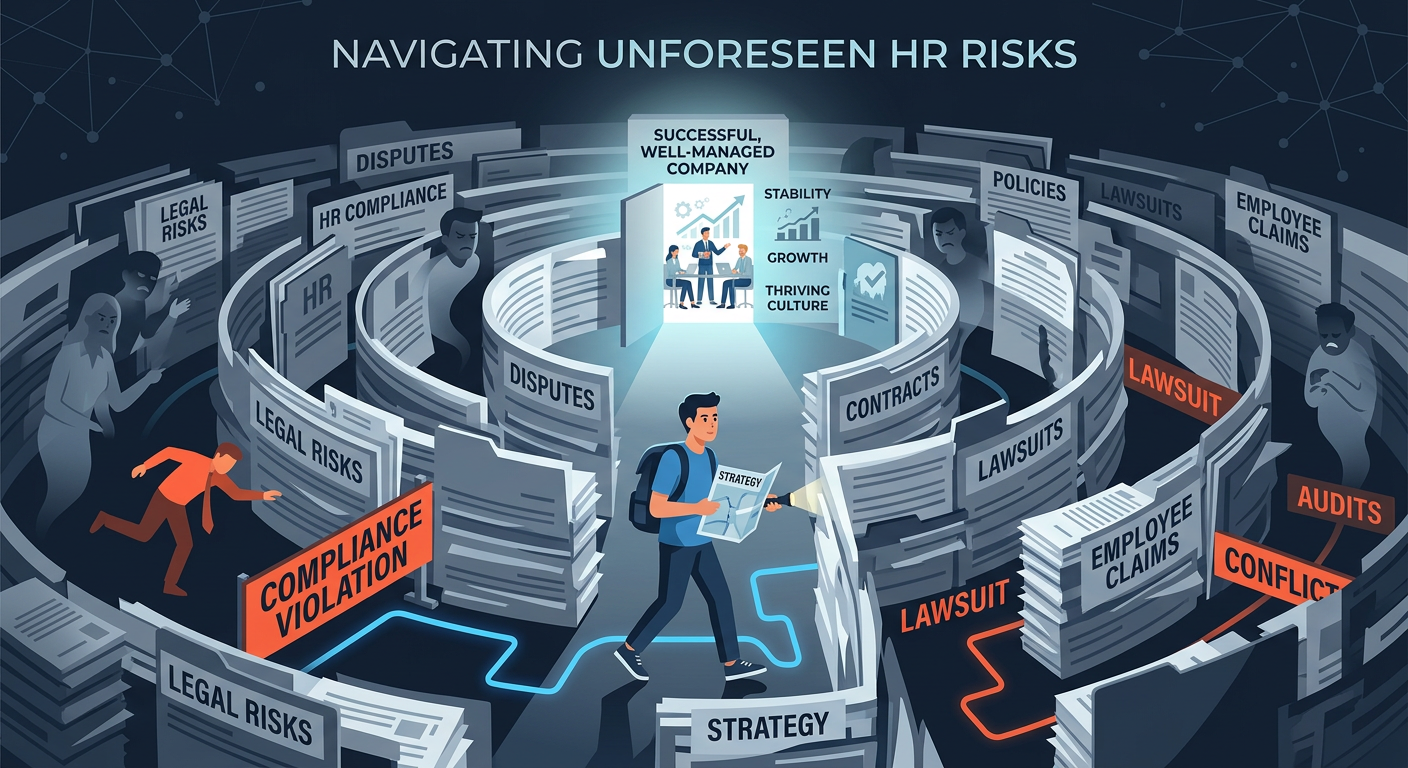
Compliance Gets More Complex as You Grow
For small businesses, compliance often starts simple.
A few employees.
Basic policies.
Limited requirements.
But as the business grows, compliance becomes more complex.
- more employees
- more regulations
- more documentation
What worked early on is no longer enough.
Why a Checklist Matters
Compliance issues rarely fail all at once.
They fail quietly.
- expired documents
- inconsistent processes
- missing records
A structured checklist helps ensure nothing is overlooked.
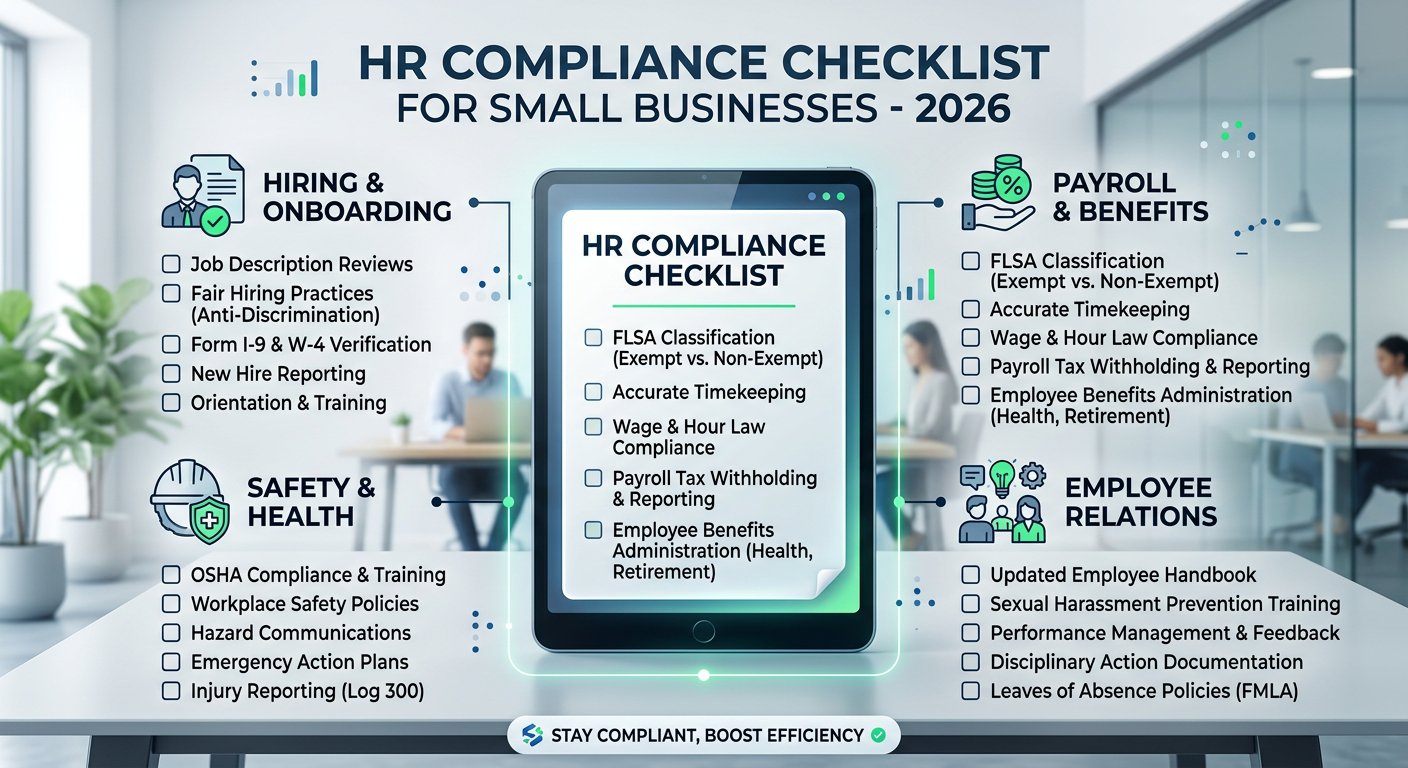
HR Compliance Checklist for Small Businesses (2026)
This checklist focuses on the core compliance areas across hiring, payroll, safety, and employee management that small businesses should have in place.
1. Employee Classification
Ensure employees are properly classified as:
- exempt or non-exempt
- employee vs independent contractor
Misclassification can lead to wage and hour violations under the Fair Labor Standards Act (FLSA).
2. Wage and Hour Compliance
Confirm compliance with:
- minimum wage requirements
- overtime rules
- accurate time tracking
The U.S. Department of Labor enforces these requirements.
3. Required Labor Law Posters
Ensure all required federal and state labor law posters are:
- up to date
- accessible to employees (including remote workers)
4. Employee Relations and Workplace Policies
Ensure policies and employee relations practices are structured and up to date.
This includes:
- updated employee handbook
- anti-discrimination and harassment policies
- sexual harassment prevention training
- performance management and feedback processes
- disciplinary action documentation
- leave of absence policies (including FMLA where applicable)
Why it matters:
- ensures consistency across the organization
- reduces legal risk
- supports a structured employee experience
5. Hiring and Onboarding Compliance
Ensure hiring and onboarding practices are structured and compliant.
This includes:
- job description reviews
- fair hiring practices (anti-discrimination)
- Form I-9 and W-4 verification
- new hire reporting
- structured orientation and training
Why it matters:
- reduces hiring risk
- ensures compliance from day one
- creates a consistent employee experience
6. I-9 and Employment Eligibility Verification
Ensure all employees complete Form I-9.
Requirements include:
- verifying identity and work authorization
- maintaining proper documentation
- completing forms within required timelines
7. Leave Compliance
Ensure compliance with applicable leave laws such as the Family and Medical Leave Act (FMLA) (if applicable).
This includes:
- tracking leave accurately
- applying policies consistently
- maintaining documentation
8. ADA Accommodations
Under the Americans with Disabilities Act (ADA), employers must:
- provide reasonable accommodations
- engage in an interactive process
- document decisions
9. Training Requirements
Ensure employees complete required training such as:
- anti-harassment training
- safety training (if applicable)
- role-specific training
Track completion consistently.
10. Payroll and Benefits Compliance
Ensure payroll and benefits are accurate, compliant, and consistently managed.
This includes:
- FLSA classification (exempt vs non-exempt)
- accurate timekeeping
- wage and hour law compliance
- payroll tax withholding and reporting
- employee benefits administration (health, retirement)
Why it matters:
- prevents wage and hour violations
- ensures proper employee classification
- reduces financial and legal risk
11. Recordkeeping and Documentation
Maintain required records, including:
- employee files
- payroll records
- performance documentation
According to the U.S. Department of Labor, proper recordkeeping is essential for compliance.
12. Data Privacy and Security
Ensure employee data is:
- stored securely
- accessed appropriately
- protected from unauthorized use
As regulations evolve, data protection is becoming more important.
13. Multi-State Compliance (If Applicable)
If employees work in multiple states:
- comply with state-specific laws
- adjust policies as needed
- track location-based requirements
14. Workplace Safety and Health Compliance
For applicable businesses, safety compliance is critical.
This includes:
- OSHA compliance and training
- workplace safety policies
- hazard communication programs
- emergency action plans
- injury reporting (OSHA Log 300)
Why it matters:
- protects employees
- reduces workplace incidents
- ensures regulatory compliance
If This Is Happening in Your Business, You May Be at Risk
These are common indicators of compliance gaps:
- policies are outdated or missing
- documentation is inconsistent
- processes vary across managers
- compliance tasks are tracked manually
- training is not consistently recorded
If several of these are true, risk is likely present.
How to Stay Compliant as You Grow
Compliance is not a one-time effort.
It requires structure and consistency.
Standardize Processes
Ensure compliance activities follow consistent workflows.
Keep Policies Updated
Review and update policies regularly.
Track Compliance Activities
Use systems or structured processes to monitor requirements.
Train Managers and Employees
Ensure everyone understands their responsibilities.
How HRLaunch Technology Helps
At HRLaunch Technology, we help small and growing businesses build the structure needed to maintain compliance consistently.
Many organizations handle compliance reactively, addressing issues only when they arise.
Our approach focuses on:
- evaluating current compliance practices and identifying gaps
- standardizing policies and workflows
- improving documentation and recordkeeping
- aligning systems with compliance requirements
We work with businesses to ensure compliance is not dependent on individuals, but built into how HR operates.
The goal is to create a compliance structure that is consistent, trackable, and scalable.
Final Thoughts
Compliance is not just about avoiding penalties.
It is about building a stable and consistent HR function.
For small businesses, the risk is often not obvious until it becomes a problem.
A structured checklist helps ensure nothing is missed.
And as your business grows, that structure becomes even more important.