Most HR Risks Don’t Start as Emergencies
Founders are usually focused on growth.
- building the product
- serving customers
- hiring quickly
- managing operations
HR often becomes something handled “well enough” in the background.
And for a while, that can appear to work.
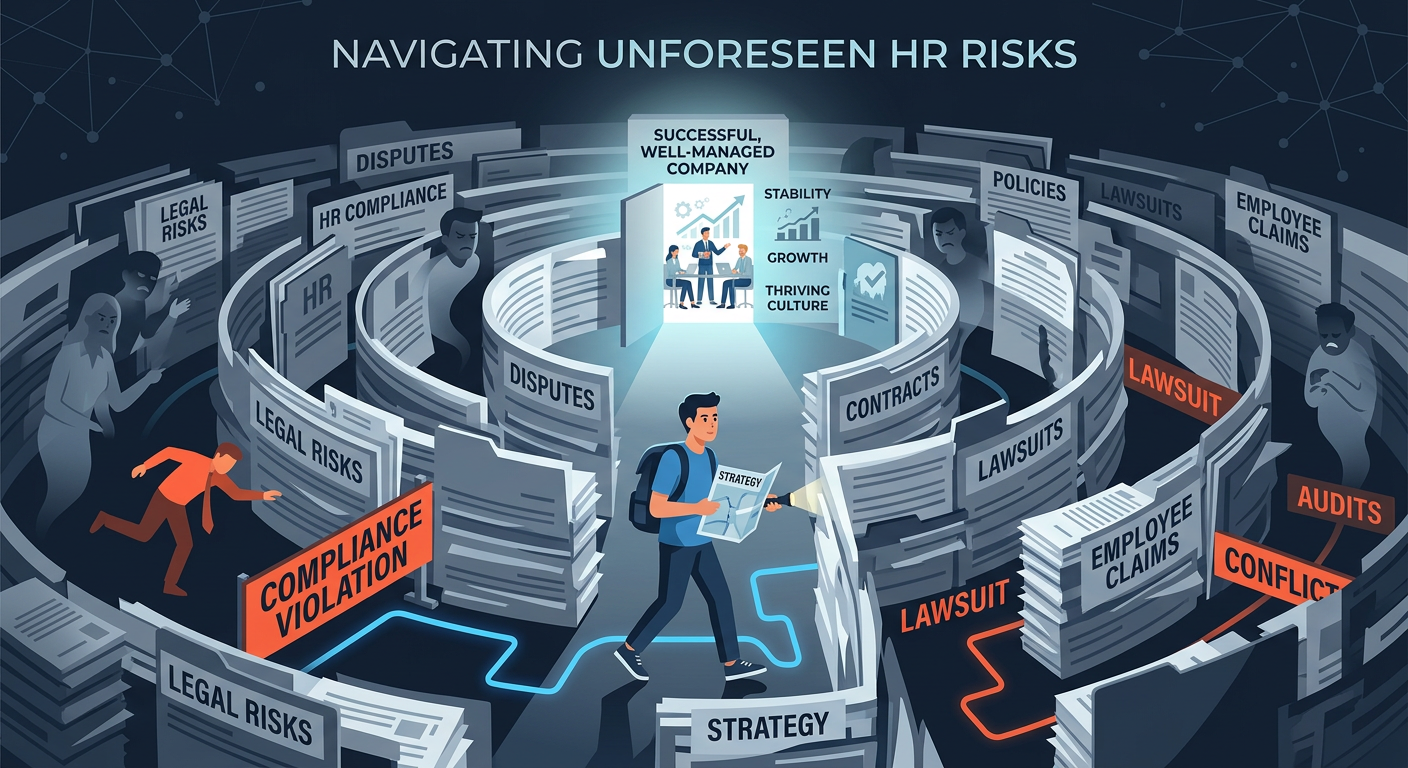
But most HR risks do not fail dramatically at first.
They build quietly over time.
Why Founders Often Miss These Risks
In early-stage and growing companies:
- processes are informal
- decisions happen quickly
- communication is direct
That speed can create the illusion that structure is unnecessary.
But growth changes complexity.
What worked with 10 employees becomes risky at 40, 75, or 150.
The HR Risks That Often Stay Hidden Until It’s Too Late
These risks are common in growing organizations.
And many are not discovered until they become expensive operationally, legally, or culturally.
1. Inconsistent Hiring Practices
At smaller sizes, hiring often depends heavily on managers or founders.
This can create:
- inconsistent interview practices
- unclear evaluation standards
- poor documentation
- hiring bias risk
According to the U.S. Equal Employment Opportunity Commission, inconsistent hiring practices can increase discrimination-related risk.
Source
U.S. Equal Employment Opportunity Commission (EEOC) - https://www.eeoc.gov/prohibited-employment-policiespractices
2. Misclassification of Employees
One of the most common hidden risks is employee classification.
This includes:
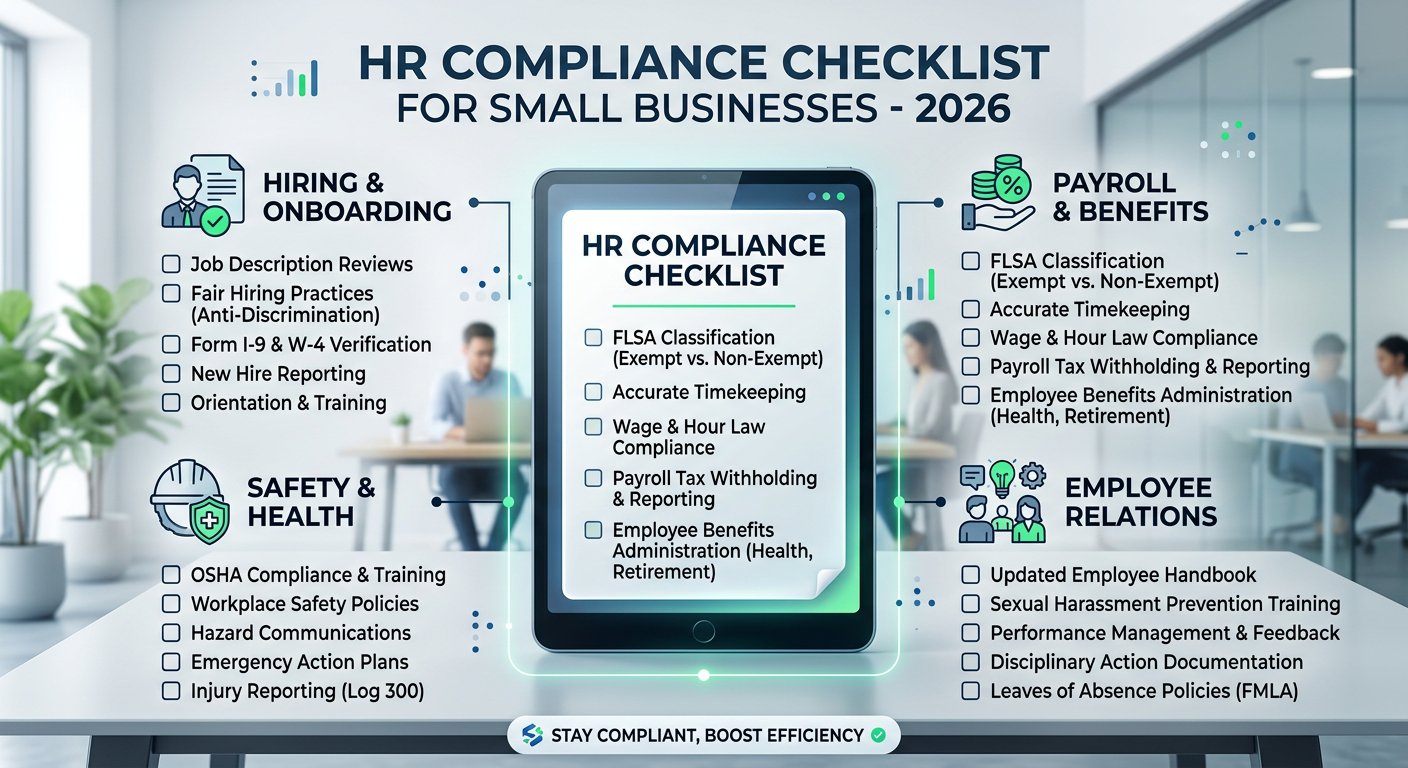
- exempt vs non-exempt classification
- employee vs contractor classification
Misclassification can lead to:
- wage and hour violations
- tax issues
- overtime liability
The U.S. Department of Labor continues increasing enforcement in this area.
Source
U.S. Department of Labor (DOL) - https://www.dol.gov/agencies/whd/flsa/misclassification
3. Managers Creating Their Own HR Processes
Without structured HR operations:
- managers handle situations differently
- onboarding varies across departments
- policies are applied inconsistently
This creates operational and compliance risk that compounds over time.
4. Outdated or Missing Policies
Many companies delay updating:
- employee handbooks
- leave policies
- harassment policies
- remote work guidelines
As regulations and workforce expectations evolve, outdated policies increase exposure.
According to SHRM, policy reviews should occur regularly as organizations grow and workplace regulations change.
Source
Society for Human Resource Management (SHRM) - https://www.shrm.org/topics-tools/tools/hr-answers/why-employee-handbooks-important
5. Compliance Tracking Done Manually
Many growing businesses still rely on:
- spreadsheets
- calendar reminders
- manual follow-up
for compliance-related activities.
This increases the risk of:
- expired certifications
- missed training
- incomplete documentation
Manual compliance management becomes harder to sustain as headcount grows.
6. Poor Documentation Practices
One of the biggest hidden risks is inconsistent documentation.
This includes:
- performance discussions
- disciplinary actions
- employee complaints
- accommodation requests
When documentation is incomplete or inconsistent, organizations become vulnerable during disputes or investigations.
7. HR Systems That Were Never Properly Structured
Many companies implement HR systems expecting them to create order automatically.
But often:
- workflows are never fully configured
- reporting structures are incomplete
- processes continue outside the system
The software is live.
The operation is still fragmented.
8. Compliance Gaps Across Multiple States
As remote work expands, many founders unintentionally create multi-state compliance exposure.
This can include:
- wage and hour differences
- leave law variations
- tax registration requirements
- labor law posting obligations
According to National Conference of State Legislatures (NCSL), state-level employment regulations continue expanding and evolving rapidly.
Source
National Conference of State Legislatures (NCSL) - https://www.ncsl.org/labor-and-employment
9. Culture Becoming Inconsistent as the Company Grows
In smaller companies, culture often develops naturally.
But growth changes this.
Without structure:
- employee experiences vary by department
- managers operate differently
- communication becomes inconsistent
Over time, culture becomes fragmented.
10. Founders Becoming the Bottleneck
Many founders remain heavily involved in:
- approvals
- hiring decisions
- employee issues
- operational workflows
At scale, this creates:
- delays
- inconsistency
- decision fatigue
Without operational structure, the company becomes dependent on individuals instead of systems and processes.
Why These Risks Usually Stay Hidden
Most of these issues do not create immediate failure.
Instead, they create:
- slow operational friction
- growing inefficiency
- inconsistent employee experiences
- increasing compliance exposure
The business adapts around the gaps until growth exposes them.
According to McKinsey & Company, operational complexity increases significantly as organizations scale, making structured management systems more important over time.
Source
McKinsey & Company - https://www.mckinsey.com/capabilities/people-and-organizational-performance/our-insights/the-state-of-organizations-2023
If This Is Happening in Your Business, Hidden Risk May Already Exist
These are common indicators:
- managers handle processes differently
- policies are outdated or unclear
- reporting requires manual cleanup
- onboarding varies across teams
- systems are underutilized
- founders remain deeply involved in operational HR decisions
If several of these are true, the issue is likely structural, not isolated.
How Founders Can Reduce HR Risk Early
The goal is not to create unnecessary bureaucracy.
It is to create operational consistency before growth magnifies gaps.
Standardize Core Processes
Focus first on:
- hiring
- onboarding
- employee lifecycle management
- compliance tracking
Clarify Ownership
Define who owns:
- workflows
- approvals
- compliance responsibilities
- HR systems
Improve Documentation
Ensure documentation is:
- consistent
- centralized
- operationally supported
Align Systems With Processes
Technology should support workflows, not operate separately from them.
Build Structure Before It Becomes Urgent
The best time to build operational HR structure is before major friction appears.
How HRLaunch Technology Helps
At HRLaunch Technology, we help growing businesses identify and reduce operational HR risks before they become larger problems.
Many founders know HR matters, but underestimate how quickly operational gaps grow as the business scales.
Our approach focuses on:
- evaluating HR workflows and operational structure
- identifying hidden compliance and process risks
- standardizing workflows across teams and managers
- aligning systems, processes, and organizational ownership
We work with small, mid-sized, and growing businesses to build practical HR foundations that support long-term growth and operational stability.
The goal is not to create unnecessary complexity.
It is to reduce friction, risk, and inconsistency before they become expensive.
Final Thoughts
Most HR risks do not appear overnight.
They build gradually through inconsistent processes, unclear ownership, and operational gaps.
Founders often do not see the problem until the organization has already outgrown the structure supporting it.
The companies that scale successfully are usually the ones that build operational HR structure early—not after problems become visible.