Compliance Doesn’t Get Easier as You Grow
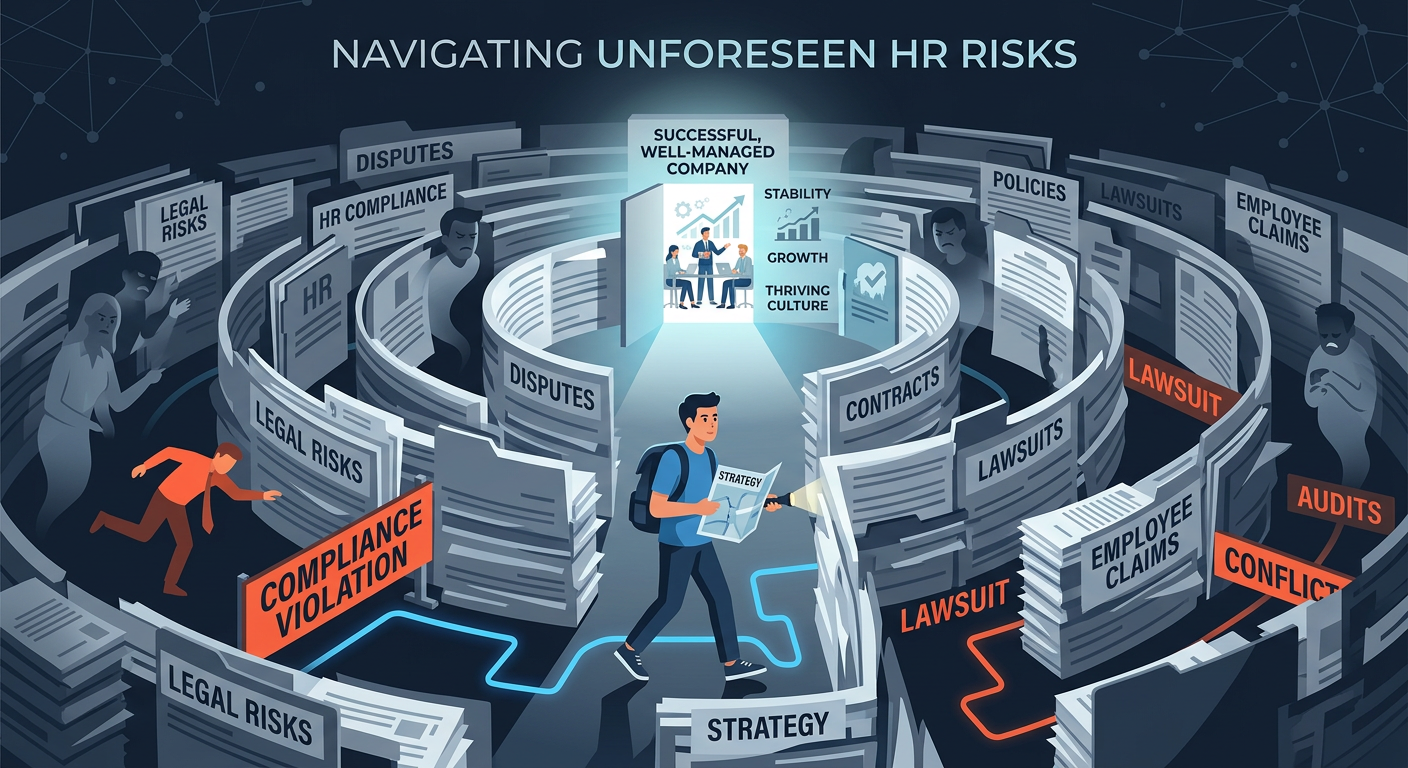
Many companies assume that once they reach a certain size, compliance becomes more structured and easier to manage.
In reality, the opposite often happens.
As organizations grow beyond 100 employees:
- operations become more complex
- teams become more distributed
- decisions become more decentralized
Compliance risk doesn’t go away.
It becomes harder to see.
Why Compliance Risk Changes at Scale
In smaller organizations, compliance challenges are often tied to lack of structure.
In mid-size companies, the challenge shifts.
It becomes about:
- inconsistent application of policies
- fragmented systems and data
- gaps between departments and locations
- evolving regulatory requirements
This is especially true for companies operating across multiple states.
According to the U.S. Department of Labor, employers must comply not only with federal laws but also with state and local regulations, which can vary significantly.
Overlooked HR Compliance Risks
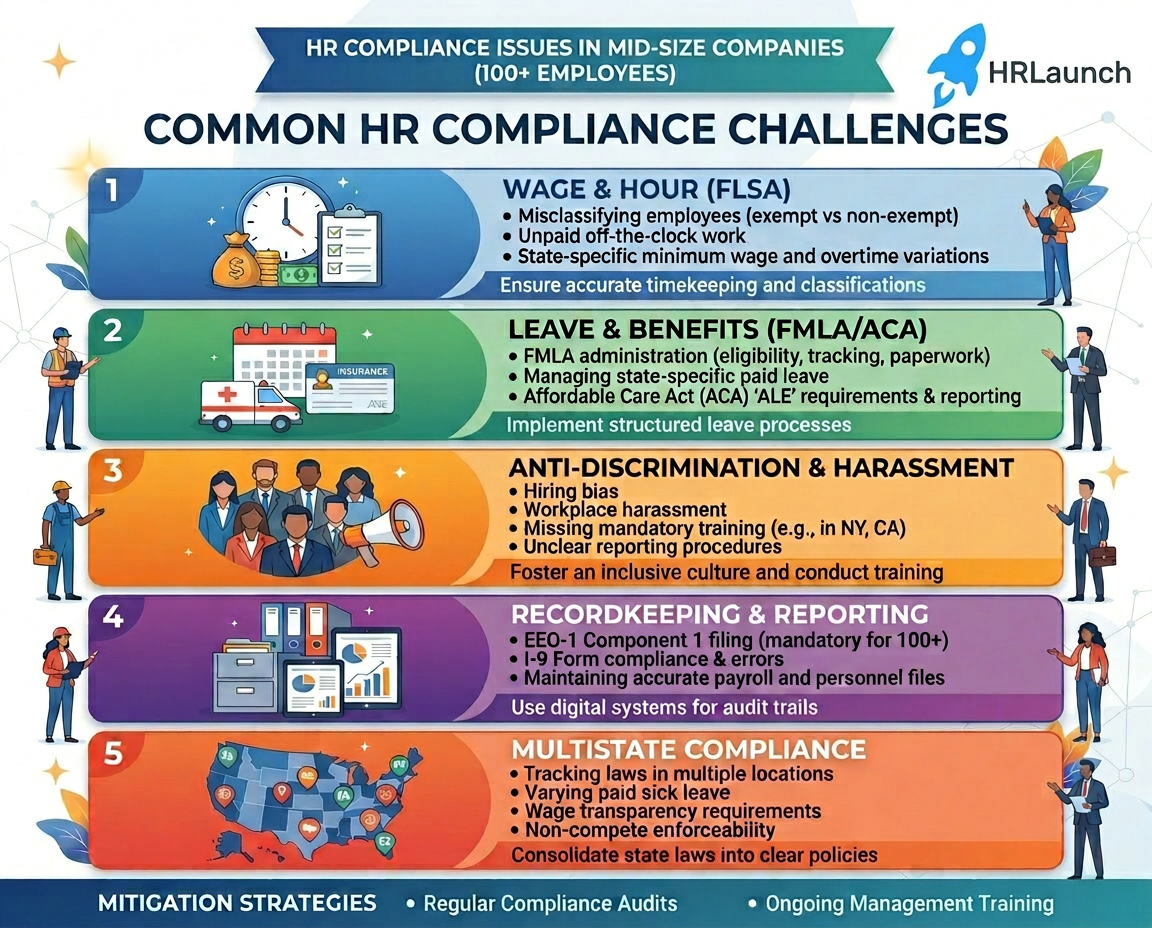
These are some of the most common compliance issues that emerge as companies scale.
Inconsistent Policy Enforcement Across Teams
Even when policies are clearly documented, they are not always applied consistently.
Different managers may:
- interpret policies differently
- make exceptions
- handle similar situations in different ways
This creates risk when employees are not treated consistently.
Multi-State Compliance Gaps
As companies expand, they often hire employees in multiple states.
Each state may have different requirements for:
- paid leave laws
- minimum wage
- overtime rules
- employee protections
Without structured tracking, it is easy to miss these differences.
Outdated Job Descriptions vs Actual Work
As roles evolve, job descriptions often do not keep up.
This can impact:
- employee classification under the Fair Labor Standards Act (FLSA)
- accommodation decisions under ADA
- performance management consistency
Compliance depends on actual job duties, not titles or outdated descriptions.
Source
U.S. Department of Labor FLSA Guidance - https://www.dol.gov/agencies/whd/flsa
Pay Compression and Pay Equity Risks
As companies grow, compensation structures can become misaligned.
Examples include:
- new hires paid more than existing employees
- inconsistent pay across similar roles
- lack of documented compensation strategy
These issues can create exposure under equal pay and discrimination laws.
Incomplete Audit Trails
Documentation becomes more important as organizations scale.
Missing records related to:
- terminations
- promotions
- disciplinary actions
can make it difficult to demonstrate compliance during audits or disputes.
System Fragmentation
Many mid-size companies operate across multiple systems:
- HRIS
- payroll platforms
- spreadsheets
When data is not centralized, it creates:
- inconsistencies
- duplicate records
- reporting challenges
Leave Mismanagement Beyond FMLA
While many organizations are aware of the Family and Medical Leave Act (FMLA), fewer are prepared for:
- state-specific leave laws
- local paid leave requirements
- tracking eligibility across jurisdictions
This creates risk as the workforce becomes more distributed.
Source
U.S. Department of Labor FMLA Overview - https://www.dol.gov/agencies/whd/fmla
Inconsistent Manager Training
Managers often play a critical role in:
- handling employee relations issues
- approving leave
- managing performance
Without consistent training, decisions may vary widely across the organization.
According to the U.S. Equal Employment Opportunity Commission, employers are responsible for ensuring workplace practices comply with anti-discrimination laws.
Source
U.S. Equal Employment Opportunity Commission - https://www.eeoc.gov
Data Privacy and Access Control
As employee data becomes more centralized, managing access becomes critical.
Risks include:
- unauthorized access to employee records
- inconsistent data permissions
- lack of clear data governance
Data privacy is becoming an increasingly important compliance area, especially for larger organizations.
What This Looks Like in Real Organizations
In many mid-size companies, these risks are not immediately visible.
Instead, they show up as:
- different answers depending on who you ask
- inconsistent employee experiences across teams
- difficulty pulling accurate reports
- uncertainty around compliance status
The issue is not that processes don’t exist.
It is because they are not aligned.
If This Is Happening in Your Business, You’re Exposed
These are common indicators that compliance risk is building:
- policies are applied differently across departments
- employee data is stored in multiple systems
- job descriptions do not match actual roles
- compensation decisions are not clearly documented
- managers handle issues independently
- leave tracking varies by location
If several of these are present, the risk is structural—not isolated.
How to Reduce Compliance Risk at Scale
As organizations grow, compliance requires more than policies.
It requires alignment.
Standardize Policy Application
Ensure policies are applied consistently across all teams and locations.
Align Job Descriptions With Reality
Regularly review roles to ensure they reflect actual responsibilities.
Centralize Data
Maintain a single source of truth for employee information.
Train Managers Consistently
Provide clear guidance on how to handle:
- employee relations
- leave
- performance management
Track Compliance Across Locations
Account for differences in state and local regulations.
How HRLaunch Technology Helps
At HRLaunch Technology, we help mid-size organizations align their HR systems and processes to support compliance at scale.
Our approach includes:
- HRIS readiness and optimization assessments
- compliance workflow alignment
- system configuration for multi-state tracking
- reporting and data visibility improvements
We focus on turning fragmented processes into structured, scalable operations.
Final Thoughts
Compliance challenges do not disappear as companies grow.
They become more complex, more distributed, and harder to detect.
Organizations that recognize this shift—and build structure to support it—are better positioned to reduce risk and operate effectively at scale.
The goal is not just to stay compliant.
It is to create alignment across systems, processes, and people as the business grows.