Your HR System Should Support Growth
HR systems are meant to create efficiency.
They should:
- streamline processes
- improve data visibility
- reduce manual work
But in many organizations, the opposite happens.
Instead of supporting growth, the system starts to slow things down.
The challenge is that this does not always happen all at once.
It builds over time.
When Systems Become a Limitation
Most companies do not realize their HR system is holding them back until friction becomes noticeable.
At that point:
- processes feel harder
- decisions take longer
- teams work around the system
The issue is often not the system itself.
It is how it has evolved within the organization.
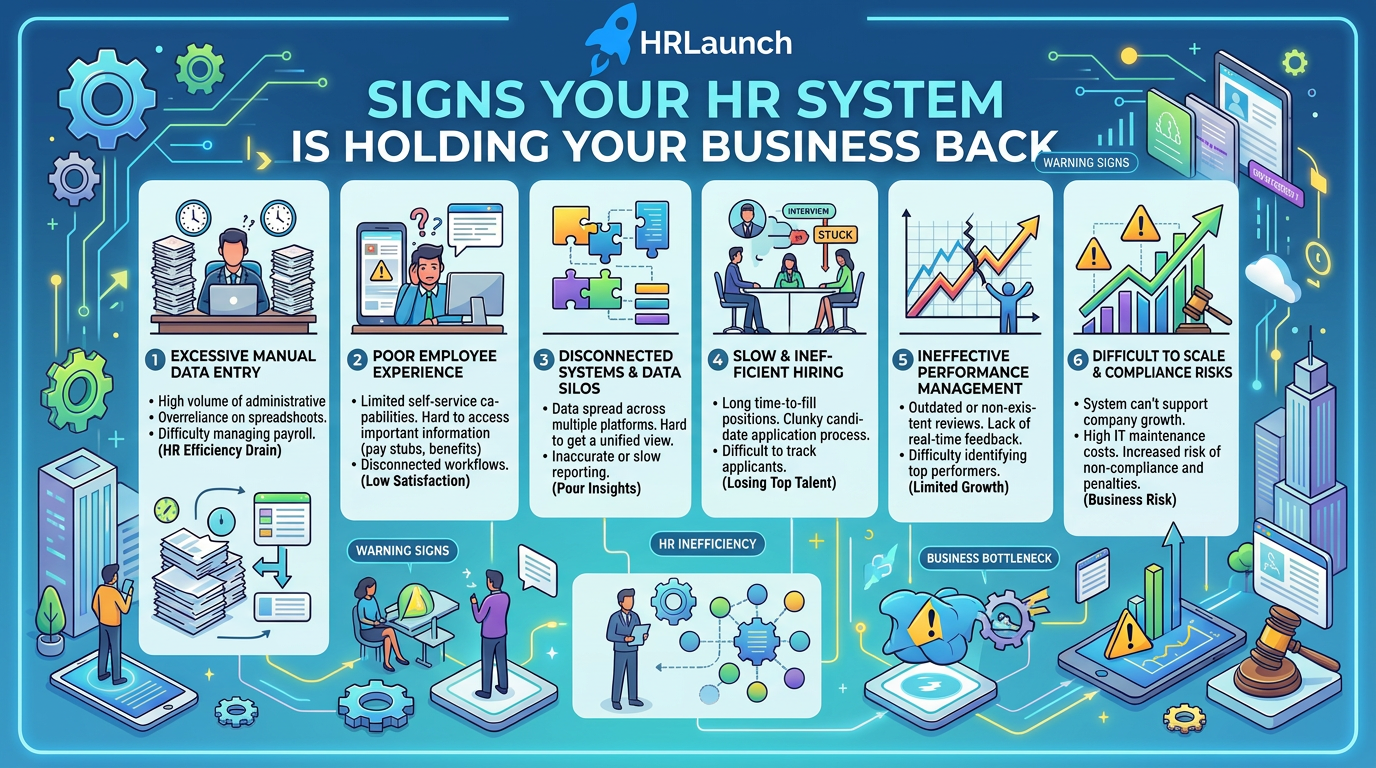
Signs Your HR System Is Holding You Back
These are some of the most common indicators that your HR system may be limiting your operations.
Reporting Is Inconsistent or Unreliable
One of the first signs is a lack of trust in reporting.
You may notice:
- different reports showing different numbers
- difficulty pulling accurate data
- reliance on manual adjustments
When data cannot be trusted, decision-making becomes more difficult.
Manual Work Is Increasing
HR systems are designed to reduce manual effort.
When teams start relying on:
- spreadsheets
- email tracking
- manual reminders
it is a sign the system is not supporting workflows effectively.
Processes Vary Across Teams
A well-structured system should support consistent processes.
If you see:
- onboarding handled differently by each manager
- approvals following different paths
- inconsistent employee experiences
the system may not be aligned with operations.
Workarounds Have Become Standard
Workarounds often begin as temporary fixes.
Over time, they become part of daily operations.
Examples include:
- tracking data outside the system
- duplicating information across tools
- bypassing system workflows
This reduces efficiency and increases risk.
System Features Are Underutilized
Many organizations use only a portion of their HR system’s capabilities.
This can include:
- unused workflow automation
- limited reporting functionality
- lack of integration with other tools
Underutilization often indicates a lack of configuration or alignment.
Data Is Fragmented Across Systems
When employee data exists in multiple places:
- inconsistencies increase
- reporting becomes difficult
- visibility is reduced
According to research from Gartner, organizations struggle to gain value from HR technology when data is fragmented and not aligned across systems.
Source
Gartner HR Technology Research - https://www.gartner.com/en/human-resources
Decisions Take Longer Than They Should
When systems are not aligned:
- information is harder to access
- data needs to be verified
- approvals take longer
This slows down operations and impacts business performance.
Why This Happens
HR systems rarely become misaligned overnight.
Common causes include:
- implementing systems without fully defined processes
- changes in the business that are not reflected in the system
- lack of ongoing system ownership
- adding tools without alignment
Over time, these factors create friction.
If This Is Happening in Your Business, Your System Needs Attention
These are clear indicators that your HR system may be holding you back:
- reporting is inconsistent or requires cleanup
- manual work exists alongside system workflows
- processes vary depending on the team
- data is stored in multiple systems
- system features are not fully used
- decision-making feels slower than it should
If several of these are present, the issue is not isolated.
It is structural.
The Business Impact
When HR systems are not aligned, the impact extends beyond HR.
Organizations may experience:
- slower hiring and onboarding
- reduced data visibility
- increased operational inefficiencies
- higher compliance risk
- delayed decision-making
According to research from PwC, organizations that align technology with processes are more effective in managing their workforce and driving performance.
Source
PwC Workforce of the Future - https://www.pwc.com/us/en/services/consulting/workforce-of-the-future.html
What to Do Next
Before making changes, it is important to understand the root cause.
Assess Your Current System
Evaluate:
- how the system is being used
- how processes are structured
- where data is stored
Identify Gaps
Look for:
- inconsistencies in workflows
- data issues
- areas of manual work
Focus on Alignment
Ensure that:
- systems support processes
- data is structured consistently
- workflows are standardized
Consider Optimization Before Replacement
In many cases, improving your current system is more effective than replacing it.
How HRLaunch Technology Helps
At HRLaunch Technology, we help organizations determine whether their HR system is truly supporting their business or holding it back.
Many challenges that appear to be system issues are actually caused by misalignment between processes, data, and system configuration.
Our approach focuses on:
- evaluating how your HR system is currently being used
- identifying gaps in workflows, data, and structure
- aligning systems with how your business actually operates
- improving system utilization and reporting reliability
We work with small, mid-sized, and growing businesses to ensure their HR systems support efficiency, consistency, and growth.
The goal is not just to have a system in place.
It is to have a system that works.
Final Thoughts
HR systems are meant to support your business, not slow it down.
When reporting becomes unreliable, processes break down, and manual work increases, those are not isolated issues.
They are signals.
Signals that your system, processes, and data are no longer aligned with how your business operates.
The goal is not just to have an HR system in place.
It is to have one that works with your business, supports growth, and reduces complexity.
Recognizing the signs early makes it easier to fix the problem before it becomes a larger constraint.