More Tools Isn’t the Goal
As small businesses grow, HR needs become more complex.
The common response is to add tools.
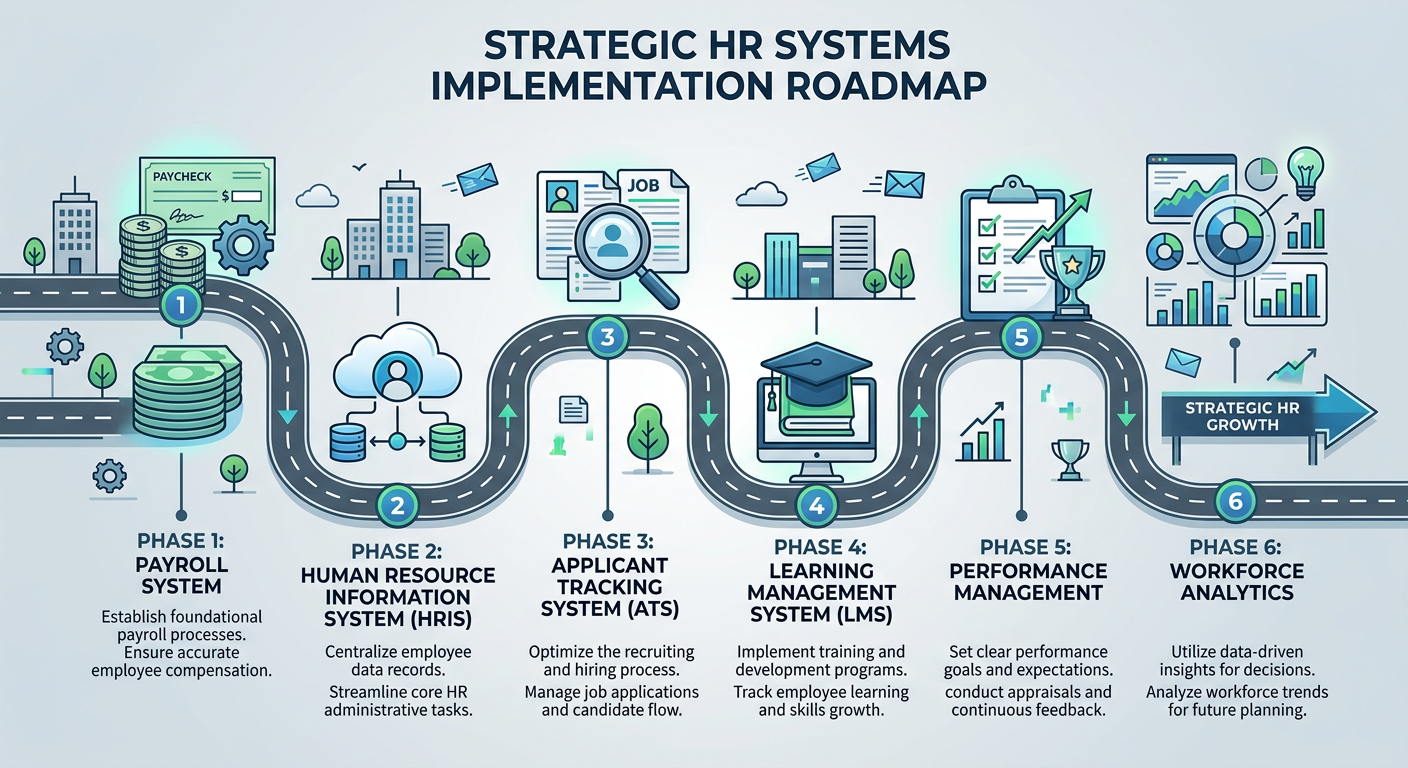
- a payroll system
- an HR platform
- a recruiting tool
- a performance system
Each one solves a specific problem.
But over time, this can create something else.
Complexity.
What an HR Tech Stack Actually Is
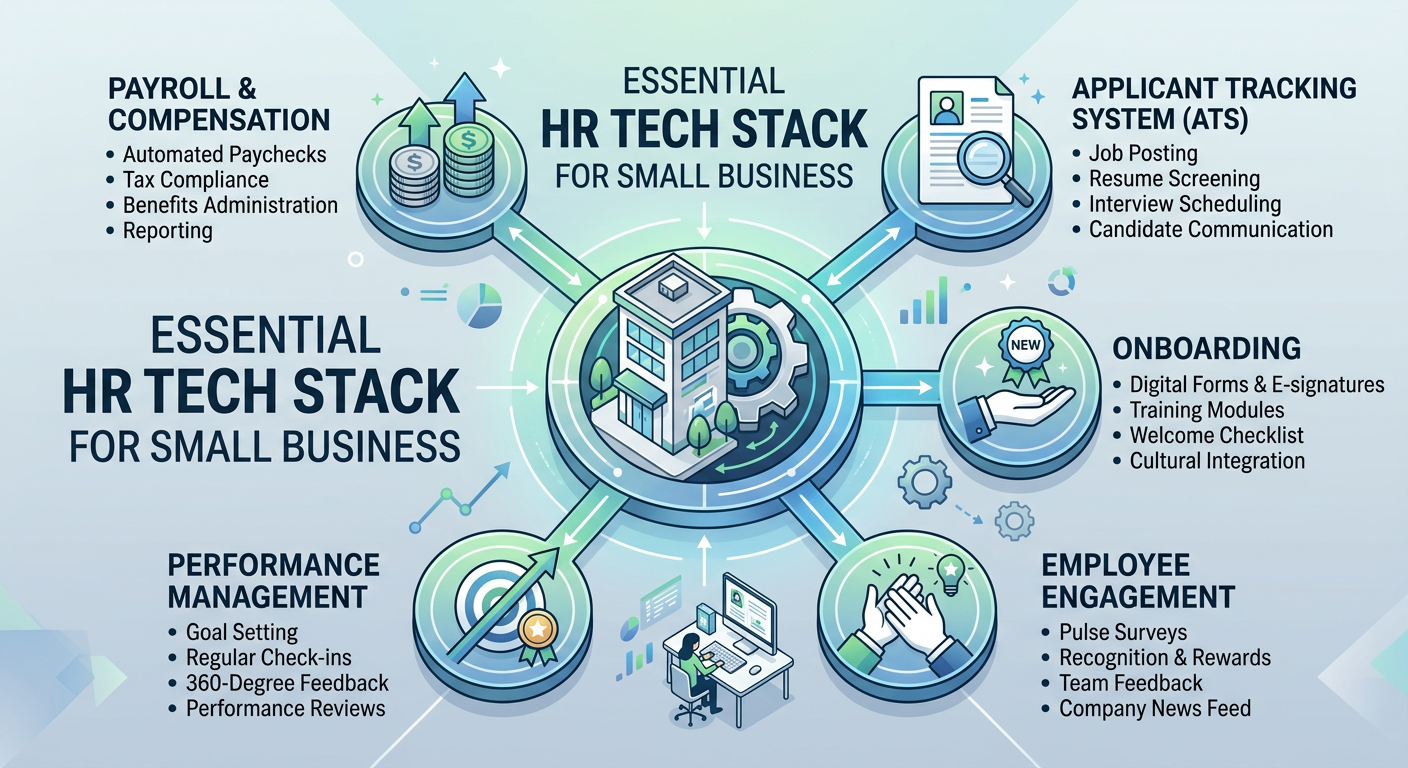
An HR tech stack is the combination of systems used to manage:
- employee data
- payroll and compensation
- hiring and onboarding
- performance and development
The goal is not to have more tools.
It is to have the right tools working together.
What Small Businesses Actually Need
For most small businesses (typically 1–100 employees), a simple and aligned setup is more effective than a complex one.
1. Core HRIS (Your Foundation)
This should be your primary system.
It should handle:
- employee records
- organizational structure
- basic reporting
- onboarding workflows
This becomes your system of record.
2. Payroll System
Payroll is critical and must be accurate.
In many cases, payroll is:
- built into the HRIS
- or integrated with it
Key capabilities include:
- payroll processing
- tax management
- compensation tracking
3. Basic Recruiting Support
At smaller sizes, recruiting does not need to be complex.
This can include:
- simple applicant tracking
- structured interview workflows
- candidate communication
Many HRIS platforms include basic recruiting functionality.
4. Onboarding Workflows
Onboarding should be consistent and structured.
This includes:
- document collection
- task tracking
- new hire communication
This is often handled within the HRIS.
5. Time Tracking (If Applicable)
For hourly or shift-based workforces, time tracking is essential.
This includes:
- tracking hours worked
- managing schedules
- integrating with payroll
What You May Not Need (Yet)
As a small business, it is easy to overinvest in tools.
Common tools that may not be necessary early on include:
- complex performance management systems
- advanced analytics platforms
- standalone learning management systems
- multiple overlapping tools
Adding these too early often creates unnecessary complexity.
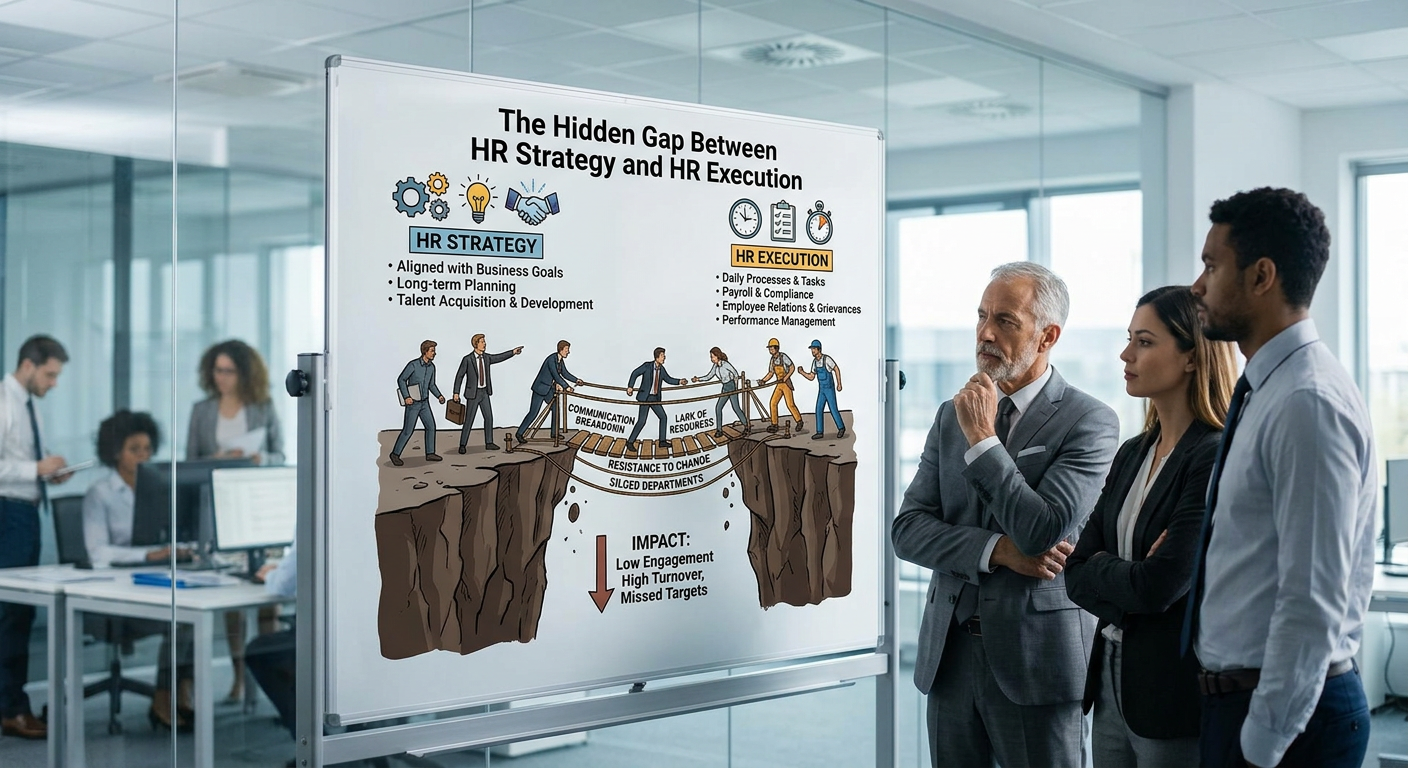
The Most Common Mistake: Tool Overload
Many small businesses build their tech stack reactively.
- a new tool is added to solve a problem
- another is added to fill a gap
- systems are layered without alignment
This leads to:
- fragmented data
- disconnected workflows
- increased manual work
According to research from Gartner, organizations struggle to gain value from HR technology when systems are not aligned and data is fragmented.
Source
Gartner HR Technology Research - https://www.gartner.com/en/human-resources
What a Good HR Tech Stack Looks Like
A strong HR tech stack is not defined by the number of tools.
It is defined by alignment.
Simple
- minimal overlap between systems
- clear purpose for each tool
Connected
- systems integrate with each other
- data flows consistently
Aligned With Processes
- tools support how your business operates
- workflows are consistent across systems
Scalable
- systems can grow with the business
- additional functionality can be added when needed
According to research from PwC, organizations that align technology with processes are more effective in managing their workforce and scaling operations.
Source
PwC Workforce of the Future - https://www.pwc.com/us/en/services/consulting/workforce-of-the-future.html
If This Is Happening in Your Business, Your Tech Stack May Be Overbuilt
These are common indicators of an overly complex HR tech stack:
- employee data exists in multiple systems
- workflows require manual handoffs
- reports need to be combined manually
- teams rely on spreadsheets alongside systems
- different tools are used for similar functions
If several of these are true, the issue is not missing tools.
It is too many tools without alignment.
How to Build the Right HR Tech Stack
Building the right stack is not about adding more.
It is about simplifying.
Start With Your Processes
Understand how HR operates before selecting tools.
Choose a Strong Core System
Your HRIS should serve as the foundation.
Add Only What You Need
Introduce new tools only when there is a clear gap.
Prioritize Integration
Ensure systems work together.
Review Regularly
As your business grows, revisit your tech stack to ensure it still fits.
How HRLaunch Technology Helps
At HRLaunch Technology, we help small and growing businesses build HR tech stacks that are simple, aligned, and scalable.
Many companies add tools over time without evaluating how they fit together, leading to fragmentation and inefficiency.
Our approach focuses on:
- evaluating your current HR processes and systems
- identifying gaps, overlap, and inefficiencies
- designing a streamlined tech stack aligned with your operations
- optimizing existing tools before recommending new ones
We work with businesses to ensure their HR technology supports how they actually operate, not the other way around.
When additional tools are needed, we guide selection and implementation in a way that supports long-term growth.
The goal is not to have more tools.
It is to have the right tools, working together effectively.
Final Thoughts
An effective HR tech stack does not need to be complex.
It needs to be aligned.
For small businesses, simplicity creates clarity.
And clarity creates efficiency.
The goal is not to build a large tech stack.
It is to build one that works.