Automation Is Not the Goal
Many organizations assume automation automatically improves HR.
More workflows.
More triggers.
More systems.
But automation without structure often creates more complexity instead of less.
The goal is not to automate everything.
It is to automate the right things.
What HR Automation Is Actually Meant to Do
Automation works best when it reduces:
- repetitive administrative work
- manual tracking
- process inconsistency
- unnecessary delays
It should create:
- efficiency
- consistency
- visibility
Not remove human judgment where it still matters.
The Best HR Processes to Automate
Some HR activities are highly repetitive and process-driven, making them ideal for automation.
1. Onboarding Workflows
Onboarding often includes repeatable steps such as:
- document collection
- account provisioning requests
- training assignments
- task notifications
Automation helps ensure consistency and reduces missed steps.
2. Compliance Tracking
Automation is highly effective for tracking:
- certification expirations
- required training completion
- policy acknowledgments
- document renewals
Instead of relying on manual reminders, systems can trigger notifications automatically.
3. Time-Off Requests and Approvals
Automating leave workflows helps:
- standardize approvals
- improve visibility
- reduce manual coordination
This also creates more accurate recordkeeping.
4. Employee Data Updates
Routine changes such as:
- address updates
- direct deposit changes
- title updates
can often be handled through employee self-service workflows.
5. Payroll Processing Support
While payroll still requires oversight, automation can help with:
- recurring payroll workflows
- deductions and calculations
- time integration
This reduces administrative effort and errors.
6. Reporting and Notifications
Automated reporting can improve visibility into:
- headcount changes
- turnover trends
- compliance deadlines
- onboarding completion
According to research from Gartner, organizations that automate routine HR workflows improve operational efficiency and reduce administrative burden.
Source
Gartner HR Technology Research - https://www.gartner.com/en/human-resources
7. Recruiting Workflow Coordination
Automation can support:
- interview scheduling
- candidate communication
- status updates
- workflow movement through hiring stages
This helps streamline recruiting operations.
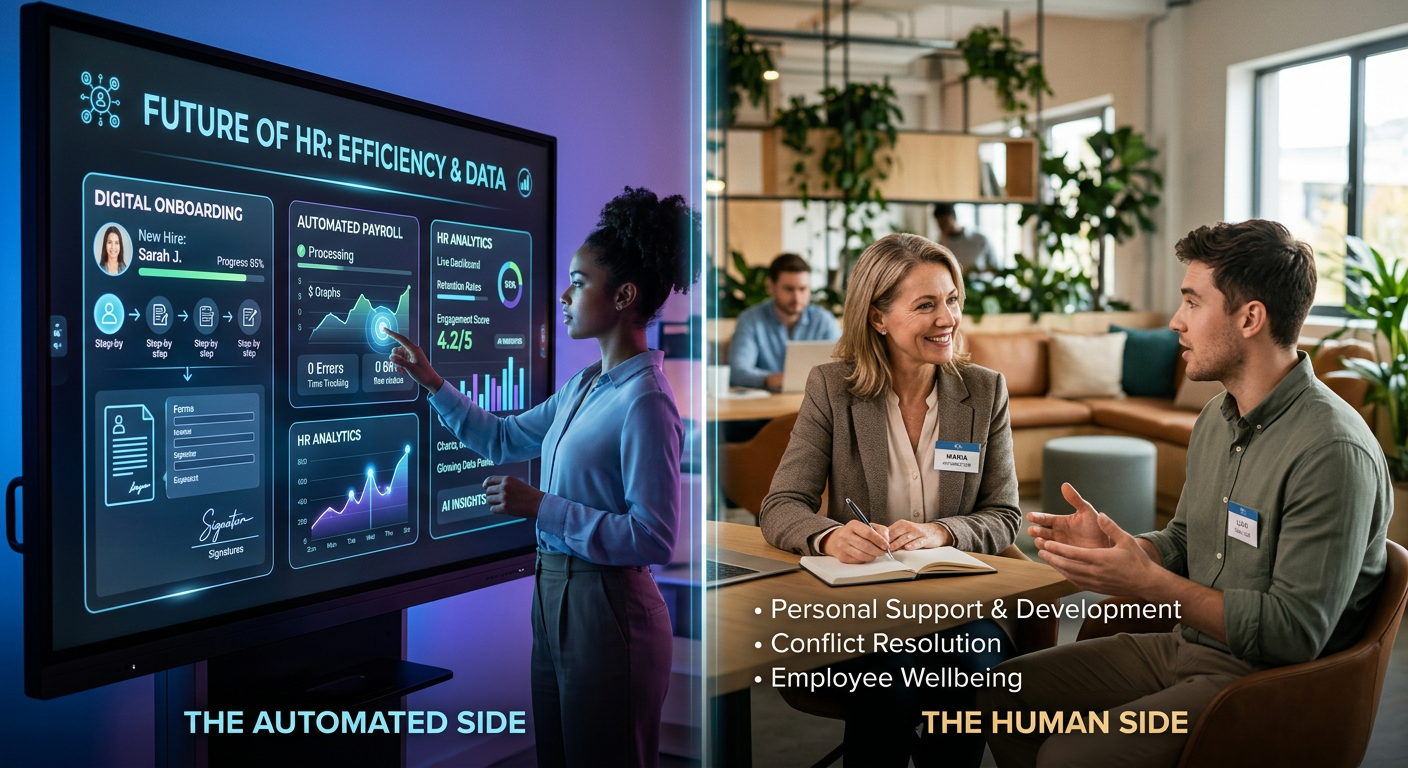
What Should Stay Manual
Not all HR activities should be automated.
Some processes require judgment, nuance, and human interaction.
1. Employee Relations Conversations
Sensitive conversations involving:
- performance concerns
- workplace conflict
- disciplinary discussions
should remain human-driven.
These situations require context and emotional intelligence.
2. Performance Coaching and Development
Systems can support tracking and documentation.
But meaningful development conversations should not be reduced to automated workflows.
Managers still need to engage directly with employees.
3. Final Hiring Decisions
Automation can support recruiting workflows.
But selecting the right candidate still requires:
- human judgment
- team alignment
- organizational fit evaluation
4. Strategic Workforce Decisions
Decisions around:
- organizational structure
- compensation strategy
- workforce planning
should remain strategic, not automated.
5. Culture and Employee Experience
Automation can improve efficiency.
But culture is built through:
- leadership
- communication
- consistency
- human interaction
Technology should support culture, not replace it.
The Biggest Mistake Companies Make With Automation
Many organizations automate broken processes.
This creates faster inefficiency instead of better operations.
Examples include:
- automating inconsistent workflows
- adding approvals that create bottlenecks
- layering automation on top of unclear processes
The process should be fixed before it is automated.
If This Is Happening in Your Business, Automation May Be Misaligned
These are common indicators of poor automation strategy:
- workflows feel overly complicated
- employees bypass systems
- approvals create delays
- manual work still exists alongside automation
- processes vary by department
If several of these are true, the issue is likely process design—not lack of automation.
How to Approach HR Automation the Right Way
Automation should support operations, not define them.
Start With Process Clarity
Before automating anything, ensure the workflow is:
- defined
- repeatable
- consistent
Automate Repetitive Work
Focus first on tasks that are:
- administrative
- predictable
- process-driven
Keep Human-Centered Processes Human
Do not automate areas requiring:
- judgment
- empathy
- strategic thinking
Review Automation Regularly
As the business grows, workflows should evolve with it.
According to research from Deloitte, organizations that align automation with operational design are more effective in improving workforce efficiency and employee experience.
Source
Deloitte Human Capital Trends - https://www2.deloitte.com/us/en/insights/focus/human-capital-trends.html
How HRLaunch Technology Helps
At HRLaunch Technology, we help organizations determine where automation creates value and where human processes should remain intentional.
Many businesses either underutilize automation or automate workflows that are not properly structured.
Our approach focuses on:
- evaluating current HR workflows and identifying inefficiencies
- determining which processes are best suited for automation
- aligning systems and workflows with business operations
- improving consistency without creating unnecessary complexity
We work with small, mid-sized, and growing businesses to build HR operations that are both efficient and practical.
The goal is not to automate everything.
It is to automate the right things in the right way.
Final Thoughts
Automation can significantly improve HR operations when applied correctly.
But not every process should become automated.
The most effective HR environments combine:
- operational efficiency
- structured workflows
- human judgment where it matters most
The goal is not maximum automation.
It is better HR operations.