The Common Assumption: One Will Solve Everything
When HR challenges arise, most organizations look for a solution in one of two places:
- software
- consulting
Some believe:
“We just need a better system.”
Others believe:
“We need someone to fix this.”
Both approaches can help.
But neither works on its own if the underlying issues are not understood.
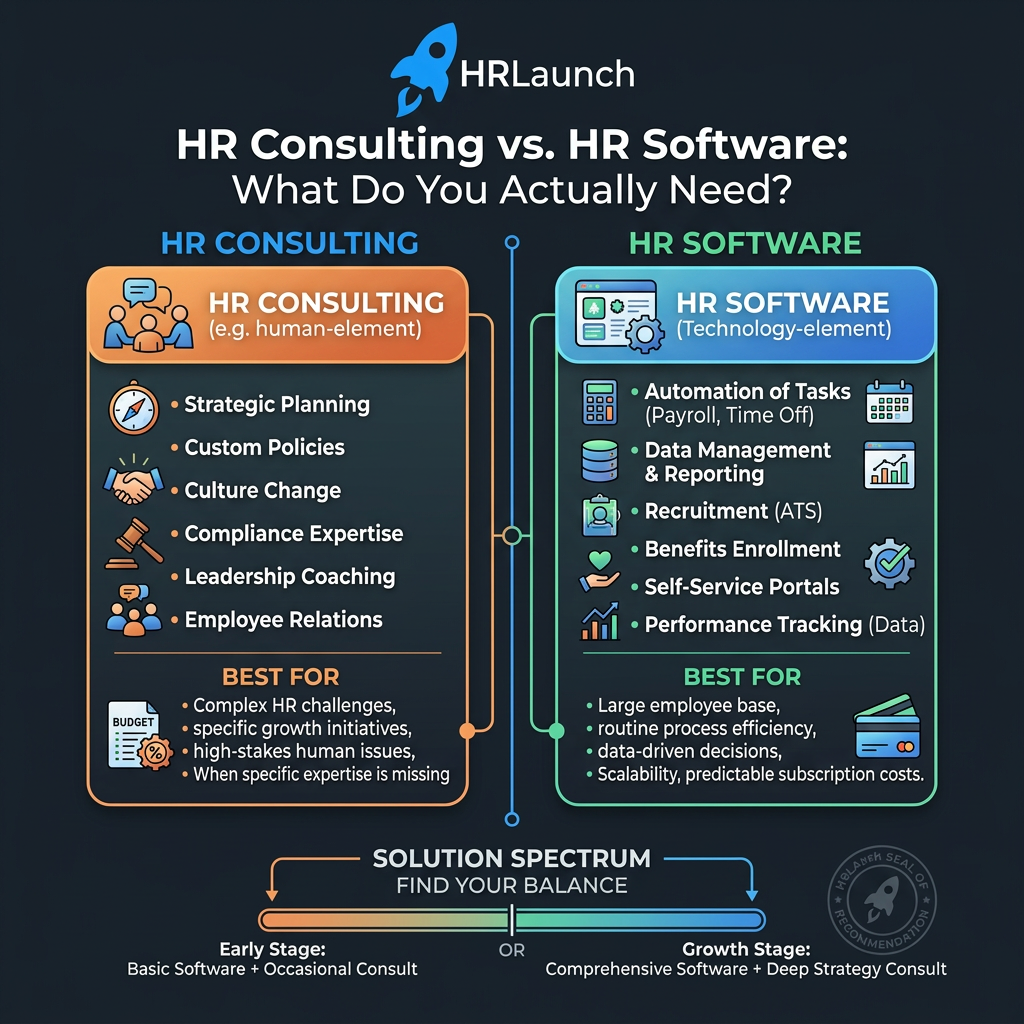
What HR Software Is Designed to Do
HR software, including HRIS platforms, is built to support and automate processes.
It is designed to:
- store and manage employee data
- standardize workflows
- improve reporting and visibility
- reduce manual administrative work
When implemented correctly, software can significantly improve efficiency.
But software does not create structure on its own.
What HR Consulting Is Designed to Do
HR consulting focuses on defining how HR should operate.
This includes:
- designing processes and workflows
- establishing policies and procedures
- improving compliance and documentation
- aligning HR with business needs
Consulting brings clarity and structure.
But without systems, execution can become manual and difficult to scale.
Where Companies Get It Wrong
Many organizations invest in one without addressing the other.
Relying Only on Software
When companies implement software without defining processes:
- workflows are misaligned
- manual work continues
- system adoption is low
The system reflects existing problems instead of solving them.
Relying Only on Consulting
When companies define processes without systems:
- execution relies on manual tracking
- consistency is harder to maintain
- scaling becomes difficult
Processes exist, but they are not supported.
The Real Answer: You Likely Need Both
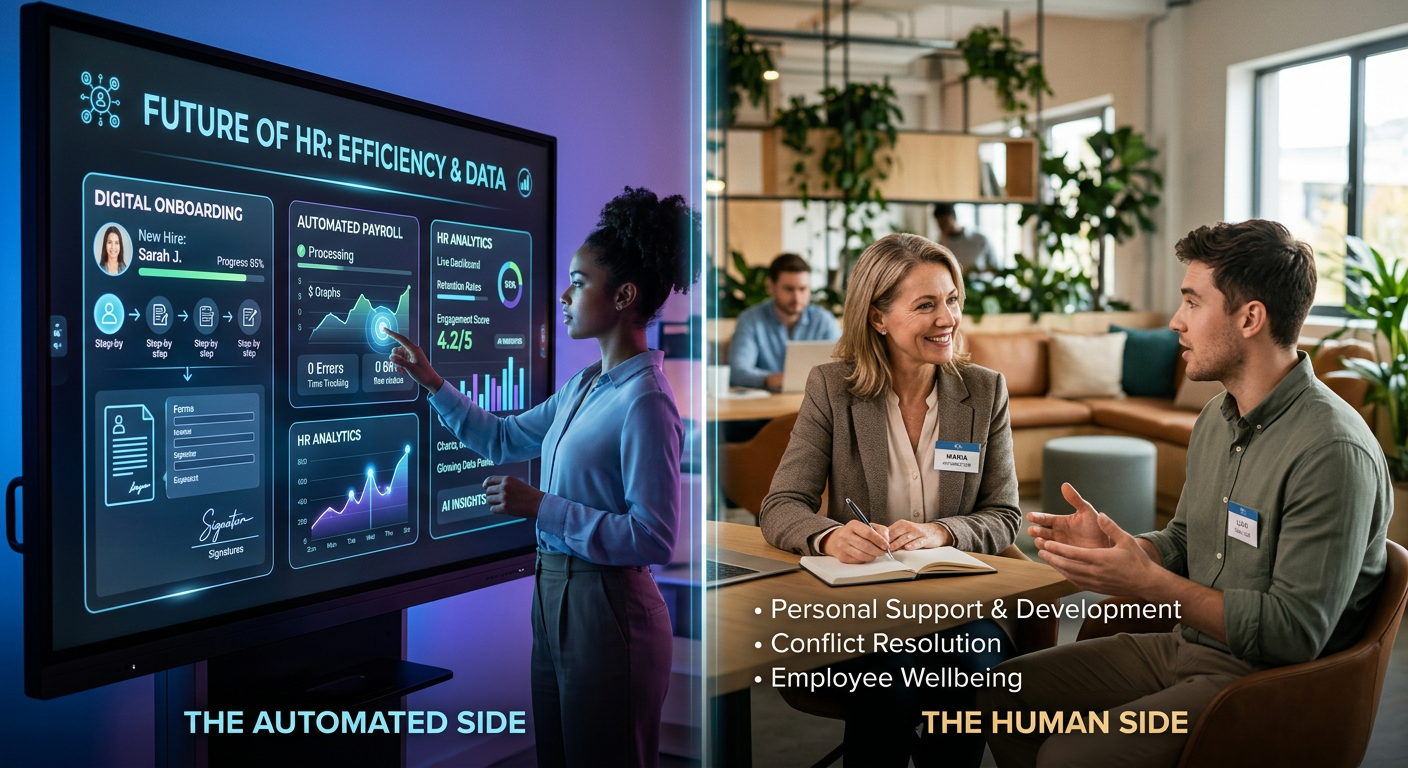
HR consulting and HR software serve different roles.
They are not interchangeable.
Consulting Defines the Structure
Consulting helps answer:
- how should HR processes work
- who owns each process
- what should be standardized
Software Enables the Execution
Software supports:
- automation of workflows
- centralized data management
- reporting and visibility
How to Know What You Need Right Now
The right starting point depends on where your organization is today.
You Likely Need Consulting First If:
- processes are unclear or inconsistent
- workflows vary by team or manager
- decisions are made without structure
- compliance feels reactive
In this case, adding software too early can create more complexity.
You Likely Need Software If:
- processes are defined but manual
- data is difficult to manage
- reporting is time-consuming
- HR operations are not scalable
Here, software can improve efficiency and visibility.
You Likely Need Both If:
- you are growing quickly
- current systems are not aligned with processes
- manual work and inconsistencies exist together
- decision-making is becoming more complex
Most growing organizations fall into this category.
The Risk of Choosing the Wrong Approach
Choosing the wrong approach can create additional challenges.
Implementing Software Too Early
- processes are built during configuration
- rework becomes necessary
- system adoption is inconsistent
Delaying Systems Too Long
- manual processes become harder to manage
- data becomes fragmented
- scalability becomes limited
According to research from Deloitte, organizations that align process design with technology implementation achieve better outcomes than those that approach them separately.
Source
Deloitte Human Capital Trends - https://www2.deloitte.com/us/en/insights/focus/human-capital-trends.html
If This Is Happening in Your Business, You May Be Misaligned
These are common indicators that the balance between consulting and software is off:
- systems are in place but not being fully used
- processes vary across teams
- manual work exists alongside automation
- data is inconsistent or difficult to report on
- HR decisions feel reactive
If several of these are present, the issue is not the tools or the support alone.
It is the lack of alignment between them.
How to Make the Right Decision
Before deciding what to invest in, take a step back.
Assess Your Current State
Understand:
- how HR processes actually function
- how systems are currently being used
- where gaps exist
Identify Root Causes
Determine whether challenges are related to:
- process
- data
- system limitations
- lack of structure
Align Before Expanding
Ensure processes and systems are aligned before adding new tools or services.
How HRLaunch Technology Helps
At HRLaunch Technology, we help organizations determine the right balance between HR consulting and HR technology based on their actual needs.
Many companies assume they need a system or external support without fully understanding the root of their challenges.
Our approach focuses on:
- evaluating current HR operations, processes, and systems
- identifying gaps in structure, consistency, and ownership
- designing practical, scalable HR workflows
- aligning systems with how the business actually operates
We work with small, mid-sized, and growing businesses to build structured HR foundations that support long-term growth and compliance.
When needed, we also support:
- HRIS selection and implementation
- system optimization and configuration
- ongoing alignment between processes and technology
The goal is not to push software or consulting independently.
It is to ensure both are used in the right way to support the business.
Final Thoughts
HR consulting and HR software are not competing solutions.
They serve different purposes.
One defines how HR should work.
The other enables it to function efficiently.
The most effective approach is not choosing one over the other.
It is understanding what your business needs first—and aligning both accordingly.