More HR Software Doesn't Automatically Create Better HR
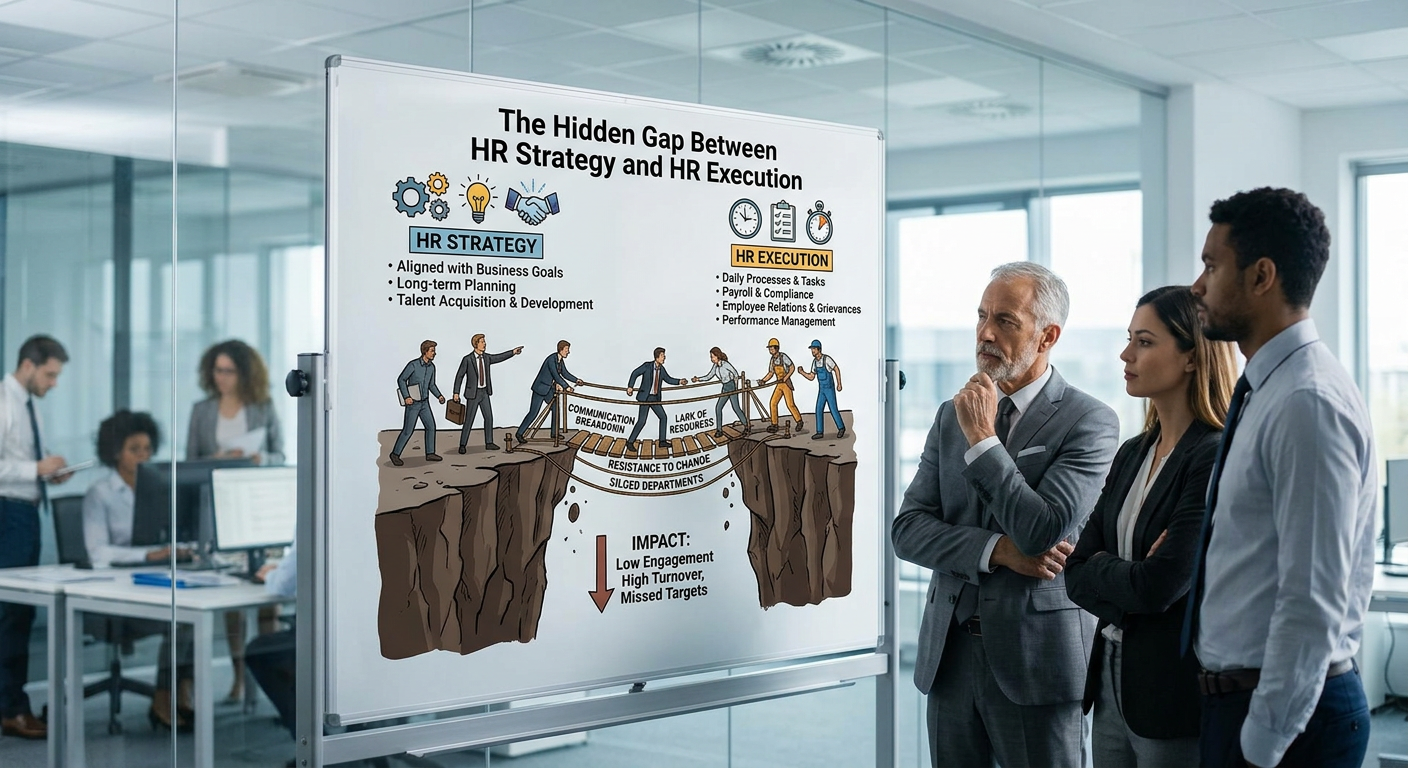
One of the most common mistakes growing businesses make is buying software to solve operational problems.
A new payroll platform.
A recruiting tool.
A performance management system.
A learning platform.
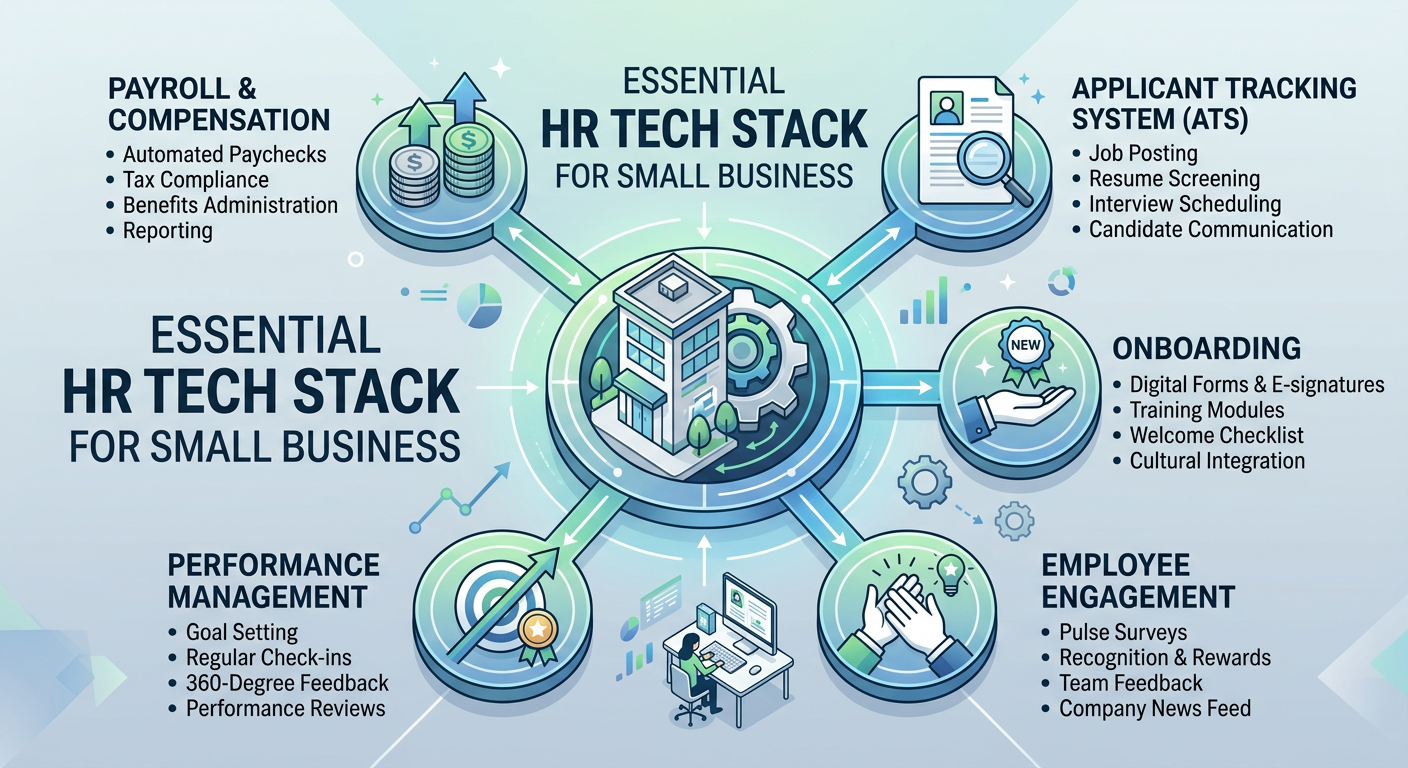
Before long, the company has six or seven different HR applications that don't communicate with one another.
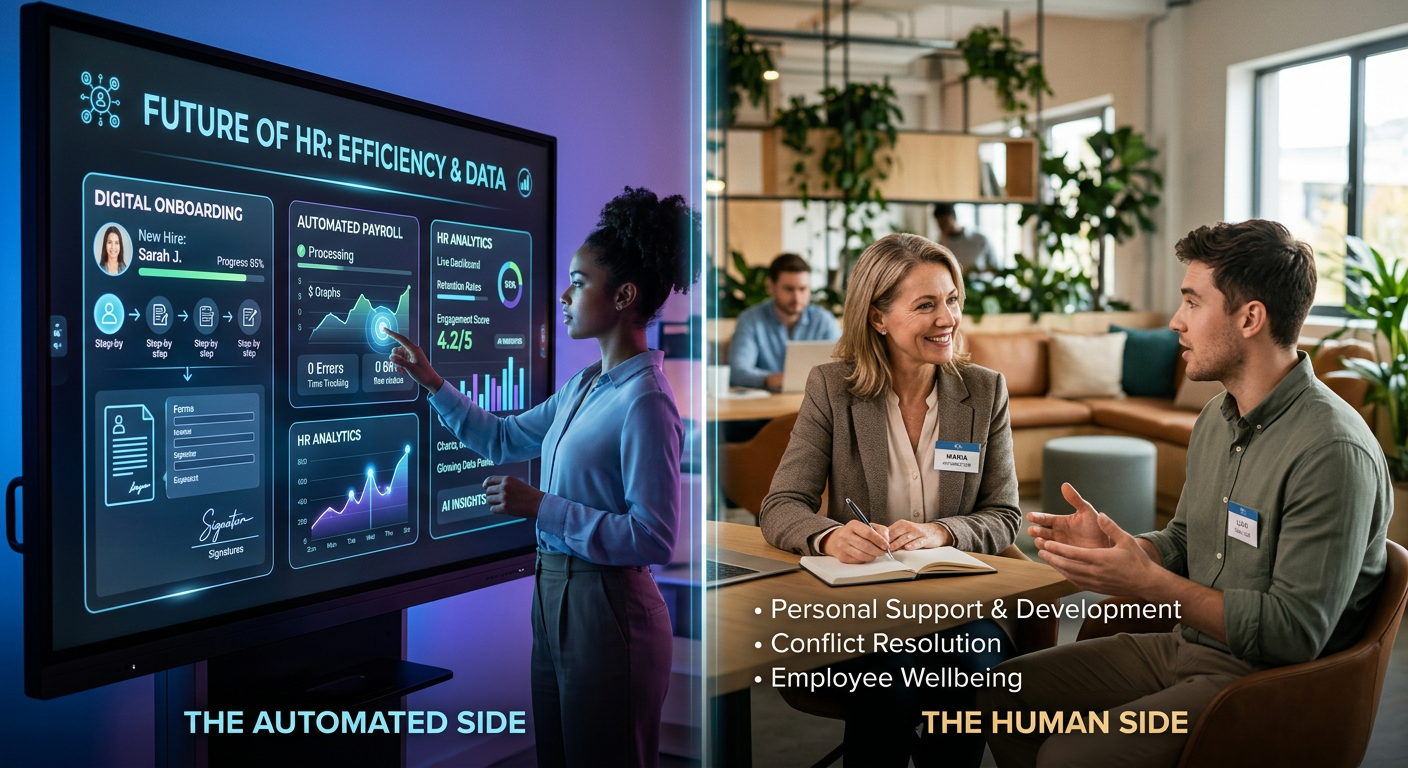
Technology should support your HR operations.
It should not become another operational challenge.
The key is implementing the right systems in the right order.
Start With Your Processes, Not Your Software
Before purchasing any HR technology, ask yourself:
- Are our HR processes documented?
- Do managers follow consistent workflows?
- Is our employee data organized?
- Do we know what problems we're trying to solve?
If the answer to most of these questions is "no," improving your processes should come before purchasing additional software.
Technology scales good processes.
It rarely fixes broken ones.
According to APQC, organizations with standardized business processes are more likely to achieve successful technology implementations because the technology supports consistent operations rather than compensating for inconsistent ones.
Stage 1: Payroll System
For many businesses, payroll is the first HR-related system implemented.
Its primary purpose is to:
- process employee pay
- calculate taxes
- manage deductions
- generate payroll records
While payroll is essential, it is important to remember:
A payroll system is not a complete HR system.
Many organizations make the mistake of trying to manage all HR activities through payroll software.
What to Look For
Choose a payroll platform that can:
- integrate with future HR systems
- support employee self-service
- handle tax compliance
- scale with business growth
Stage 2: Human Resource Information System (HRIS)
Once payroll is functioning well, the next investment should typically be an HRIS.
This becomes the central source of truth for employee information.
An HRIS manages:
- employee records
- onboarding
- organizational structure
- employee documents
- basic workflows
- reporting
Instead of storing information across spreadsheets and email folders, the HRIS centralizes workforce data.
According to Gartner, organizations with centralized workforce data improve reporting accuracy and workforce visibility.
Why the HRIS Comes Before Other Tools
Many businesses purchase recruiting software, learning systems, or performance management tools before establishing an HRIS.
That often creates:
- duplicate employee records
- inconsistent reporting
- disconnected workflows
The HRIS should become the foundation that other systems connect to.
Stage 3: Applicant Tracking System (ATS)
If hiring becomes frequent, an Applicant Tracking System is usually the next logical investment.
An ATS helps manage:
- job postings
- candidate communication
- interview workflows
- hiring documentation
- offer management
This improves consistency throughout the recruiting process.
When an ATS Makes Sense
An ATS becomes valuable when:
- multiple positions are open regularly
- hiring managers participate in recruiting
- candidate communication becomes difficult to manage
- recruiting metrics become important
If you hire only a few employees each year, your HRIS may already provide sufficient recruiting functionality.
Stage 4: Learning Management System (LMS)
As organizations grow, training becomes increasingly important.
A Learning Management System helps manage:
- employee onboarding courses
- compliance training
- leadership development
- continuing education
- certification tracking
This creates a more consistent learning experience.
According to the Association for Talent Development (ATD), organizations that invest in structured learning programs improve employee capability and long-term organizational performance.
Stage 5: Performance Management System
Performance management often begins with simple conversations and spreadsheets.
As the workforce grows, dedicated tools can support:
- performance reviews
- goal tracking
- manager feedback
- employee development planning
The technology should support meaningful conversations—not replace them.
Stage 6: Workforce Analytics and Reporting
Once your core systems are established, reporting becomes significantly more valuable.
A workforce analytics solution can provide visibility into:
- turnover
- hiring trends
- time to fill
- headcount
- employee movement
- workforce planning
Reliable reporting depends on accurate data from the systems implemented earlier.
Systems Many Companies Buy Too Early
One of the biggest mistakes is purchasing specialized HR software before the fundamentals are in place.
Examples include:
- employee engagement platforms
- recognition software
- advanced AI recruiting tools
- workforce planning software
These tools can provide value.
But only after the underlying HR foundation is mature.
Don't Buy Software to Solve Process Problems
Technology cannot compensate for:
- inconsistent hiring
- unclear ownership
- poor onboarding
- undocumented workflows
- outdated policies
If these problems exist today, they will likely exist after implementation.
The software simply makes them more visible.
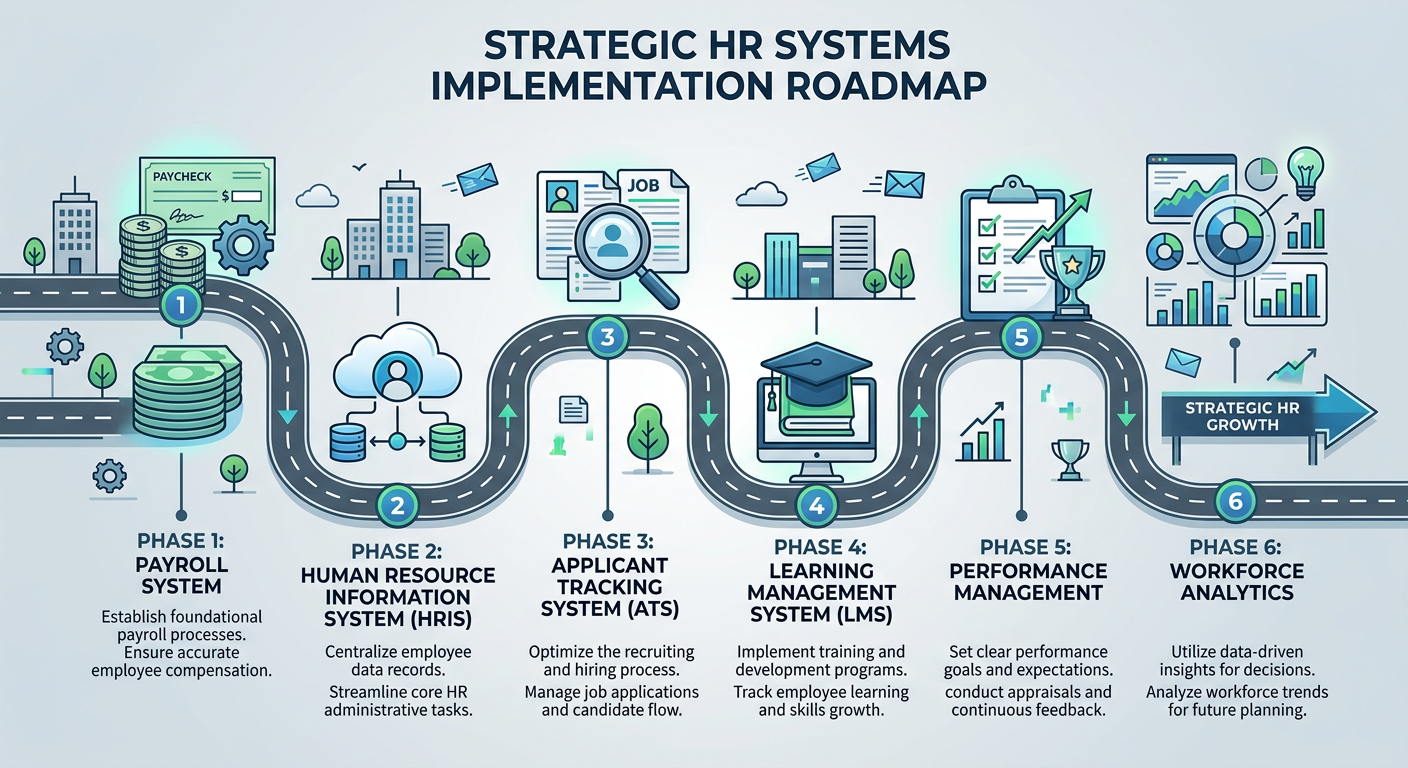
A Practical HR Technology Roadmap
For most small and mid-sized businesses, the progression looks like this:
Phase 1
- Payroll System
Phase 2
- Human Resource Information System (HRIS)
Phase 3
- Applicant Tracking System (ATS), if hiring volume justifies it
Phase 4
- Learning Management System (LMS)
Phase 5
- Performance Management
Phase 6
- Workforce Analytics and Advanced Reporting
Not every organization will need every system immediately.
The key is implementing technology as operational needs evolve.
If This Is Happening in Your Business, Your Technology May Be Out of Sequence
These are common indicators:
- employee information exists in multiple systems
- HR relies heavily on spreadsheets
- managers enter the same information more than once
- reports rarely match
- employees use several different HR platforms to complete basic tasks
- systems don't integrate with one another
If several of these sound familiar, it may be time to reassess your HR technology roadmap.
Recommendation Going Forward
The best HR technology strategy is not about buying the most software.
It is about implementing the right systems at the right time.
At HRLaunch Technology, we help organizations evaluate their current HR operations before recommending technology solutions.
We work with businesses to:
- assess HR readiness
- identify operational gaps
- select the right HRIS
- design scalable HR processes
- implement HR technology in the proper sequence
- optimize existing HR systems
Our goal is not to sell software.
It is to help businesses build an HR technology ecosystem that supports long-term growth, operational efficiency, and compliance.
Because the best HR systems are not the ones with the most features.
They are the ones that fit your business and are implemented on the right foundation.
Final Thoughts
Every growing business reaches a point where spreadsheets and manual processes are no longer enough.
The solution is not to purchase every HR tool available.
It is to build your HR technology stack intentionally.
Start with strong processes.
Implement foundational systems first.
Then expand your technology as your business grows.
Done correctly, each new system should simplify HR operations—not make them more complicated.
Sources
APQC – Process Classification Framework® (Human Capital Management)
https://www.apqc.org/process-frameworks/human-capital-management-pcf
Gartner – HR Technology Research
https://www.gartner.com/en/human-resources/topics/hr-technology
Association for Talent Development (ATD) – Research and Reports
HR Open Standards Consortium – HR Systems Integration Standards