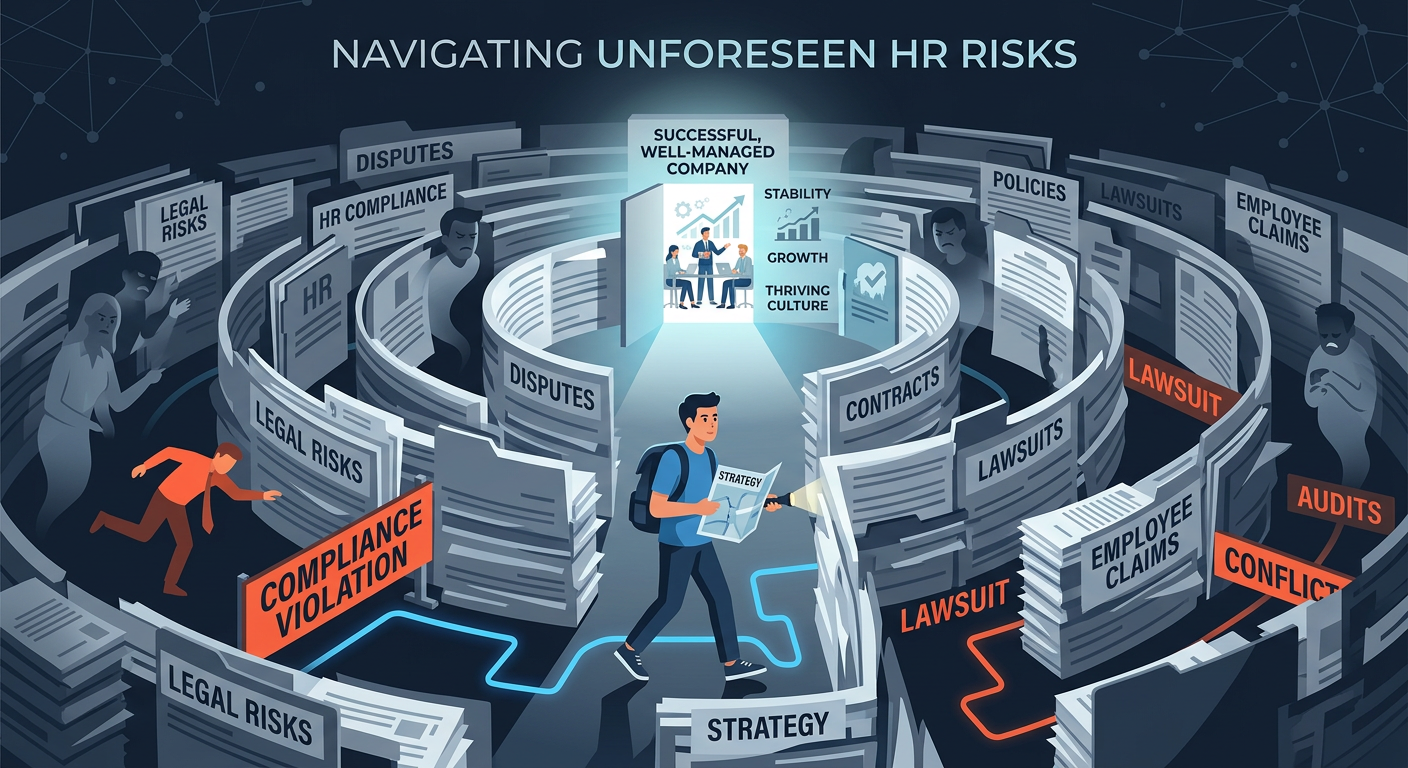
Not All Compliance Risks Are Obvious
When companies think about compliance, they usually think about laws:
FMLA.
ADA.
Minimum wage.
But many of the issues that create real risk don’t start with laws.
They start with everyday decisions.
Things that feel small.
Things that feel informal.
Things that seem manageable at the time.
Over time, those decisions become patterns—and that’s where risk builds.
Where Hidden Compliance Risk Comes From
In growing businesses, compliance issues often come from:
- inconsistency
- lack of documentation
- informal decision-making
- unclear processes
These don’t feel like compliance problems in the moment.
But they create exposure when:
- an employee raises a concern
- a manager handles something differently
- the business grows and patterns become harder to manage
Common Hidden Compliance Risks
These are some of the most common areas where we see compliance risk develop without companies realizing it.
Offer Letters That Don’t Match Reality
Offer letters are often treated as simple documents.
But inconsistencies can create problems.
Examples include:
- compensation terms that differ from actual pay practices
- unclear bonus structures
- missing or vague language
When expectations and reality don’t align, it can lead to disputes.
Job Titles That Don’t Reflect Actual Duties
Titles are often given based on perception rather than responsibility.
For example:
- “Manager” titles without direct reports
- senior titles without decision-making authority
This can create issues with employee classification under laws like the Fair Labor Standards Act (FLSA), which determines exempt vs non-exempt status based on job duties, not titles.
Source
U.S. Department of Labor FLSA Guidance - https://www.dol.gov/agencies/whd/flsa
Inconsistent PTO and Flexibility Practices
Small businesses often allow flexibility on a case-by-case basis.
Examples:
- one employee is allowed additional time off
- another is not
- exceptions are made without documentation
Over time, this creates:
- inconsistent treatment
- employee perception issues
- potential claims of unfair practices
Manager-Level Decisions Without Structure
Managers often make decisions about:
- promotions
- compensation adjustments
- performance actions
Without clear guidelines, these decisions can vary widely across the organization.
This creates risk when:
- similar situations are handled differently
- decisions are not documented
- patterns cannot be explained
Communication That Becomes “Policy”
In many organizations, communication happens through:
- Slack or Teams
- informal conversations
Over time, these communications can act like unofficial policies.
The problem is:
- they are not consistent
- they are not documented centrally
- they are difficult to reference later
Verbal Agreements With Employees
It is common for managers to make verbal commitments such as:
- “We’ll revisit your salary in six months”
- “You’ll be eligible for a promotion soon”
If these agreements are not documented, they can lead to:
- misunderstandings
- unmet expectations
- disputes
Shadow HR Processes
In growing companies, processes often develop outside of formal systems.
Examples include:
- onboarding handled differently by each manager
- performance feedback not tracked consistently
- employee changes not documented properly
These “shadow processes” create gaps between what is happening and what is recorded.
Why These Issues Become Compliance Problems
Individually, these situations may not seem significant.
But over time, they create patterns.
And patterns are what matter in compliance.
When organizations cannot demonstrate:
- consistency
- documentation
- clear decision-making
they become more vulnerable to:
- employee complaints
- audits
- legal challenges
According to the U.S. Equal Employment Opportunity Commission, consistent and well-documented practices are critical in defending against workplace-related claims.
Source
U.S. Equal Employment Opportunity Commission - https://www.eeoc.gov
If This Is Happening in Your Business, You’re at Risk
You may not have a visible compliance issue—but these are early indicators that risk is building.
- Employees are treated differently across teams
- Decisions are made without documentation
- Policies are not clearly defined or consistently applied
- Managers handle situations in their own way
- Employee expectations are set informally
- HR processes vary depending on the situation
If several of these are happening, the issue is not isolated.
It is structural.
The Root Issue: Lack of Structure
Most hidden compliance risks come down to the same core problem:
Lack of structure.
Without structure:
- processes vary
- decisions are inconsistent
- documentation is incomplete
Compliance is not just about following laws.
It is about creating consistent, repeatable processes.
How to Reduce Hidden Compliance Risk
Small businesses do not need complex systems to reduce risk.
They need consistency.
Define Clear Processes
Ensure key HR activities are structured:
- hiring
- onboarding
- performance management
- compensation decisions
Document Decisions
Create a record of:
- hiring decisions
- promotions
- performance actions
Standardize Manager Practices
Provide guidance so managers handle situations consistently.
Centralize Information
Keep policies, documentation, and employee data in one place.
How HRLaunch Technology Helps
At HRLaunch Technology, we help organizations identify and address hidden compliance risks by bringing structure to HR processes.
Our approach includes:
- HRIS readiness assessments
- process and workflow alignment
- system configuration for consistency and tracking
- ongoing HR technology advisory
We focus on helping businesses move from informal processes to structured operations.
Final Thoughts
Not all compliance risks are obvious.
Many of the most significant issues start quietly—through everyday decisions that feel manageable at the time.
As businesses grow, those decisions become patterns.
And patterns create risk.
The goal is not just to stay compliant.
It is to build structure that prevents problems before they appear.