Why Compliance Breaks in Small Businesses
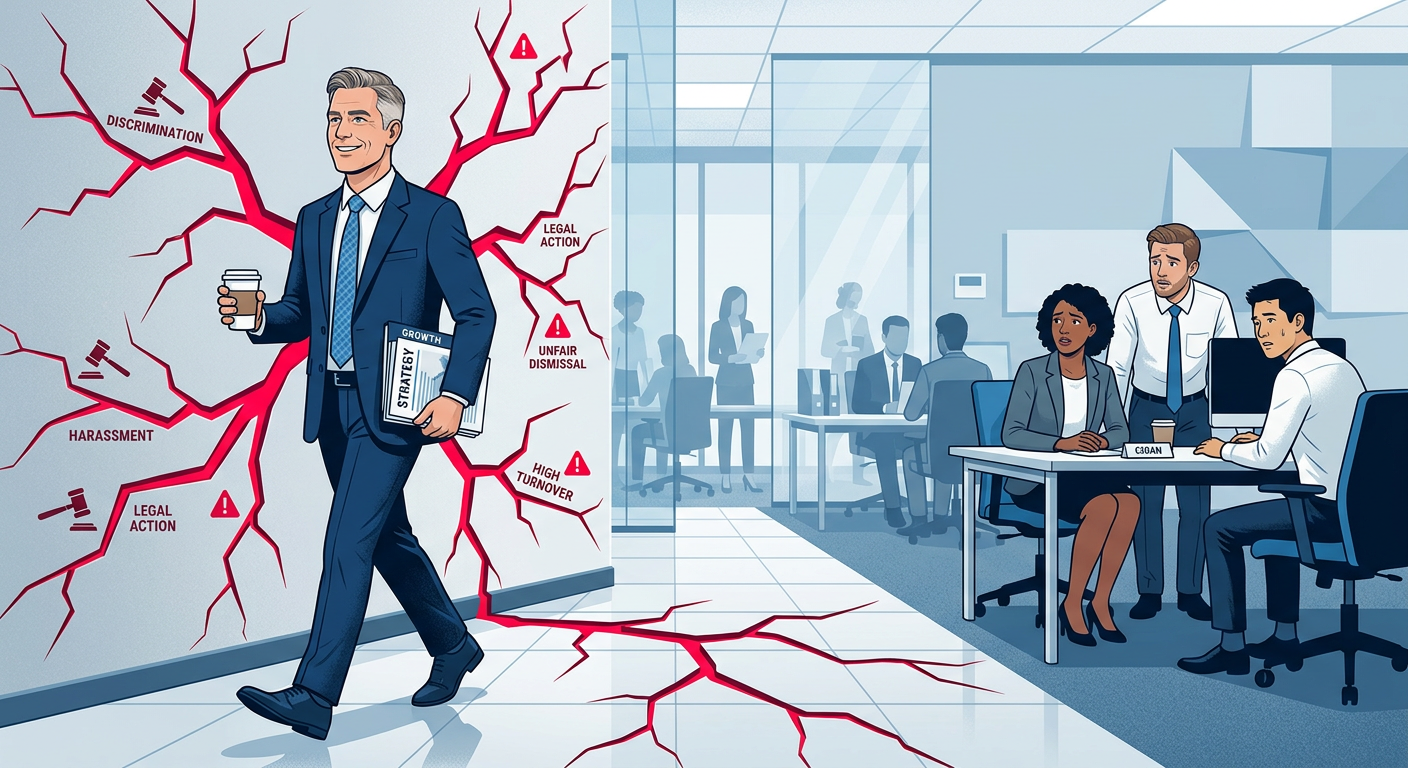
Most small businesses don’t ignore compliance intentionally.
It usually breaks down because:
- there is no clear ownership
- processes are informal
- tracking is manual
- priorities shift as the business grows
At 5–10 employees, this may not create immediate issues.
At 25–50 employees, it starts to.
At 75+, it becomes difficult to manage without structure.
The Shift From Reactive to Operational Compliance
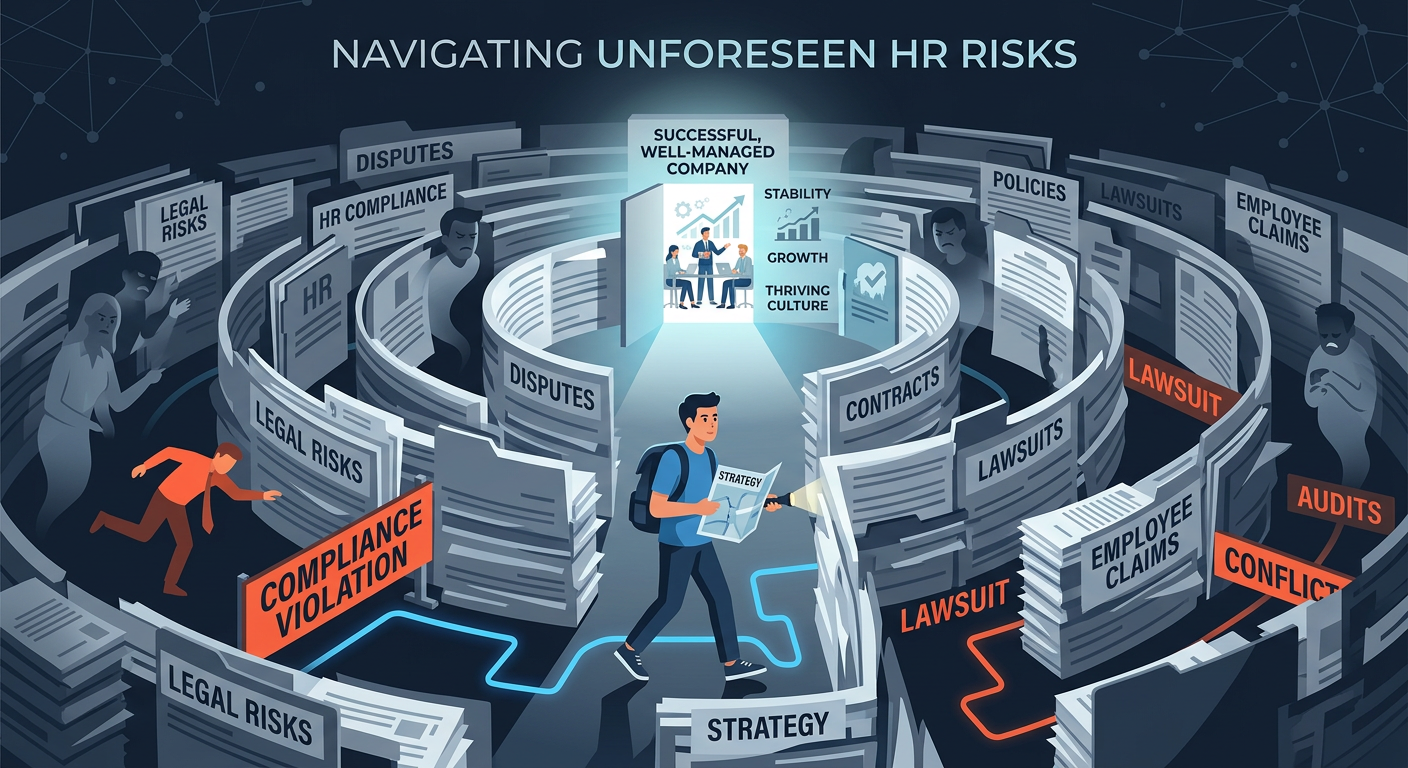
Many organizations operate in a reactive state:
- responding to issues after they occur
- scrambling to find documents
- relying on memory and manual reminders
Operational compliance looks different.
It is structured, consistent, and built into how the business runs.
Instead of asking:
“Did we remember to do this?”
You can rely on:
“The system and process ensure it happens.”
What Operational Compliance Actually Looks Like
Small businesses do not need overly complex systems to manage compliance.
They do need structure in a few key areas:
- clear ownership of HR processes
- centralized employee data
- defined workflows
- consistent documentation
- visibility into compliance status
According to the U.S. Department of Labor, employers are responsible for maintaining accurate records and complying with federal labor standards as their workforce grows.
The 5 Core Areas Every Small Business Must Control
Instead of trying to manage every compliance requirement individually, businesses should focus on controlling a few core areas.
1. Employee Data and Documentation
This includes:
- I-9 forms
- tax documents
- employee records
- policy acknowledgments
Without centralized and accurate data, compliance becomes difficult to track.
2. Policy Management (Employee Handbook)
Policies should be:
- clearly documented
- regularly updated
- consistently enforced
An outdated or missing handbook creates gaps in expectations and compliance alignment.
3. Hiring and Interview Practices
Hiring processes should be structured to ensure:
- consistent interview questions
- fair candidate evaluation
- compliance with anti-discrimination laws
Unstructured hiring increases risk.
4. Training and Acknowledgments
Organizations should track:
- anti-harassment training
- safety training
- role-specific training
- policy acknowledgments
Without tracking, it is difficult to demonstrate compliance.
5. Leave and Benefits Tracking
This includes:
- FMLA or applicable leave tracking
- PTO policies
- benefits eligibility and enrollment
As companies grow, tracking these manually becomes increasingly difficult.
Manual vs System-Driven Compliance
The difference between struggling with compliance and managing it effectively often comes down to how it is tracked.
Manual Compliance
- spreadsheets
- email reminders
- scattered documentation
- reliance on individuals
System-Driven Compliance
- centralized data
- automated reminders
- structured workflows
- real-time reporting
According to research from Gartner, organizations that leverage HR technology effectively are better positioned to manage compliance and reduce operational risk.
Source
Gartner HR Technology Research - https://www.gartner.com/en/human-resources
A Simple Compliance Framework
Small businesses can simplify compliance by focusing on a repeatable framework:
Track
All required data, documents, and deadlines are captured in one place.
Trigger
The system identifies upcoming deadlines or required actions.
Notify
Managers and employees are alerted automatically.
Report
HR and leadership can see compliance status at any time.
This approach reduces reliance on memory and manual follow-up.
When a System Becomes Necessary
There is a point where manual processes are no longer sustainable.
Signs include:
- difficulty tracking employee data
- missed deadlines or incomplete documentation
- inconsistent processes across teams
- limited visibility into compliance status
At this stage, an HR system can help centralize and automate compliance processes.
HR Compliance Checklist for Small Businesses
Use this checklist to evaluate your current compliance structure:
Employee Data
- Do you have all employee records centralized?
- Are documents complete and up to date?
Policies
- Do you have a current employee handbook?
- Are policies aligned with your actual operations?
Hiring
- Are interview processes structured and consistent?
- Are hiring decisions documented?
Training
- Are required trainings assigned and tracked?
- Do you have records of completion?
Leave and Benefits
- Are leave requests tracked consistently?
- Do you understand applicable requirements (FMLA, state laws)?
If the answer to several of these is “no,” your compliance process may need structure.
How HRLaunch Technology Helps
At HRLaunch Technology, we help small businesses build structured HR systems and processes that support compliance as they grow.
Our approach includes:
- HRIS readiness assessments
- compliance workflow alignment
- HR system configuration
- ongoing HR technology advisory
We focus on turning compliance into an operational process rather than a reactive one.
Final Thoughts
Compliance does not need to be complex.
But it does need to be structured.
Small businesses that build simple, scalable compliance processes early are better positioned to grow without unnecessary risk.
The goal is not just to stay compliant.
It is to build systems that make compliance part of how your business operates every day.