The Default Reaction: “We Need a New System”
When HR processes start to break down, the conclusion often comes quickly:
“We need a new system.”
It feels like the logical next step.
- reporting is inconsistent
- workflows are inefficient
- manual work is increasing
The system becomes the focus.
But in many cases, the system is not the problem.
Why This Assumption Happens
HR systems sit at the center of operations.
So when something goes wrong, they are the most visible point of failure.
Common assumptions include:
- the system cannot handle current needs
- the platform is outdated
- another tool would solve the issue
In reality, these symptoms often come from something else.
What’s Actually Causing the Problem
Before replacing a system, it is important to understand what is driving the friction.
In many organizations, the root causes include:
Poor System Configuration
Even strong HR systems require proper setup.
Without it:
- workflows do not align with actual processes
- required fields may be missing
- reporting structures are incomplete
This leads to inefficiencies that appear to be system limitations.
Unclear or Undefined Processes
Systems are only as effective as the processes they support.
When processes are unclear:
- workflows become inconsistent
- approvals are handled differently
- manual work increases
The system reflects the confusion.
Inconsistent Data
Data issues are one of the most common drivers of frustration.
Examples include:
- inconsistent job titles
- missing employee information
- duplicate records
According to research from Gartner, organizations struggle to use HR systems effectively when data is not standardized and aligned.
Source
Gartner HR Technology Research - https://www.gartner.com/en/human-resources
Lack of System Ownership
Many organizations do not have clear ownership of their HR system.
This leads to:
- inconsistent updates
- lack of maintenance
- underutilized features
Over time, the system becomes less effective.
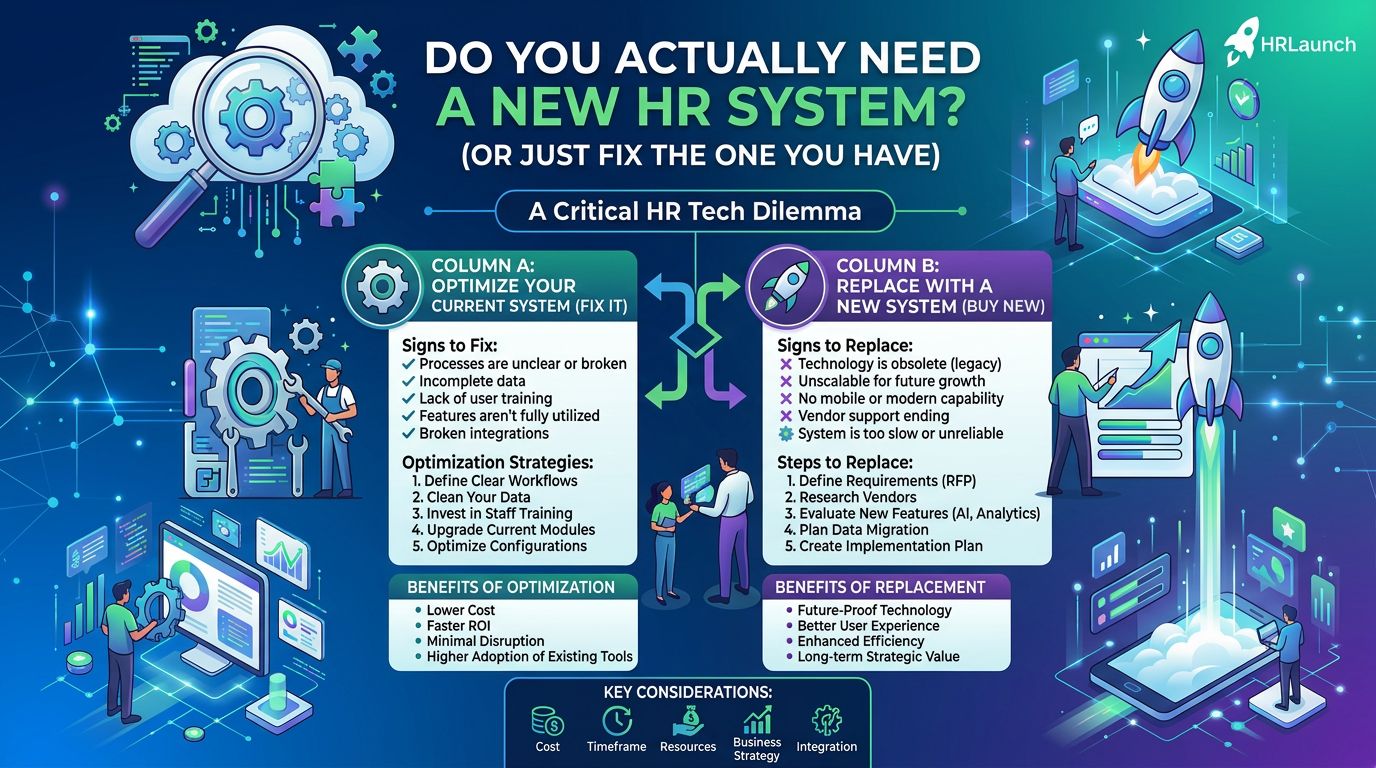
When You Actually Need a New HR System
There are cases where replacing your system is the right decision.
Common indicators include:
The System Cannot Support Your Business Model
If your organization has outgrown the system’s capabilities, it may no longer be a fit.
Examples:
- inability to support multi-state or global operations
- lack of integration with other key systems
- limited scalability
Critical Features Are Missing
If the system cannot support essential functions such as:
- payroll integration
- reporting capabilities
- compliance tracking
then replacement may be necessary.
The Vendor No Longer Meets Your Needs
This includes:
- lack of support
- limited product updates
- poor user experience
At that point, the issue extends beyond configuration.
When You Should Fix Your Current System
In many cases, replacing the system is not required.
Instead, organizations benefit from optimizing what they already have.
The System Has Features You Are Not Using
Many HR systems are underutilized.
If key features exist but are not configured or used, optimization is the better path.
Processes Are Happening Outside the System
If teams are relying on:
- spreadsheets
- manual tracking
the issue is not the system.
It is how it is being used.
Data Is Inconsistent or Unreliable
Fixing data structure often resolves reporting and workflow issues.
Replacing the system without fixing data will carry the same problems forward.
Workflows Do Not Match How the Business Operates
Reconfiguring workflows to align with actual processes can significantly improve efficiency.
If This Is Happening in Your Business, You May Not Need a New System
These are common signs that your current system can be fixed:
- reports are inconsistent but data is incomplete
- manual work exists alongside system workflows
- features are not fully utilized
- processes vary across teams
- system usage is inconsistent
If several of these are true, the issue is likely optimization, not replacement.
The Cost of Getting This Wrong
Replacing an HR system is a significant investment.
It includes:
- implementation costs
- time and resource commitment
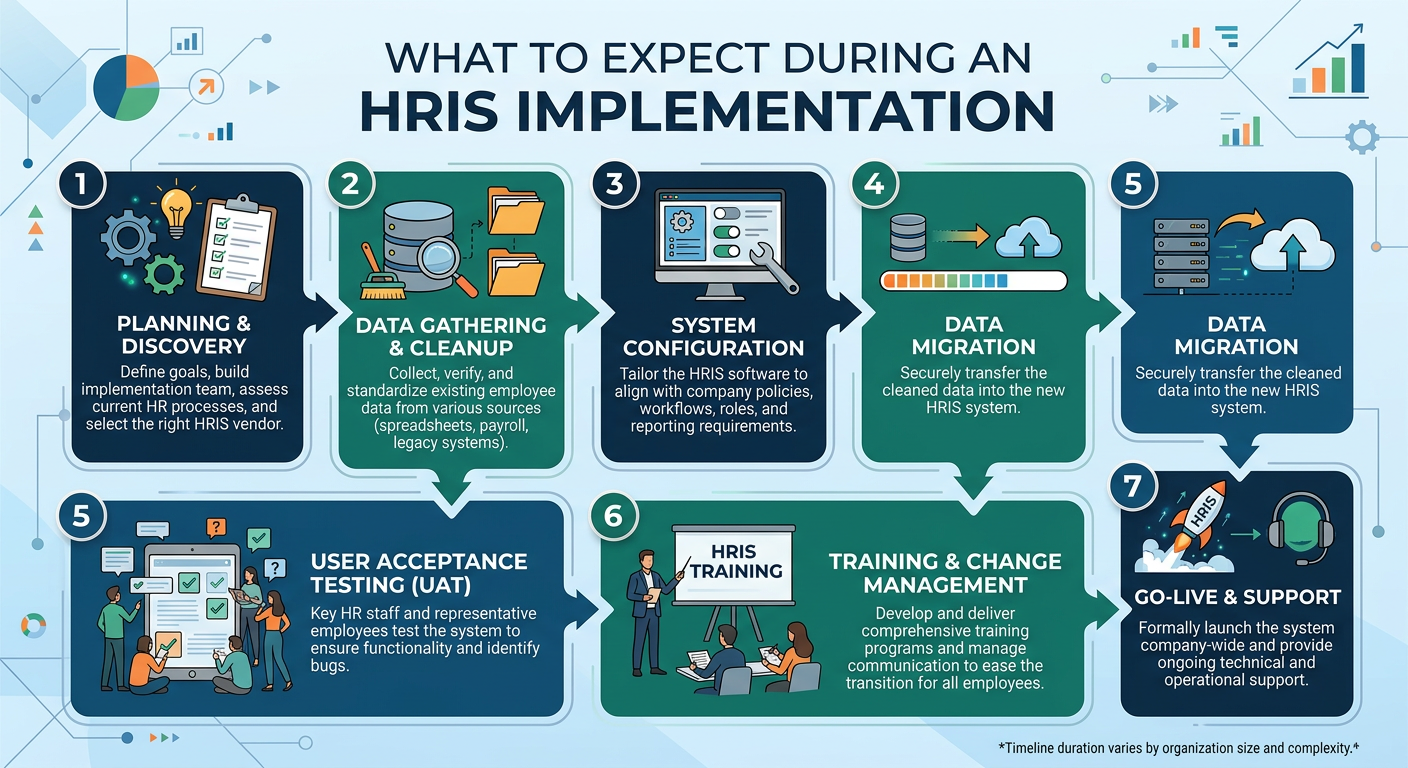
- data migration
- training and change management
According to Deloitte, organizations that do not address process and data issues before implementation often experience delays and reduced value from new systems.
Source
Deloitte Human Capital Trends - https://www2.deloitte.com/us/en/insights/focus/human-capital-trends.html
If the underlying issues are not resolved, a new system will produce the same results.
How to Make the Right Decision
Before deciding to replace your HR system, take a step back.
Assess Your Current State
Understand:
- how your processes actually work
- where data is stored
- how the system is being used
Identify the Root Causes
Determine whether issues are related to:
- configuration
- processes
- data
- system limitations
Evaluate System Capabilities
Compare your needs with what your current system can support.
Consider Optimization First
If the system can meet your needs with proper configuration, optimization is often the better path.
How HRLaunch Technology Helps
At HRLaunch Technology, we work with organizations that are trying to determine whether they need a new HR system or need to fix what they already have.
In many cases, the challenge is not the platform.
It is the lack of structure behind it.
Our approach focuses on building a strong HR foundation before recommending technology changes.
This includes:
- evaluating current HR processes and workflows
- identifying gaps in structure, consistency, and ownership
- improving how HR operations function day to day
- aligning systems with how the business actually operates
We support small, mid-sized, and growing businesses in building practical, scalable HR operations, even when a single person or an operations-led team manages HR.
When a system is already in place, we help optimize it by:
- aligning workflows
- improving data structure
- increasing system utilization
When a system is not in place, we guide organizations through:
- selecting the right HRIS
- implementing it in a way that supports real operations
- ensuring long-term alignment with business needs
The goal is not just to implement or fix a system.
It is to build an HR function that is structured, consistent, and capable of supporting growth.
Final Thoughts
Not every HR problem requires a new system.
In many cases, the issue is not the tool.
It is how the tool is being used.
Replacing a system without addressing underlying issues often leads to the same challenges.
Clarity comes first.
Then the right decision becomes clear.