Why Moving Fast Often Creates Bigger Problems
When organizations evaluate HR systems, there is often pressure to move quickly.
The goal is clear:
Get a system in place.
Improve efficiency.
Solve immediate challenges.
But in many cases, decisions are made before the organization fully understands its current state.
It feels faster.
Until it isn’t.
What “Guessing” Looks Like in HR Decisions
Guessing doesn’t always feel like guessing.
It often shows up as:
- selecting a system based on a demo rather than actual needs
- choosing tools because another company uses them
- implementing software without clearly defined workflows
- relying on assumptions instead of data
These decisions may seem reasonable in the moment.
But without clarity, they introduce risk.
The Real Cost of Guessing
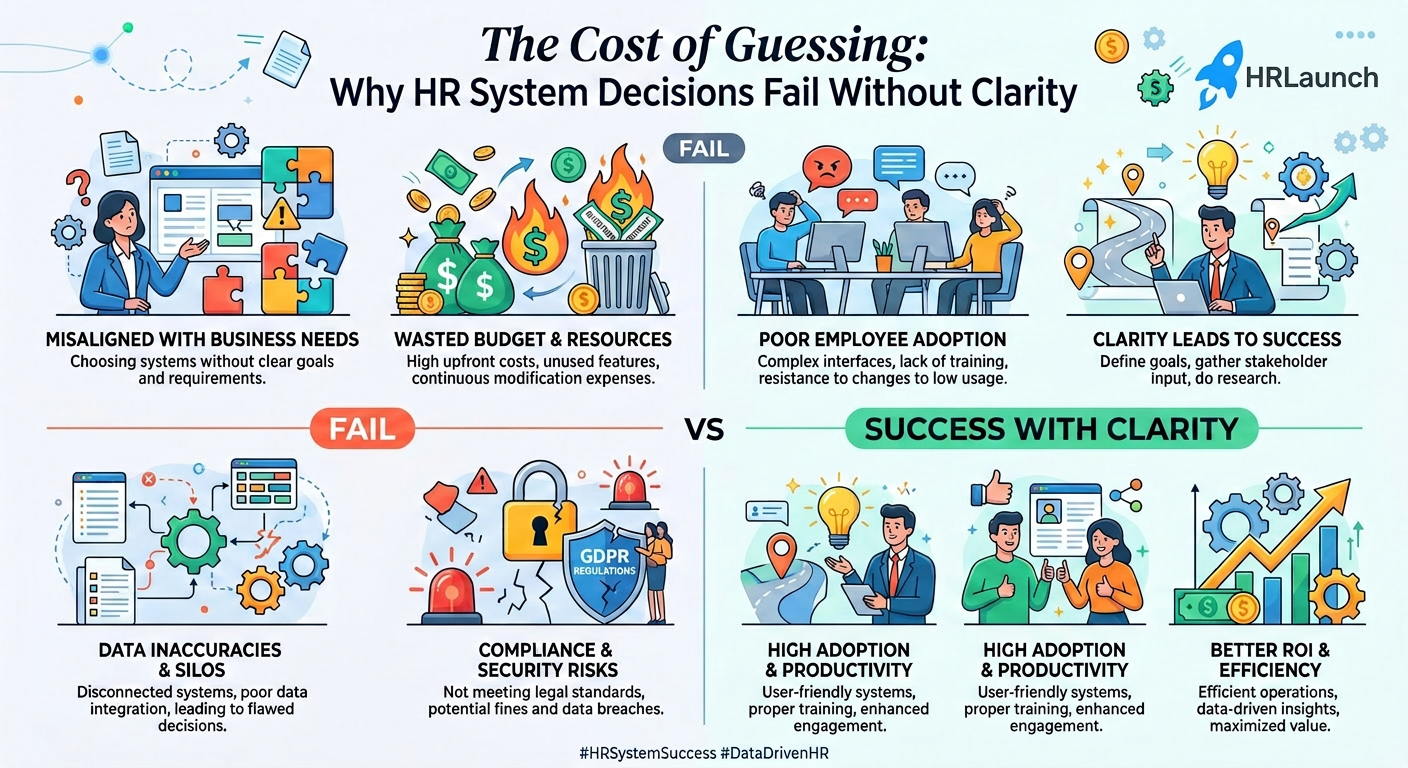
The impact of these decisions typically appears after implementation.
Duplicate Tools
Without a clear understanding of existing systems, organizations often end up with overlapping tools.
This leads to:
- multiple systems performing similar functions
- increased costs
- confusion about where data lives
Misaligned Workflows
When workflows are not defined upfront, systems are configured based on assumptions.
The result:
- processes that don’t match how the business actually operates
- manual workarounds
- inconsistent execution across teams
Reporting Inconsistencies
Without structured data and clear system alignment:
- reports do not match across systems
- data becomes difficult to trust
- decision-making is impacted
According to research from PwC, organizations often struggle to extract meaningful insights from HR technology when data structures are not clearly defined.
Source
PwC Workforce of the Future - https://www.pwc.com/us/en/services/consulting/workforce-of-the-future.html
Re-Implementation Costs
One of the most expensive outcomes is having to reconfigure—or replace—a system.
This includes:
- additional implementation costs
- lost time
- disruption to operations
- employee frustration
According to Gartner, many HR technology initiatives fail to deliver expected value due to poor planning and lack of alignment with business processes.
Source
Gartner HR Technology Research - https://www.gartner.com/en/human-resources
Why This Keeps Happening
Even experienced organizations fall into this pattern.
Common reasons include:
- pressure to move quickly
- lack of internal HR technology expertise
- belief that software will solve operational issues
- underestimating the importance of current-state analysis
The focus becomes implementation—not understanding.
What “Clarity” Actually Means
Clarity is not just about knowing you need a system.
It is about understanding how your organization currently operates.
This includes:
- mapping HR processes
- identifying where data is stored
- understanding system dependencies
- defining ownership of HR functions
Without this foundation, systems are built on assumptions.
If This Is Happening in Your Business, You’re Guessing
These are common indicators that decisions are being made without sufficient clarity:
- you selected a system before mapping your workflows
- you are unsure where key HR data is stored
- multiple tools are being used for similar functions
- reporting results differ across systems
- processes vary depending on the team or manager
- vendor recommendations are driving decisions more than internal needs
If several of these are true, the issue is not the system.
It is the lack of current-state understanding.
The Difference Between Rushed and Deliberate Decisions
Rushed Decisions
- driven by urgency
- based on assumptions
- focused on speed
- lead to rework
Deliberate Decisions
- based on clear understanding
- aligned with business operations
- structured and intentional
- reduce long-term cost and complexity
Deliberate decisions may take more time upfront—but they prevent significantly more effort later.
How to Avoid the Cost of Guessing
Organizations can reduce risk by focusing on a few key steps before making HR system decisions.
Conduct a Current-State Review
Understand:
- existing processes
- current systems
- data structure
Define Workflows Before Configuration
Ensure processes are clearly documented before selecting or implementing a system.
Centralize Data and Ownership
Establish:
- a single source of truth
- clear accountability for HR systems
Make Decisions Based on Fit, Not Assumptions
Choose systems based on how your organization operates—not how others operate.
How HRLaunch Technology Helps
At HRLaunch Technology, we help organizations make HR system decisions with clarity and confidence.
Our approach includes:
- HRIS readiness assessments
- current-state analysis
- vendor-neutral system evaluation
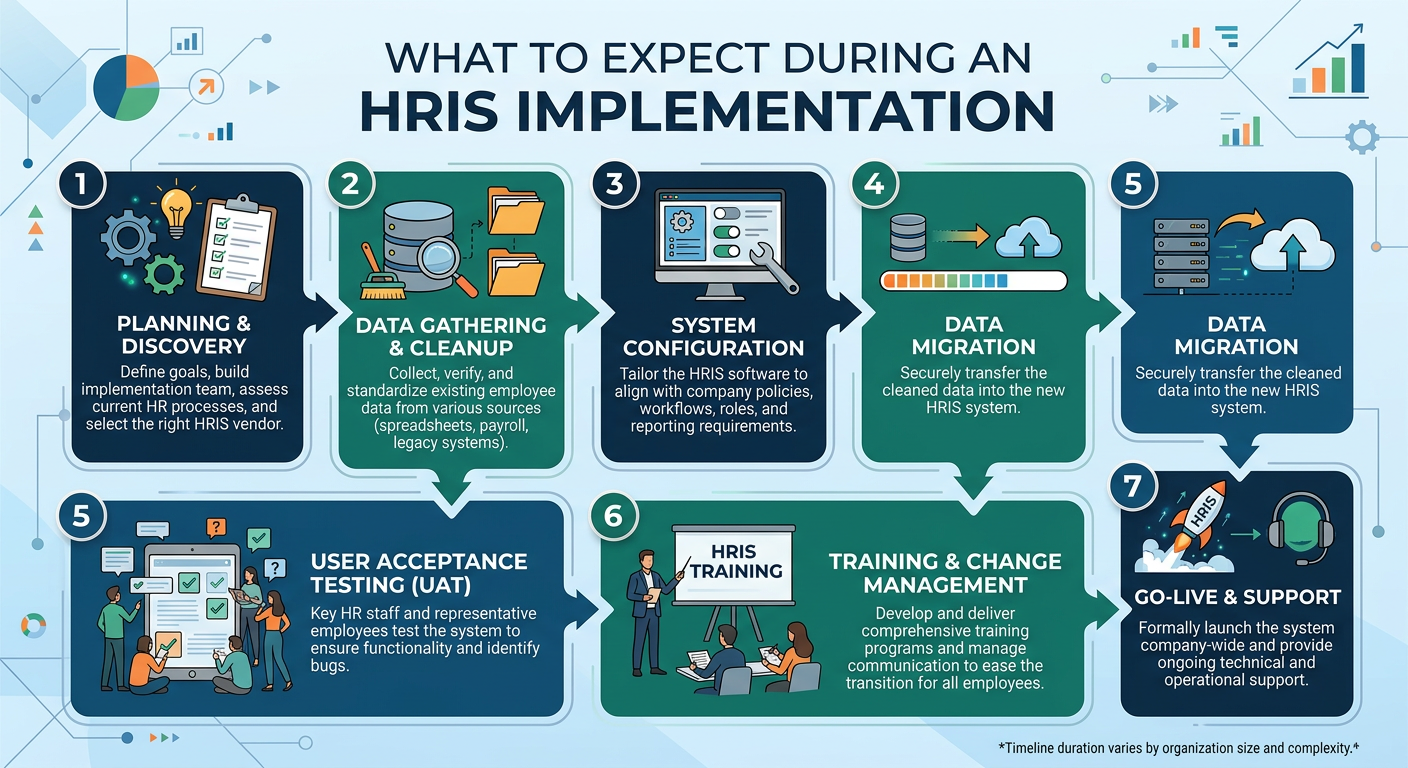
- implementation planning and support
We focus on ensuring decisions are deliberate, not rushed.
Final Thoughts
Guessing feels faster in the moment.
But it often leads to:
- inefficiencies
- additional costs
- unnecessary complexity
Clarity upfront reduces correction later.
Deliberate decisions outperform rushed ones—every time.