Where HRIS Implementations Start to Break Down
Most HRIS implementations begin with strong intentions.
The system is selected.
The contract is signed.
A timeline is established.
From there, many organizations assume the rest is straightforward.
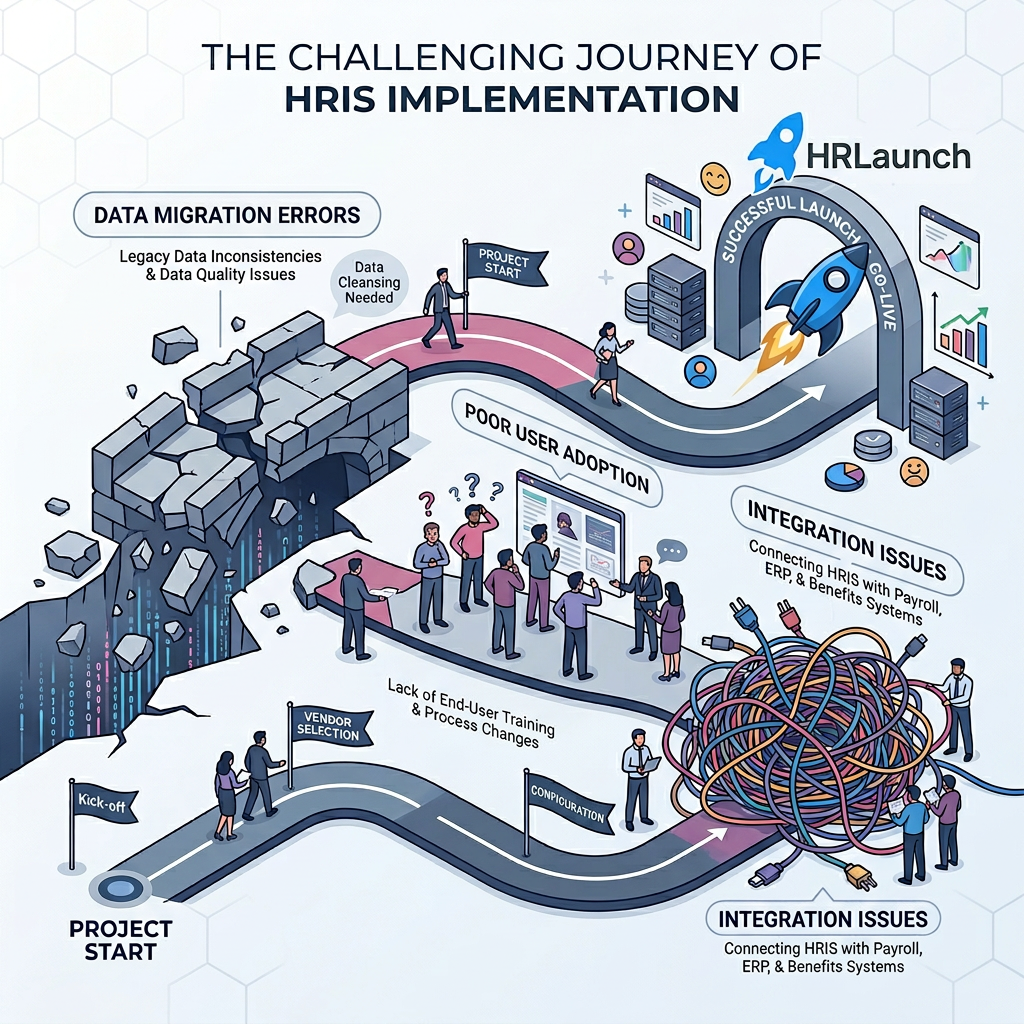
But this is where problems often begin.
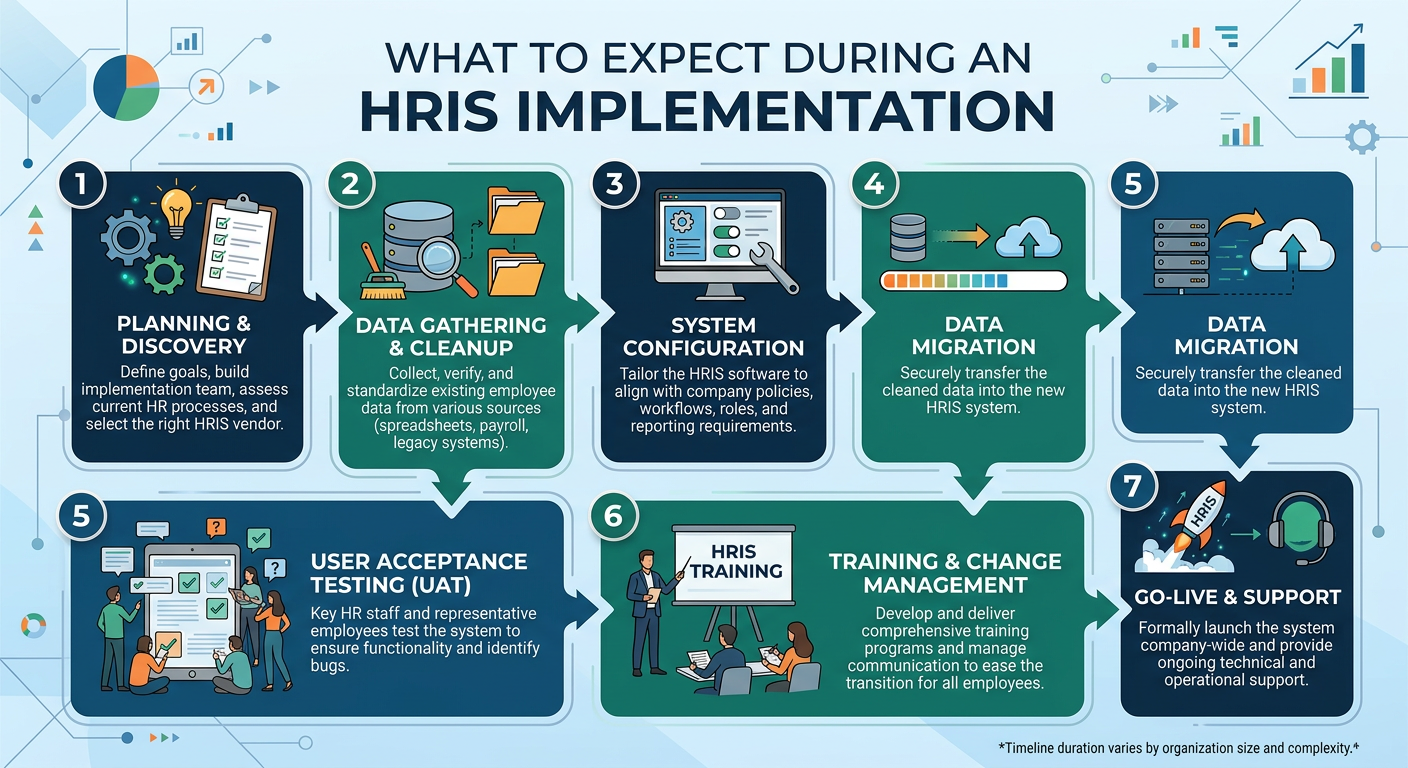
HRIS implementation is not just a technical process—it is an operational one. And when that distinction is missed, even the best systems can struggle to deliver results.
Expectation vs Reality in HRIS Implementation
One of the most consistent patterns across implementations is the gap between what companies expect and what actually happens.
Expectation: “We’ll Be Live Quickly, and Everything Will Work”
Reality: Rushed Timelines Lead to Poor Configuration
Many organizations push for aggressive implementation timelines.
The goal is often speed:
- “We need this live in 30 days.”
- “Let’s get payroll running first and fix the rest later.”
What happens instead:
- Workflows are only partially configured
- Data fields are incomplete
- Processes are not fully aligned
Once the system is live, fixing these issues becomes more complex.
Expectation: “The Vendor Will Handle the Setup”
Reality: Vendors Configure—They Don’t Design Your Operations
Vendors play an important role in implementation, but their responsibility is often misunderstood.
Vendors typically:
- configure the system based on inputs
- guide technical setup
- provide implementation support
They do not:
- define your HR processes
- standardize your workflows
- clean your data
When organizations rely too heavily on vendors for operational decisions, the system reflects existing gaps rather than improving them.
Expectation: “We Can Figure Out Processes During Implementation”
Reality: Lack of Process Design Creates System Confusion
Many companies attempt to define workflows while simultaneously configuring the system.
This often leads to:
- inconsistent approval processes
- unclear onboarding workflows
- duplicated or conflicting configurations
According to research from Deloitte, organizations that invest in upfront process design and change management are significantly more likely to achieve successful technology implementations.
Source
Deloitte Human Capital Trends - https://www2.deloitte.com/us/en/insights/focus/human-capital-trends.html
Expectation: “We’ll Migrate Our Data As-Is”
Reality: Poor Data Quality Creates Long-Term Issues
Data migration is one of the most overlooked parts of HRIS implementation.
Many organizations transfer:
- inconsistent employee records
- outdated job titles
- incomplete data fields
This results in:
- unreliable reporting
- confusion across teams
- increased administrative cleanup after go-live
An HR system can only be as effective as the data it contains.
Expectation: “Once It’s Live, We’re Done”
Reality: Lack of Ownership Leads to Immediate Underutilization
Going live is not the end of implementation—it is the beginning of system usage.
Without clear ownership:
- no one maintains system configuration
- workflows are not updated as the company evolves
- features remain unused
This leads to the common outcome where systems are live but not optimized.
Expectation: “Employees Will Naturally Use the System”
Reality: Adoption Requires Change Management
HR systems introduce new ways of working.
Without proper communication and training:
- employees revert to old processes
- managers bypass workflows
- HR teams maintain manual workarounds
According to Gartner, poor change management is one of the leading causes of failed technology adoption.
Source
Gartner HR Technology Research - https://www.gartner.com/en/human-resources
Expectation: “We’ll Replicate What We Do Today”
Reality: Replicating Inefficient Processes Limits System Value
Many organizations try to configure their HR system to match their existing processes exactly.
While this may feel familiar, it often results in:
- maintaining inefficiencies
- missing opportunities for automation
- increased system complexity
Implementation should be an opportunity to improve processes—not just replicate them.
Why These Pitfalls Matter
When these issues occur during implementation, the impact is long-lasting.
Organizations may experience:
- limited system adoption
- ongoing manual work
- inaccurate reporting
- frustration across teams
- the need for reconfiguration or system replacement
According to PwC, many organizations fail to realize the full value of HR technology due to gaps in implementation and adoption.
Source
PwC Workforce of the Future - https://www.pwc.com/us/en/services/consulting/workforce-of-the-future.html
How to Avoid These Pitfalls
Successful HRIS implementations focus on preparation and execution—not just technology.
Define Processes Before Configuration
Clearly document:
- hiring workflows
- onboarding processes
- approval structures
Clean and Standardize Data
Ensure employee data is:
- accurate
- consistent
- complete
Assign Clear Ownership
Identify who is responsible for:
- system configuration
- data management
- ongoing optimization
Set Realistic Timelines
Allow time for:
- process design
- testing
- training
Invest in Change Management
Provide:
- training for employees and managers
- clear communication about system changes
- support during transition
How HRLaunch Technology Helps
At HRLaunch Technology, we help organizations implement HR systems with a focus on operational clarity and long-term success.
Our approach includes:
- HRIS readiness assessments
- implementation planning and oversight
- HR process alignment
- post-implementation optimization
We ensure that systems are not only implemented, but configured to support how the business actually operates.
Final Thoughts
HRIS implementation is not just about getting a system live.
It is about building a foundation that supports your organization as it grows.
Understanding the gap between expectations and reality allows businesses to avoid common pitfalls and implement HR systems that deliver real value over time.