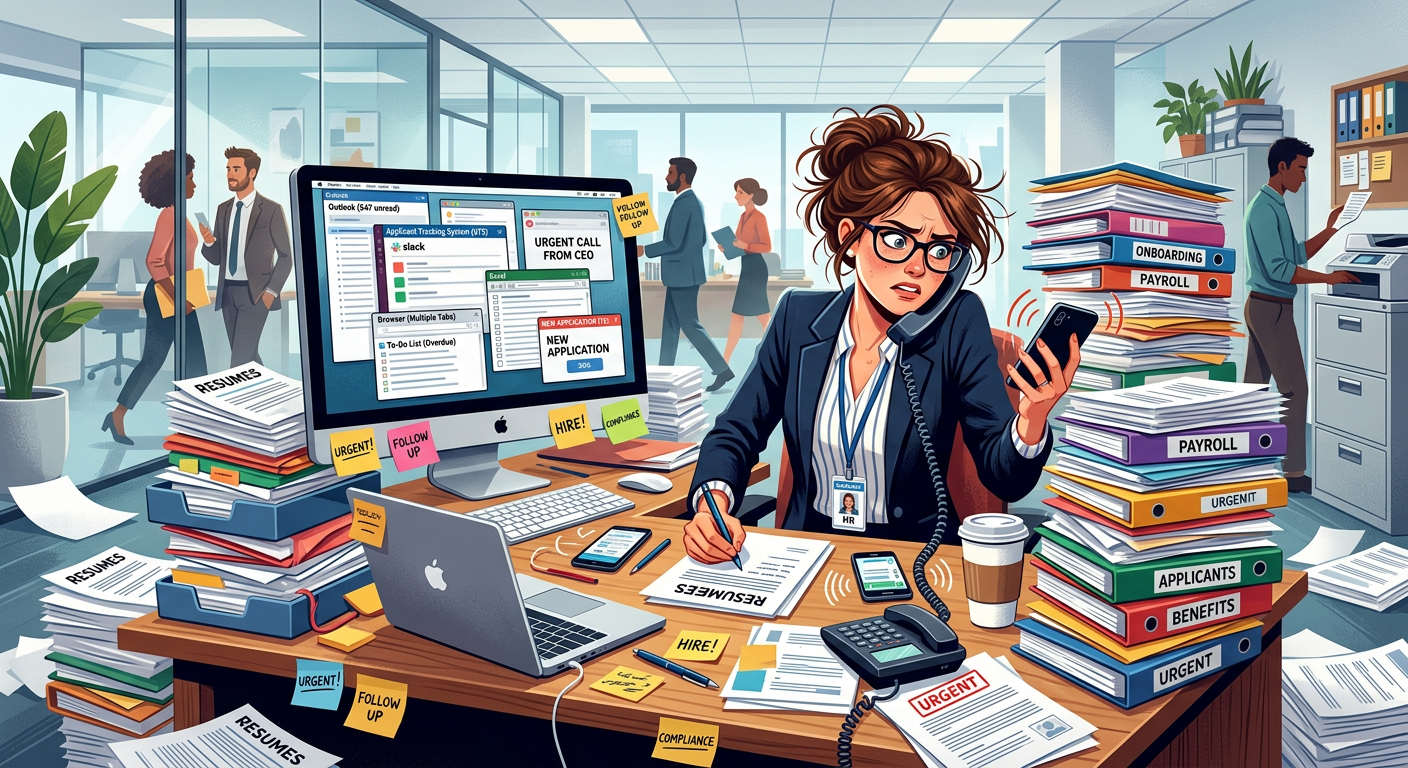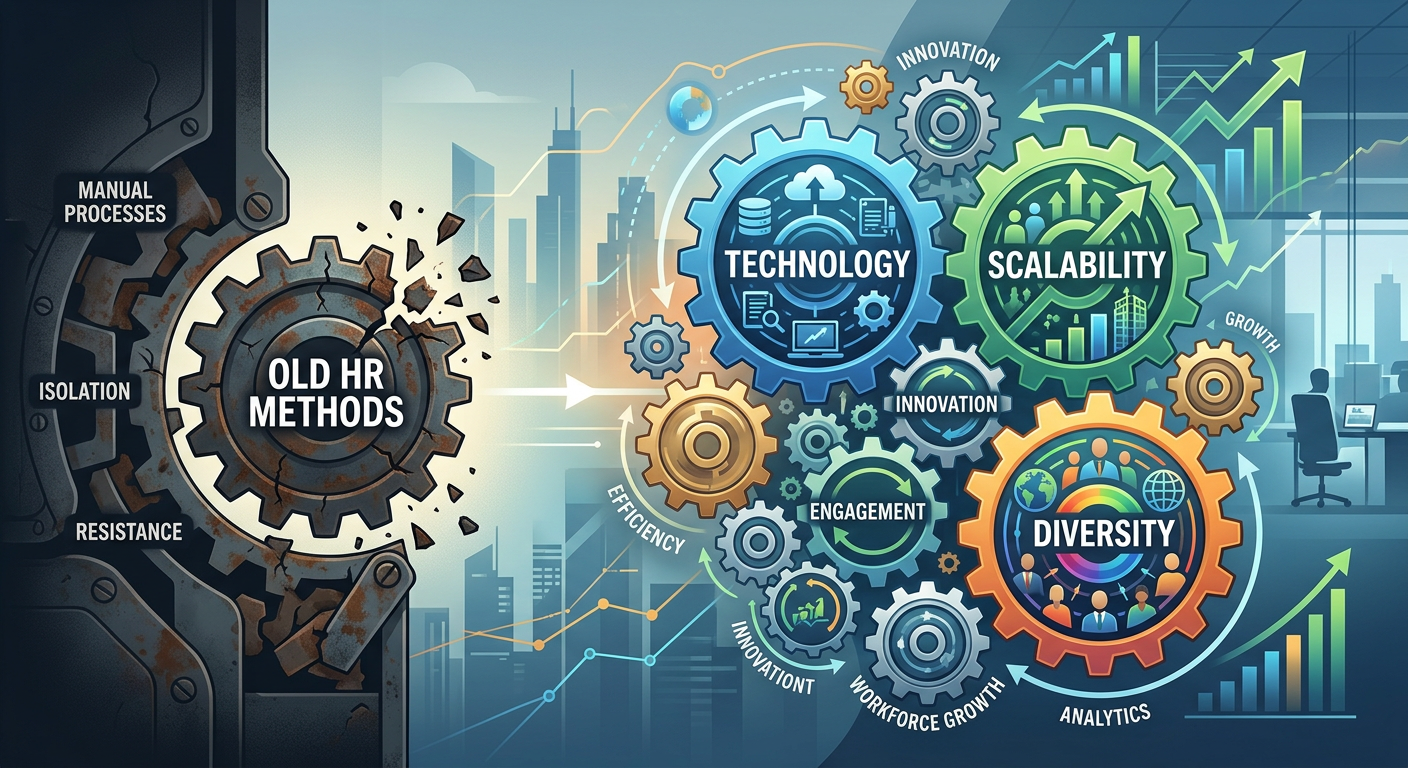
What Worked Before Often Stops Working Later
Most HR processes do not start out broken.
In fact, many work well in the beginning.
At smaller company sizes:
- communication is direct
- decisions happen quickly
- processes can remain informal
But growth changes the environment.
What worked at 15 employees often struggles at 75.
What worked at 75 may completely break at 200.
The problem is not that the original process was bad.
It is that the business outgrew it.
Why Companies Hold Onto Old HR Practices
The phrase:
“We’ve always done it this way”
usually comes from familiarity, not strategy.
Processes continue because:
- they once worked
- people are used to them
- changing them feels disruptive
Over time, however, outdated processes create hidden operational friction.
What This Looks Like in Practice
As companies grow, outdated HR practices become more visible.
Hiring Still Depends on Individual Managers
At smaller sizes, managers can hire informally.
But at scale, this often creates:
- inconsistent candidate experiences
- uneven hiring standards
- slower decision-making
Without structured hiring workflows, the process becomes difficult to manage consistently.
Onboarding Is Still Manual
What once worked through emails and reminders now becomes difficult to maintain.
This often leads to:
- inconsistent onboarding experiences
- missed tasks and documentation
- delayed employee productivity
The process depends on memory instead of structure.
Policies Exist but Are Applied Differently
As organizations grow:
- more managers make decisions
- more teams operate independently
Without standardized workflows:
- policies are interpreted differently
- documentation varies
- employee experiences become inconsistent
Reporting Requires Manual Work
Older processes often rely on:
- spreadsheets
- disconnected systems
- manual data entry
This creates:
- inconsistent reporting
- duplicate work
- unreliable workforce data
According to research from Gartner, fragmented processes and inconsistent data reduce operational efficiency and decision-making quality.
Source
Gartner HR Technology Research - https://www.gartner.com/en/human-resources
HR Systems Are Underutilized
Many organizations implement HR systems but continue using outdated workflows outside the platform.
This often includes:
- approvals handled through email
- manual tracking in spreadsheets
- processes bypassing the system entirely
The technology exists.
But the old habits remain.
Why This Becomes More Dangerous at Scale
Growth increases complexity.
As headcount grows:
- more employees require support
- more managers execute processes
- more compliance obligations exist
Outdated workflows that once felt manageable begin creating:
- inefficiency
- inconsistency
- operational risk
What was once a small issue becomes organization-wide friction.
The Real Problem: HR Hasn’t Evolved With the Business
Most growing companies evolve operationally.
Revenue grows.
Teams expand.
Technology changes.
But HR processes often remain tied to earlier stages of the company.
The business scales.
The workflows do not.
According to research from PwC, organizations that align processes and technology with growth are better positioned to manage workforce complexity effectively.
Source
PwC Workforce of the Future - https://www.pwc.com/us/en/services/consulting/workforce-of-the-future.html
If This Is Happening in Your Business, Your Processes May No Longer Fit Your Size
These are common indicators that HR processes have not evolved with growth:
- managers handle the same process differently
- onboarding varies across departments
- reporting requires manual cleanup
- employees receive inconsistent experiences
- workflows rely heavily on email or spreadsheets
If several of these are true, the issue is likely not the people.
It is the process structure.
How to Evolve HR as You Grow
Improvement does not require rebuilding everything.
It requires intentional alignment.
Reevaluate Existing Workflows
Ask:
- does this still fit the size of the business
- is this scalable
- is this consistent across teams
Standardize Core Processes
Focus first on:
- hiring
- onboarding
- employee lifecycle management
- compliance workflows
Align Systems With Current Operations
Ensure technology supports how the business operates today—not how it operated years ago.
Reduce Manual Dependency
The more workflows depend on memory and workarounds, the more difficult scale becomes.
Build for the Next Stage, Not the Last One
Processes should support where the company is going, not where it started.
How HRLaunch Technology Helps
At HRLaunch Technology, we help organizations modernize HR operations as they grow.
Many companies continue using processes that were designed for a much smaller business environment.
Our approach focuses on:
- evaluating current HR workflows and operational gaps
- identifying outdated or inconsistent processes
- designing scalable, repeatable HR operations
- aligning systems, workflows, and organizational structure
We work with small, mid-sized, and growing businesses to ensure HR evolves alongside the business itself.
The goal is not to change processes for the sake of change.
It is to build structure that supports growth, consistency, and long-term efficiency.
Final Thoughts
“We’ve always done it this way” is not a growth strategy.
Processes that once worked can become barriers as the business scales.
The organizations that grow effectively are the ones willing to reevaluate, standardize, and evolve their HR operations over time.
Because growth changes the business.
And HR has to change with it.