Why Choosing the Right HCM Platform Matters
For growing organizations, selecting a Human Capital Management (HCM) platform is one of the most important technology decisions the business will make.
A well-implemented HR system can streamline operations, improve reporting, simplify compliance, and reduce administrative work.
But choosing the wrong system can create long-term challenges, such as:
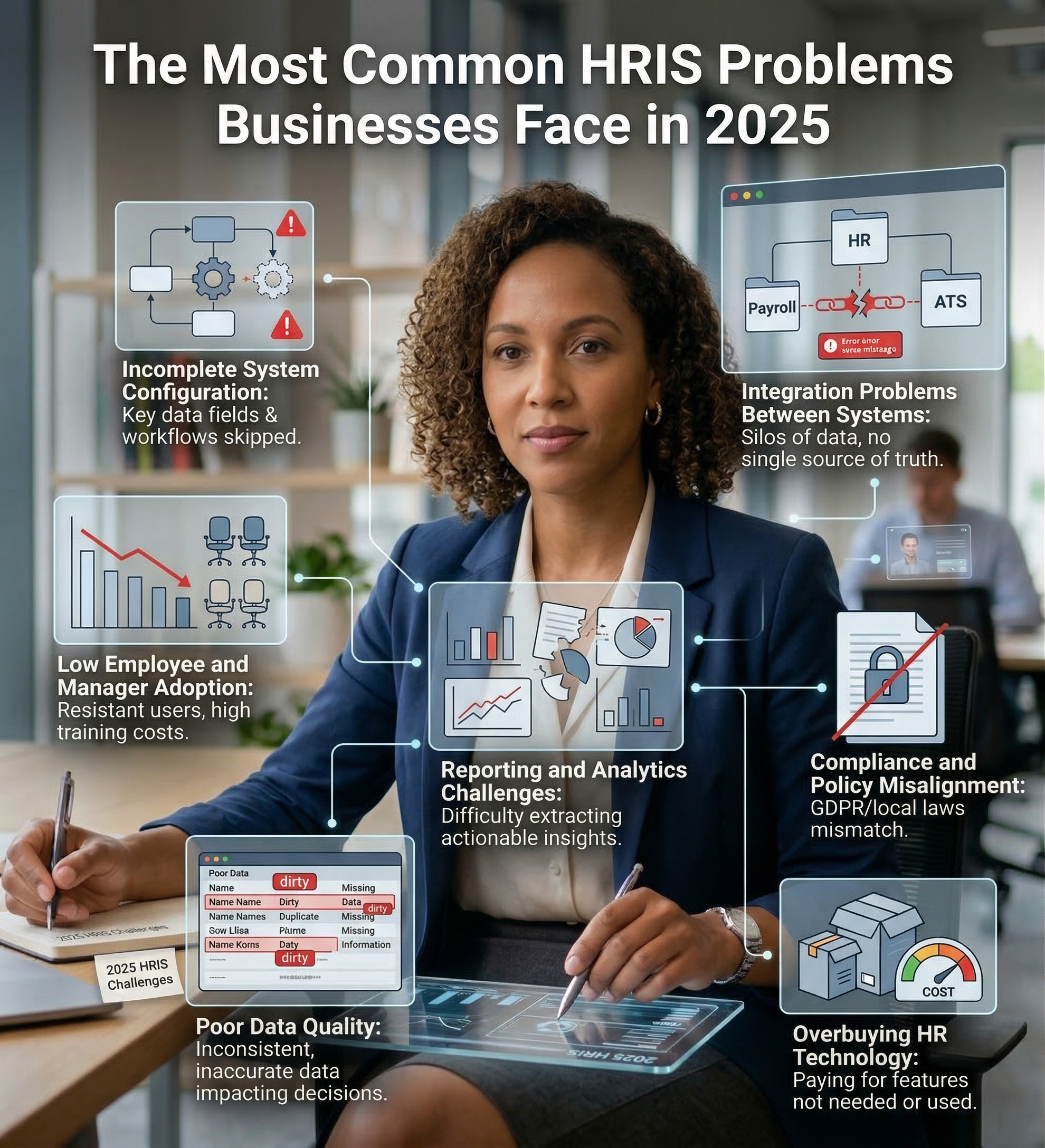
- Inefficient HR workflows
- Poor reporting visibility
- Integration problems with other systems
- Frustrated employees and managers
- Costly reimplementation projects
Unfortunately, many organizations only discover these problems after the system has already been implemented.
Understanding how to identify unreliable HCM platforms before making a purchase can help companies avoid costly mistakes.
Why Growing Companies Are Especially Vulnerable
Businesses in growth stages often feel pressure to move quickly when selecting HR technology.
Leadership teams may want to:
- Replace manual processes quickly
- Support rapid hiring
- Improve workforce reporting
- Modernize HR operations
This urgency can sometimes lead to decisions being made before the organization fully understands its operational needs.
According to research from Gartner, organizations frequently struggle with HR technology implementations because they underestimate the planning required to align systems with internal processes.
Source
Gartner HR Technology Research - https://www.gartner.com/en/human-resources
Warning Signs of an Unreliable HCM Platform
When evaluating HR technology, several red flags can indicate that a platform may not be the right long-term solution for your organization.
The Platform Promises to Solve Every HR Problem
One of the most common warning signs appears during the sales process.
If a vendor claims their system can solve every HR challenge immediately, that should raise questions.
Every HR platform has strengths and limitations. Reliable vendors are typically transparent about:
- What their system does well
- Which features require configuration
- Where integrations may be necessary
Overpromising during the sales cycle often leads to disappointment during implementation.
Weak Reporting and Analytics Capabilities
As organizations grow, HR data becomes increasingly important for decision-making.
Executives often need insight into:
- employee turnover trends
- hiring performance
- workforce planning
- compensation structures
If a platform struggles to provide flexible reporting tools, HR teams may end up relying heavily on spreadsheets again.
According to PwC workforce research, many companies struggle to extract meaningful insights from HR technology because reporting capabilities were not evaluated thoroughly during system selection.
Source
PwC Workforce of the Future Report - https://www.pwc.com/us/en/services/consulting/workforce-of-the-future.html
Limited Integration Options
Most businesses rely on multiple systems to operate effectively.
Common integrations include:
- accounting software
- recruiting platforms
- payroll providers
- time tracking systems
- learning management systems
If an HCM platform has limited integration capabilities, HR teams may be forced to manage duplicate data across multiple systems.
This creates inefficiencies and increases the risk of errors.
Reliable HR platforms typically offer:
- open APIs
- prebuilt integrations
- clear documentation for system connectivity
Hidden Pricing or Complex Module Structures
Some HR technology vendors advertise competitive pricing but require additional modules for core functionality.
Common examples include:
- performance management
- reporting tools
- recruiting features
- time tracking
- advanced analytics
As organizations grow, these additional modules can significantly increase the total cost of ownership.
Before selecting a system, businesses should understand:
- What features are included in the base platform
- Which tools require additional licensing
- How pricing scales with employee growth
Poor Implementation Methodology
A strong implementation process is critical to the success of any HR system.
Unreliable platforms often rely on implementation approaches that:
- Rush configuration timelines
- Provide limited onboarding guidance
- Assume the organization already has structured HR processes
Without careful planning, companies may end up with systems that are poorly configured and difficult to use.
According to Deloitte Human Capital Trends, organizations that invest in change management and implementation planning are significantly more likely to achieve successful HR technology outcomes.
Source
Deloitte Human Capital Trends Report - https://www2.deloitte.com/us/en/insights/focus/human-capital-trends.html
Poor Customer Support Reputation
Customer support plays a significant role in long-term HRIS success.
HR systems require ongoing adjustments as companies grow, including:
- policy updates
- workflow changes
- compliance updates
- reporting adjustments
Before selecting an HCM platform, organizations should review independent customer feedback from sources such as:
- Gartner Peer Insights
- G2
- TrustRadius
- Capterra
Consistent complaints about support quality can indicate future challenges.
Sources
G2 Software Reviews - https://www.g2.com
TrustRadius Software Reviews - https://www.trustradius.com
Capterra HR Software Reviews - https://www.capterra.com/human-resource-software/
A Simple Checklist for Evaluating HCM Platforms
When evaluating HR technology vendors, growing companies should ask several important questions.
Platform Capability
- Does the system support our workforce size and projected growth?
- Can it handle multi-state or global compliance requirements?
Reporting and Data
- Can HR teams easily build custom reports?
- Does the platform provide workforce analytics?
Integration and Scalability
- Does the system integrate with our existing software?
- Are APIs available for future integrations?
Implementation Support
- What does the implementation timeline look like?
- What training and support are provided?
Pricing Transparency
- What features are included in the base platform?
- How will pricing change as the company grows?
Answering these questions early can prevent major issues later.
Why Many HR Technology Decisions Go Wrong
In many cases, organizations choose HR technology based on software features rather than operational readiness.
But successful HR systems depend on more than just technology.
They require:
- clear HR workflows
- well-structured employee data
- defined ownership of HR processes
- alignment between policies and systems
When these areas are unclear, even the best HR platform can struggle to deliver value.
How HRLaunch Technology Helps
At HRLaunch Technology, we help growing companies evaluate and implement HR systems using a vendor-neutral advisory approach.
Our services include:
- HRIS readiness assessments
- HR technology vendor evaluation
- implementation planning and oversight
- HR process alignment
Rather than pushing specific platforms, we help organizations make informed decisions based on their operational needs.
Final Thoughts
Selecting an HCM platform is not just a software decision. It is an operational decision that can impact how a company manages its workforce for years.
By identifying warning signs early and carefully evaluating HR technology vendors, organizations can avoid costly implementation mistakes and choose systems that truly support their growth.