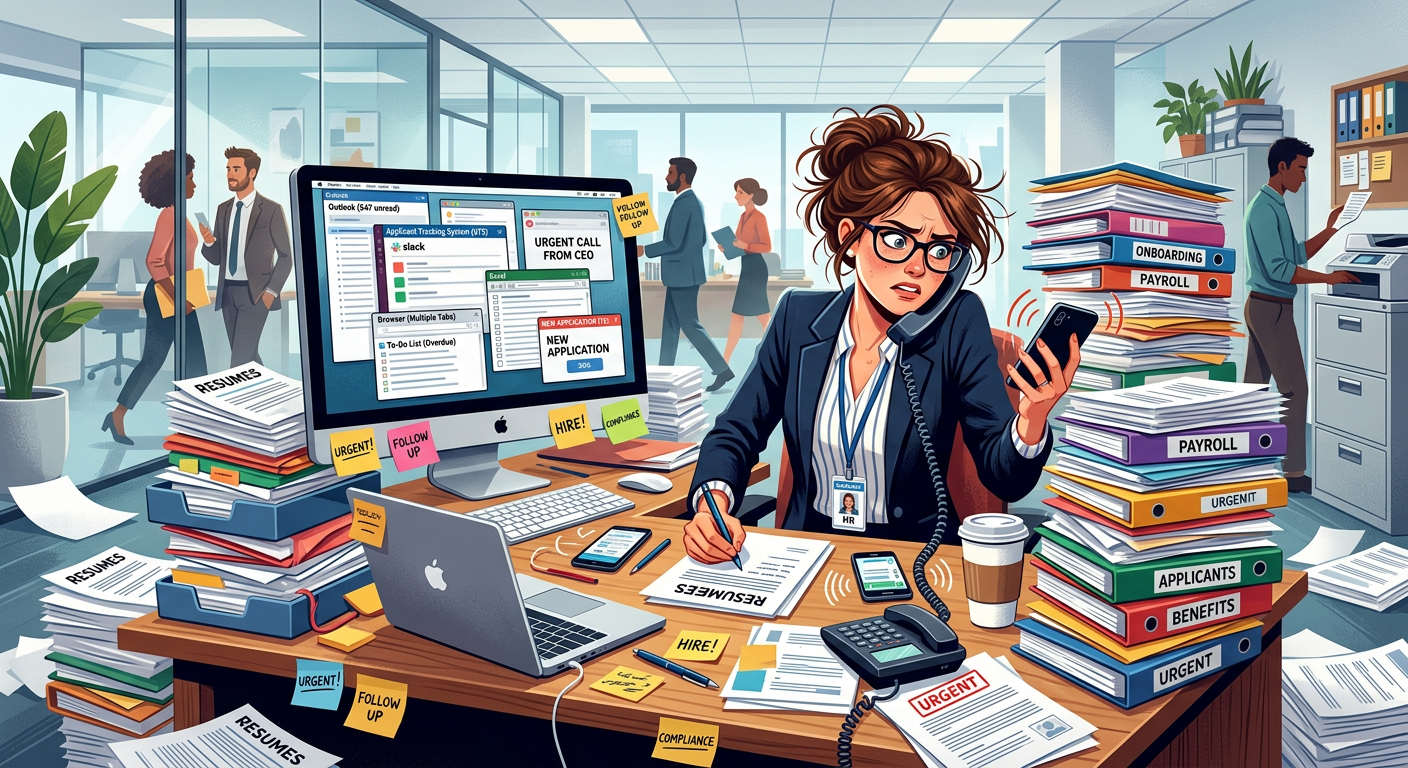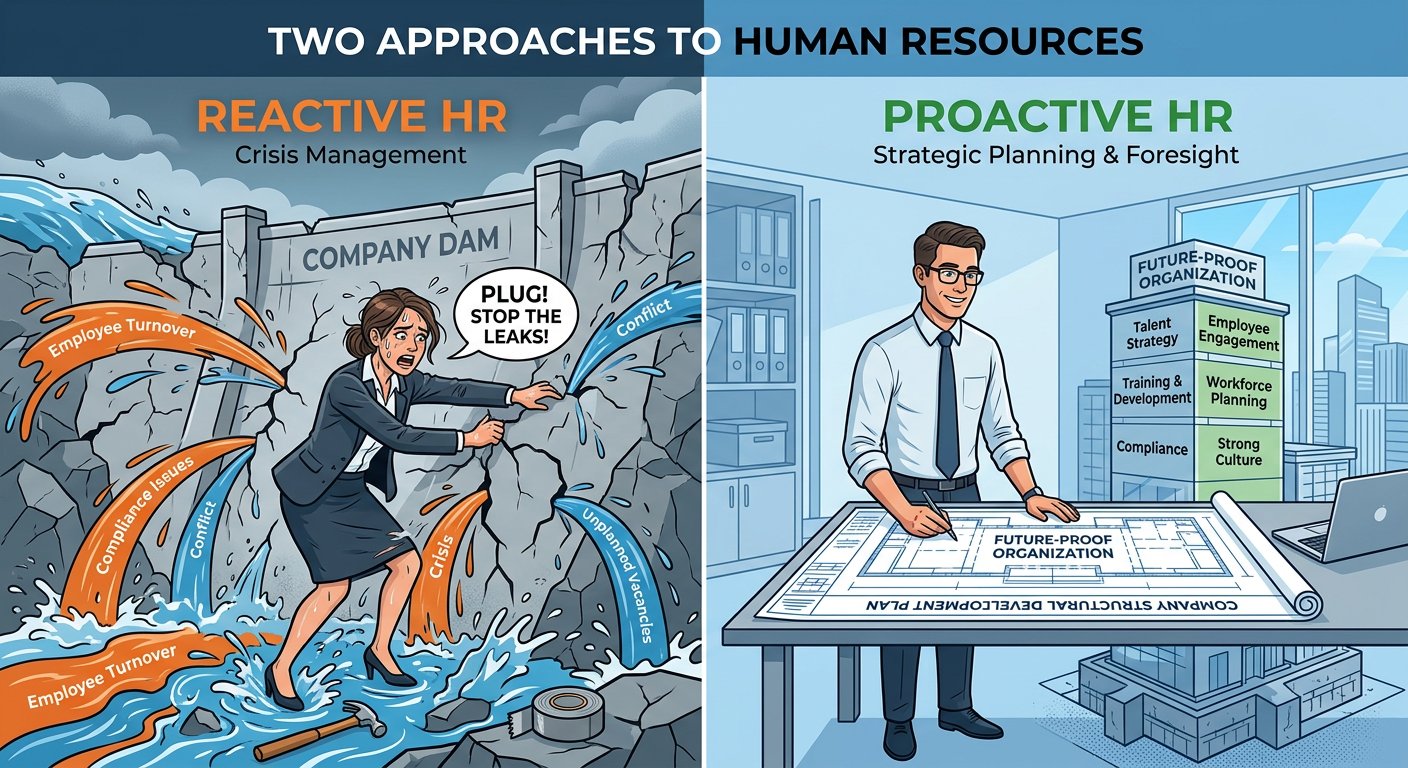
HR Often Feels Like Constant Firefighting
For many growing businesses, HR starts to feel reactive over time.
Every day becomes:
- another employee issue
- another urgent request
- another compliance concern
- another workflow problem
The work never fully slows down.
And eventually, HR begins operating in response mode instead of with operational control.
Why HR Becomes Reactive
Most reactive HR environments are not caused by lack of effort.
They are caused by lack of structure.
As organizations grow:
- more employees require support
- more managers execute workflows
- more systems become involved
Without standardized operations, complexity compounds quickly.
The Hidden Problem: HR Is Operating Without Infrastructure
Many businesses assume HR should naturally “keep up” as the company grows.
But growth changes operational demands.
Processes that worked informally at 15 employees often break at 75 or 150.
Without operational infrastructure:
- workflows become inconsistent
- managers create workarounds
- manual work increases
- reporting becomes unreliable
The organization adapts reactively instead of operating predictably.
What Reactive HR Usually Looks Like
Reactive HR environments often share similar patterns.
Constant Manual Follow-Up
HR spends excessive time:
- reminding managers to complete tasks
- tracking approvals manually
- following up on missing documentation
- resolving preventable workflow gaps
The system depends heavily on human memory and intervention.
Managers Handle Processes Differently
Without standardized workflows:
- onboarding varies by department
- employee issues are handled inconsistently
- approvals follow different paths
This creates operational unpredictability.
HR Systems Are Underutilized
Many organizations have systems in place but still rely heavily on:
- spreadsheets
- email chains
- manual tracking
The software exists.
But the workflows are not fully aligned.
Reporting Is Difficult to Trust
Reactive HR environments often struggle with:
- fragmented data
- inconsistent reporting
- duplicate information across systems
According to research from Visier, organizations with fragmented workforce data struggle to make proactive workforce decisions effectively.
Source
Visier Workforce Analytics Research
Compliance Becomes Event-Driven
Instead of compliance being operationally embedded:
- issues are addressed only when discovered
- reminders are handled manually
- documentation becomes inconsistent
This increases organizational risk over time.
Why This Gets Worse as Companies Grow
Growth increases operational complexity.
As headcount expands:
- more workflows must stay aligned
- more managers influence employee experience
- more systems and approvals become involved
Without operational structure, HR absorbs the friction.
According to Gallup — Manager Experience and Organizational Performance, organizations with inconsistent management practices experience lower operational effectiveness and employee engagement.
The Difference Between Reactive HR and Predictable HR
Predictable HR environments operate differently.
They rely on:
- standardized workflows
- clear ownership
- aligned systems
- operational visibility
The goal is not eliminating all problems.
It is reducing preventable friction.
What Predictable HR Looks Like
Workflows Are Clearly Defined
Processes for:
- hiring
- onboarding
- approvals
- employee lifecycle management
follow structured paths consistently.
Ownership Is Clear
Everyone understands:
- who owns the process
- who approves actions
- who maintains systems and documentation
This reduces confusion and delays.
Systems Support Operations
HR systems are configured to:
- automate repetitive workflows
- trigger notifications
- centralize data
- improve reporting visibility
Technology supports operations instead of requiring constant manual intervention.
Managers Follow Consistent Processes
Managers are aligned around:
- expectations
- workflows
- documentation standards
- employee management practices
This improves consistency across teams.
Data Is Structured and Reliable
Predictable HR depends on accurate, centralized workforce data.
According to APQC — HR Process Standardization Research, organizations with standardized HR processes improve operational efficiency and reduce administrative burden significantly.
If This Is Happening in Your Business, HR May Be Too Reactive
These are common indicators:
- HR spends most of its time responding to urgent issues
- managers follow inconsistent processes
- workflows depend heavily on reminders
- reporting requires manual cleanup
- compliance tasks are tracked manually
- systems are underutilized
If several of these are true, the issue is likely operational structure—not just workload.
How to Make HR More Predictable
Improvement starts with operational alignment.
Standardize Core Processes
Focus first on:
- onboarding
- approvals
- compliance tracking
- employee lifecycle workflows
Define Ownership Clearly
Ensure accountability exists for:
- workflows
- systems
- approvals
- reporting
Align Systems With Operations
Technology should reinforce operational consistency.
Reduce Manual Dependency
The more HR relies on memory and follow-up, the more reactive it becomes.
Build Structure Before Growth Magnifies the Problem
The earlier structure is introduced, the easier scaling becomes.
According to CIPD — People Management and Organizational Effectiveness, operationally aligned people management practices significantly improve organizational consistency and effectiveness.
How HRLaunch Technology Helps
At HRLaunch Technology, we help organizations move HR from reactive administration to structured operational support.
Many businesses operate with HR processes that evolved informally over time, creating inconsistency and operational friction as the company grows.
Our approach focuses on:
- evaluating current HR workflows and operational gaps
- identifying areas where manual work and inconsistency exist
- designing scalable, repeatable HR operations
- aligning systems, workflows, and ownership structures
We work with small, mid-sized, and growing businesses to build HR environments that are more predictable, scalable, and operationally aligned.
The goal is not simply to react faster.
It is to reduce the operational friction causing the reaction in the first place.
Final Thoughts
Reactive HR is usually a symptom of operational gaps.
Not failure.
As businesses grow, informal workflows and inconsistent ownership eventually create friction that HR absorbs daily.
Predictable HR comes from:
- structured workflows
- aligned systems
- operational consistency
- clear ownership
That is what allows HR to support growth without constantly operating in response mode.
Sources
Visier — Workforce Analytics Research and Insights - https://www.visier.com/blog/
Gallup — Why Great Managers Are So Rare - https://www.gallup.com/workplace/236570/why-great-managers-rare.aspx
APQC — Human Capital Management Processes and Best Practices - https://www.apqc.org/resource-library/resource-listing/human-capital-management-processes-and-best-practices
CIPD — Organisation Development Factsheet - https://www.cipd.org/uk/knowledge/strategy/organisational-development/factsheet/