HR Changes Faster Than Most Companies Expect
In the early stages, HR feels manageable.
Processes are informal.
Decisions are quick.
Communication is direct.
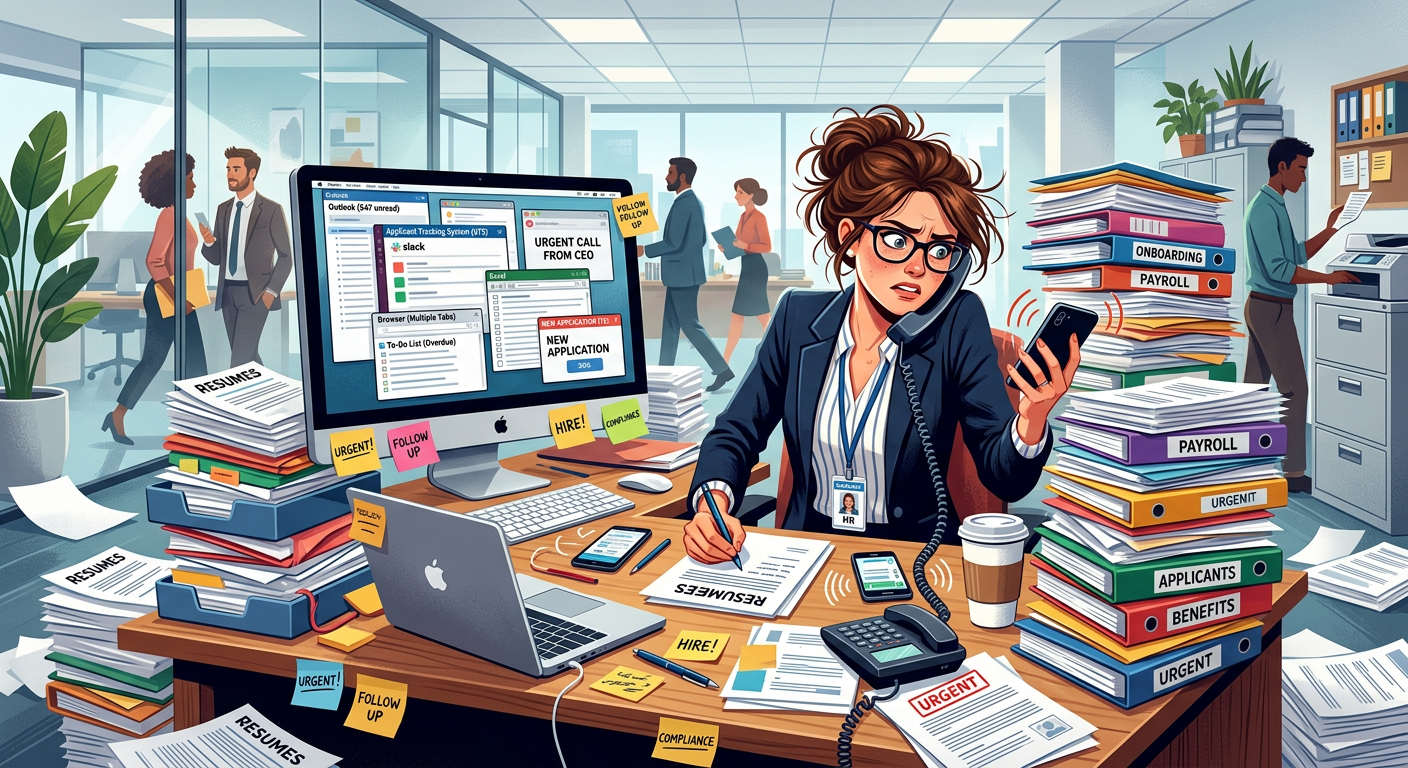
But as headcount grows, complexity increases.
What worked at 25 employees often breaks by 50.
What worked at 50 becomes inefficient by 100.
Growth does not just add people.
It changes how HR needs to function.
Why HR Needs to Evolve With Headcount
Each stage of growth introduces new challenges:
- more managers making decisions
- more employees requiring consistency
- more data to manage
- more compliance considerations
Without evolving HR structure:
- processes become inconsistent
- manual work increases
- decisions slow down
According to research from Gartner, organizations that adapt HR processes as they scale are more effective in maintaining consistency and performance.
Source
Gartner HR Research - https://www.gartner.com/en/human-resources
What HR Looks Like at Each Stage
Understanding these stages helps organizations prepare before problems appear.
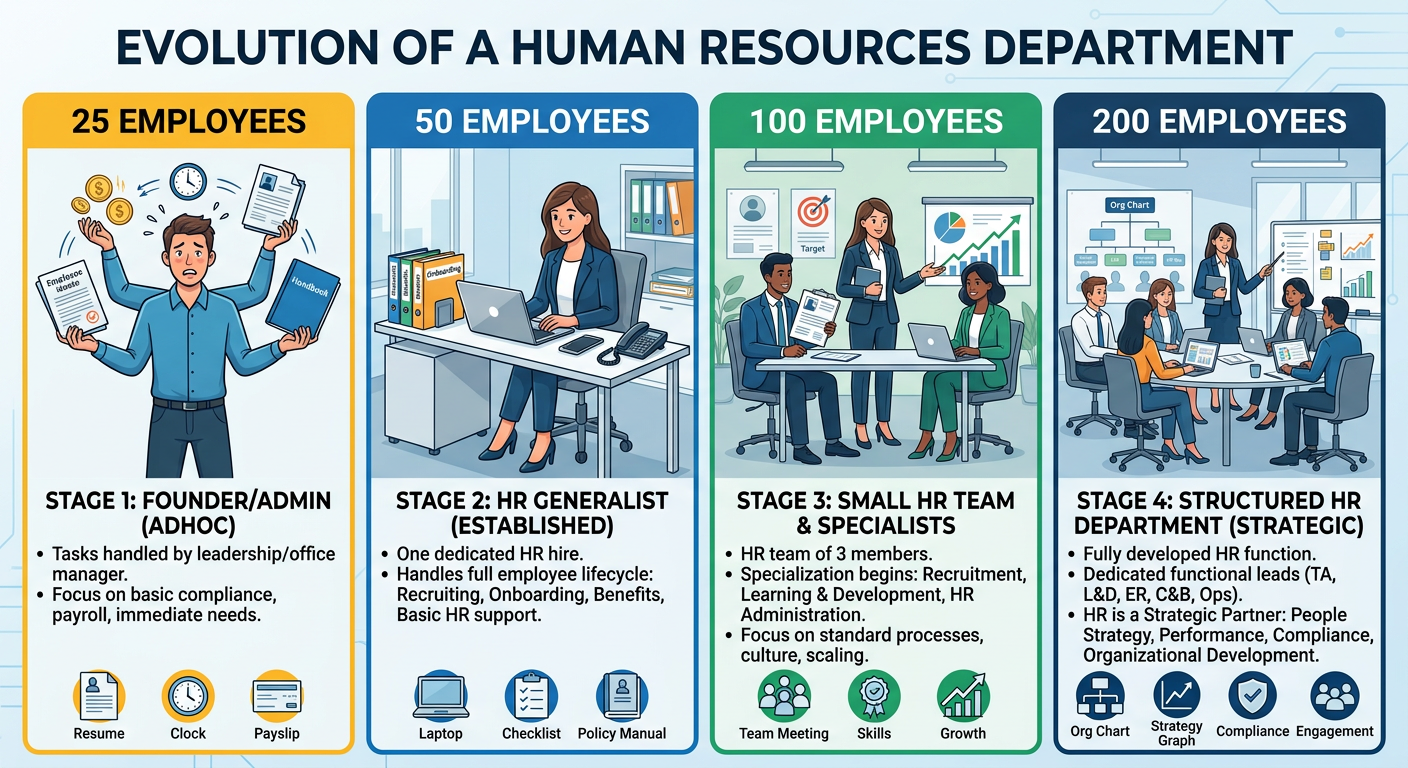
At 25 Employees: Informal but Functional
At this stage, HR is usually handled by:
- a founder
- an operations leader
- a generalist
What Works
- direct communication
- quick decision-making
- minimal process structure
What Starts to Break
- inconsistent hiring
- lack of documentation
- limited visibility into employee data
What to Focus On
- defining basic HR processes
- creating consistent hiring and onboarding
- starting to organize employee data
At 50 Employees: Early Signs of Strain
As the team grows, informal processes begin to show gaps.
What Works
- some processes begin to take shape
- roles are more defined
What Breaks
- hiring becomes inconsistent across managers
- onboarding varies
- employee issues escalate more often
- manual tracking increases
What to Focus On
- standardizing key HR processes
- improving onboarding structure
- defining ownership of HR responsibilities
At 100 Employees: Structure Becomes Necessary
At this stage, HR can no longer operate informally.
What Works
- basic processes exist
- HR may be more defined as a function
What Breaks
- processes are not consistently followed
- data becomes difficult to manage
- reporting lacks reliability
- systems may be underutilized or misaligned
What to Focus On
- formalizing workflows across the organization
- improving data structure and reporting
- aligning systems with processes
- ensuring consistency across teams
At 200 Employees: Complexity Increases Significantly
By this stage, the organization requires a more mature HR function.
What Works
- structured processes are in place
- HR may have dedicated roles
What Breaks
- scalability issues if processes are not aligned
- increased compliance requirements
- more complex decision-making
- inefficiencies across teams
What to Focus On
- refining and optimizing HR processes
- improving system integration and usage
- strengthening compliance and documentation
- using data to support decision-making
According to research from PwC, organizations that align HR processes and technology as they scale are more effective in managing workforce complexity.
Source
PwC Workforce of the Future - https://www.pwc.com/us/en/services/consulting/workforce-of-the-future.html
The Common Pattern Across All Stages
At every stage, the same pattern appears:
- growth introduces complexity
- informal processes begin to break
- structure becomes necessary
The difference between companies that scale effectively and those that struggle often comes down to how early they build that structure.
If This Is Happening in Your Business, You May Be Behind Your Stage
These are common indicators that HR has not kept up with growth:
- processes vary across managers
- onboarding is inconsistent
- manual work continues to increase
- data is unreliable or fragmented
- decisions are becoming slower
If several of these are true, HR structure may not match your current stage.
How to Stay Ahead of Growth
The key is not to react to problems.
It is to prepare before they appear.
Build Structure Early
Do not wait until processes break.
Define them as the organization grows.
Standardize Key Workflows
Focus on consistency in:
- hiring
- onboarding
- employee lifecycle management
Align Systems With Processes
Ensure systems support how HR operates at each stage.
Improve Data as You Grow
Keep data structured and consistent to support decision-making.
How HRLaunch Technology Helps
At HRLaunch Technology, we help organizations align their HR structure with their stage of growth.
Many companies outgrow their HR processes without realizing it, leading to inefficiency and inconsistency.
Our approach focuses on:
- evaluating current HR operations against growth stage
- identifying gaps in processes, structure, and ownership
- designing scalable workflows that evolve with the business
- improving consistency across teams and managers
We work with small, mid-sized, and growing businesses to build HR foundations that support each stage of growth.
When systems are involved, we ensure they align with processes and scale with the organization.
The goal is not just to keep up with growth.
It is to build HR that supports it.
Final Thoughts
HR does not stay the same as a company grows.
It needs to evolve.
What works at 25 employees will not work at 100.
What works at 100 will not scale to 200.
The organizations that grow successfully are the ones that recognize this early and build the structure needed to support each stage.
That is what allows HR to move from reactive to scalable.