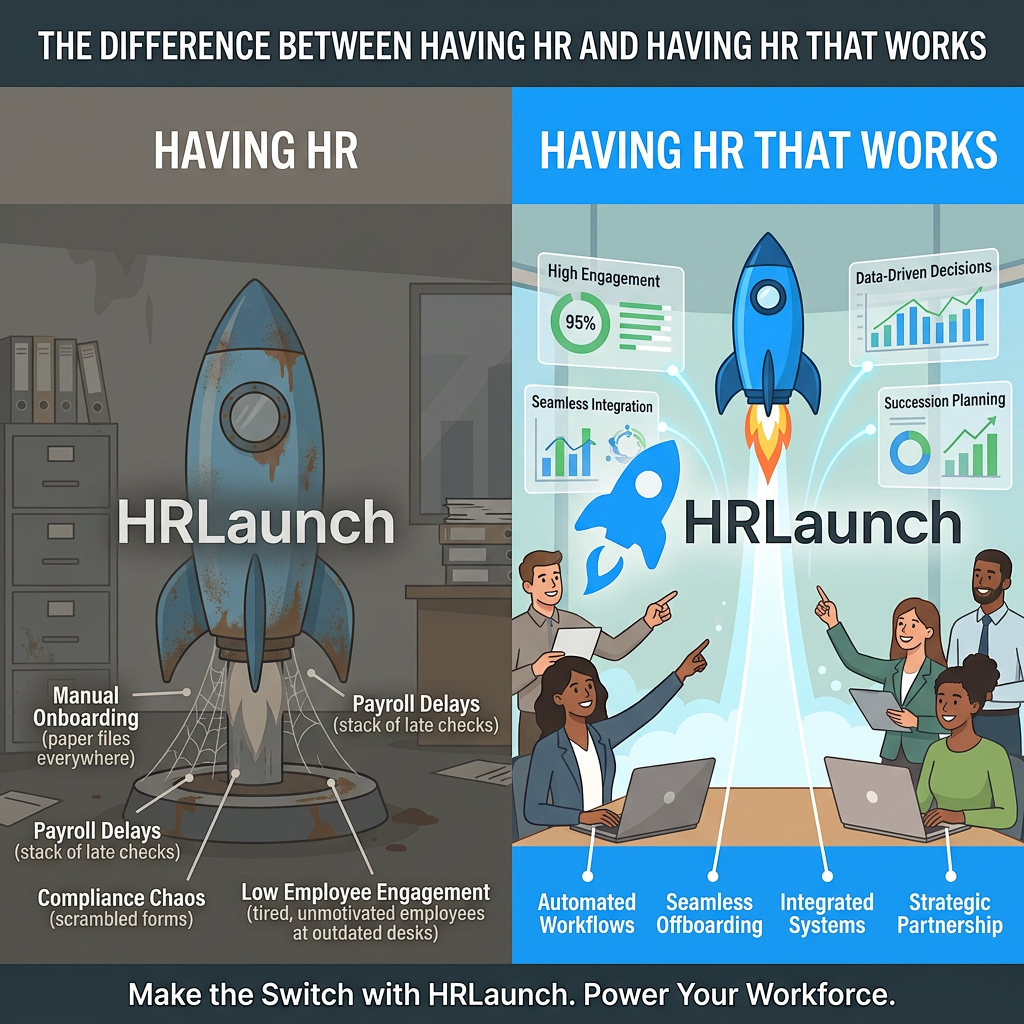
Having HR Does Not Mean It Is Working
Most organizations have some form of HR.
It may be:
- a dedicated HR person
- an operations leader handling HR responsibilities
- an outsourced provider
On paper, HR exists.
But in practice, that does not always mean it is working effectively.
What “Having HR” Often Looks Like
In many small and mid-sized businesses, HR is present but not structured.
This can include:
- handling payroll and basic administration
- responding to employee issues as they arise
- managing hiring when roles open
- maintaining basic documentation
These activities are necessary.
But they are often reactive.
What “HR That Works” Looks Like
HR that works is structured, consistent, and aligned with the business.
It goes beyond handling tasks.
It focuses on how those tasks are performed.
Processes Are Clearly Defined
Effective HR starts with clarity.
- hiring follows a consistent process
- onboarding is structured
- employee changes are handled systematically
This reduces variability and confusion.
Workflows Are Consistent Across Teams
When HR works well:
- processes do not vary by manager
- approvals follow a defined path
- employees have a consistent experience
Consistency builds efficiency.
Data Is Reliable and Structured
HR that works depends on accurate data.
- employee information is consistent
- reporting is reliable
- decisions are supported by data
According to research from Gartner, organizations struggle to make effective decisions when HR data is inconsistent or not aligned across systems.
Source
Gartner HR Technology Research - https://www.gartner.com/en/human-resources
Systems Support Processes
HR systems are aligned with how the business operates.
- workflows reflect real processes
- automation reduces manual work
- reporting provides visibility
Systems become a tool, not a barrier.
Decisions Are Proactive, Not Reactive
Instead of reacting to issues:
- HR identifies trends
- decisions are based on data
- processes prevent problems before they arise
This shifts HR from reactive to strategic.
Why the Gap Exists
Many organizations start with basic HR and never evolve beyond it.
Common reasons include:
- underestimating the importance of structured HR
- limited resources or dedicated HR staff
- focusing on immediate needs instead of long-term structure
- lack of clarity on what “good” HR looks like
Over time, this creates gaps.
What This Looks Like in Practice
The difference becomes clear in day-to-day operations.
Hiring Feels Inconsistent
- different managers follow different processes
- candidate experience varies
- decisions take longer than expected
Employee Issues Take Longer to Resolve
- policies are interpreted differently
- documentation is inconsistent
- escalation is more common
Reporting Is Unreliable
- data exists in multiple places
- reports do not align
- decisions require additional validation
Manual Work Continues to Increase
- processes are handled outside systems
- tasks are duplicated
- efficiency decreases over time
According to research from PwC, organizations that align processes and technology are more effective in managing their workforce and improving performance.
Source
PwC Workforce of the Future - https://www.pwc.com/us/en/services/consulting/workforce-of-the-future.html
If This Is Happening in Your Business, HR May Not Be Fully Functioning
These are common indicators that HR exists but is not working effectively:
- processes vary depending on the manager
- manual work exists alongside systems
- data is inconsistent or difficult to use
- decisions are reactive
- policies are not applied consistently
If several of these are true, the issue is not the absence of HR.
It is the lack of structure.
How to Move from Having HR to Having HR That Works
Improving HR does not require starting over.
It requires building structure.
Define and Document Processes
Ensure all key HR activities follow a consistent approach.
Standardize Workflows
Create alignment across teams and managers.
Align Systems With Operations
Ensure systems support how the business actually operates.
Improve Data Structure
Make data consistent, reliable, and usable.
Establish Ownership
Define who is responsible for:
- processes
- systems
- data
How HRLaunch Technology Helps
At HRLaunch Technology, we help organizations move from having HR in place to having HR that actually works.
Many small and mid-sized businesses have HR responsibilities covered, but lack the structure needed for consistency, efficiency, and scalability.
Our approach focuses on:
- evaluating current HR operations and identifying gaps
- designing clear, repeatable workflows
- aligning processes across teams and managers
- improving how HR functions on a day-to-day basis
We work with small, mid-sized, and growing businesses to build practical, scalable HR foundations, even when a single individual or an operations-led team manages HR.
When systems are involved, we ensure they support these processes through proper configuration, data alignment, and workflow design.
The goal is not just to have HR in place.
It is to have HR that functions consistently, supports growth, and reduces risk.
Final Thoughts
Having HR is a starting point.
But it is not the end goal.
The difference between having HR and having HR that works comes down to structure, consistency, and alignment.
When processes are defined, systems are aligned, and data is reliable, HR becomes a function that supports the business.
Not one that slows it down.