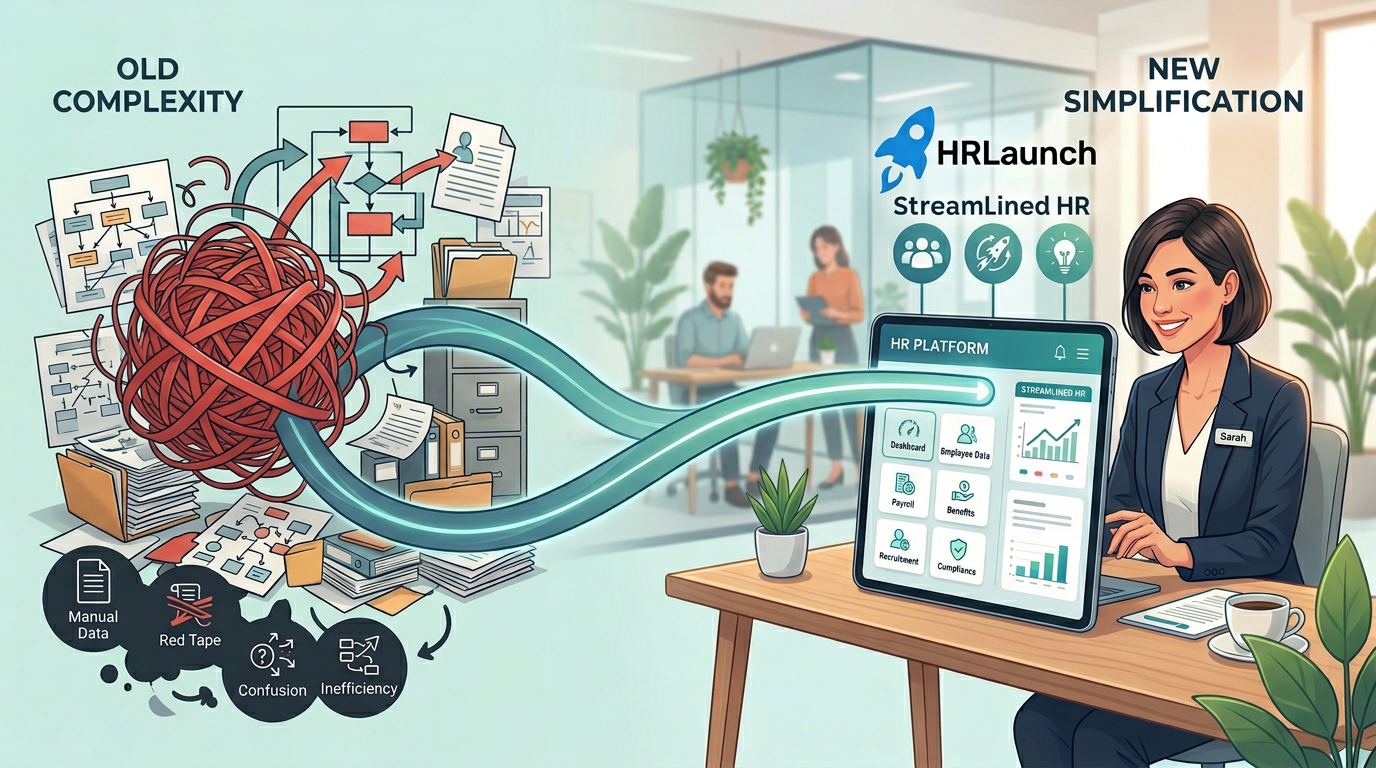
HR Isn’t Supposed to Feel This Complicated
Most organizations do not set out to create complex HR processes.
In the beginning, things feel manageable.
- Hiring is straightforward
- Processes are informal
- Communication is direct
But as the organization grows, HR starts to feel heavier.
Tasks take longer.
Processes become unclear.
Decisions require more effort.
The work itself has not changed as much as it feels.
The structure around it has.
Why HR Becomes More Complex Over Time
Complexity does not usually come from a single change.
It builds gradually as the organization grows.
Common drivers include:
- adding new tools without alignment
- creating processes without standardization
- managing data across multiple systems
- allowing exceptions to become the norm
Over time, these factors compound.
What Complexity Looks Like in Practice
HR complexity is often visible in day-to-day operations.
Processes That Vary by Team
Different teams may handle the same process in different ways.
- onboarding steps vary by manager
- performance reviews are inconsistent
- approvals follow different paths
This creates confusion and inefficiency.
Too Many Systems
Organizations often use multiple tools for HR functions.
- HRIS
- payroll systems
- recruiting platforms
- spreadsheets
Without alignment, these systems create duplication and gaps.
Manual Work Alongside Automation
Even with systems in place, teams may still rely on:
- spreadsheets
- email tracking
- manual reminders
This increases effort and reduces consistency.
Data That Cannot Be Trusted
When data is inconsistent:
- reports do not align
- metrics vary depending on the source
- decisions require additional validation
According to research from Gartner, organizations struggle to use HR data effectively when systems and data structures are not aligned.
Source
Gartner HR Technology Research - https://www.gartner.com/en/human-resources
Decisions That Take Longer Than Expected
As complexity increases:
- more people are involved in decisions
- processes are not clearly defined
- outcomes are less predictable
This slows down operations.
The Root Cause: Lack of Alignment
HR does not become complex because the work itself is complex.
It becomes complex because:
- systems are not aligned with processes
- processes are not consistently applied
- data is not structured properly
- ownership is unclear
When these elements are not aligned, complexity increases.
If This Is Happening in Your Business, HR Is Overly Complex
These are common indicators that HR processes have become more complicated than they should be:
- processes vary depending on the team or manager
- multiple systems are used for the same function
- manual work exists alongside system workflows
- reports require cleanup before use
- decisions take longer than expected
- data is inconsistent across systems
If several of these are true, the issue is structural.
How to Simplify HR
Simplifying HR is not about removing processes.
It is about improving alignment.
Standardize Processes
Ensure that key HR activities follow consistent workflows across the organization.
Align Systems With How You Operate
HR systems should reflect how your business actually works.
Centralize Data
Establish a single source of truth for employee information.
Reduce Redundancy
Eliminate duplicate tools and overlapping processes.
Define Ownership
Clarify who is responsible for:
- processes
- systems
- data
Why Simplicity Matters
Simplifying HR creates measurable benefits.
Organizations can expect:
- faster decision-making
- improved data accuracy
- reduced administrative effort
- better employee experience
According to research from PwC, organizations that align processes and technology are more effective in managing their workforce and driving performance.
Source
PwC Workforce of the Future - https://www.pwc.com/us/en/services/consulting/workforce-of-the-future.html
How HRLaunch Technology Helps
At HRLaunch Technology, we help organizations simplify HR by building structure behind how HR actually operates.
As companies grow, complexity often comes from inconsistent processes, unclear ownership, and disconnected workflows—not the work itself.
Our approach focuses on:
- designing and standardizing HR workflows
- aligning processes across teams and managers
- reducing manual work and duplication
- creating scalable HR operations that support growth
We work with small, mid-sized, and growing businesses to ensure HR functions consistently, even when managed by a single individual or an operations-led team.
When systems are involved, we ensure they support these processes—not complicate them.
The goal is to reduce complexity by creating clarity, consistency, and structure across HR operations.
Final Thoughts
HR should not feel more complicated as your organization grows.
It should become more structured.
When systems, processes, and data are aligned, complexity decreases and clarity increases.
The goal is not to remove structure.
It is to create the right structure so HR works the way it should.