Why Mid-Size Businesses Need a More Advanced HRIS
For many organizations, the HR tools that worked when the company had 20 or 50 employees begin to struggle once the workforce grows beyond 100.
Hiring increases.
Compliance requirements expand.
Managers need better visibility into workforce data.
Payroll becomes more complex.
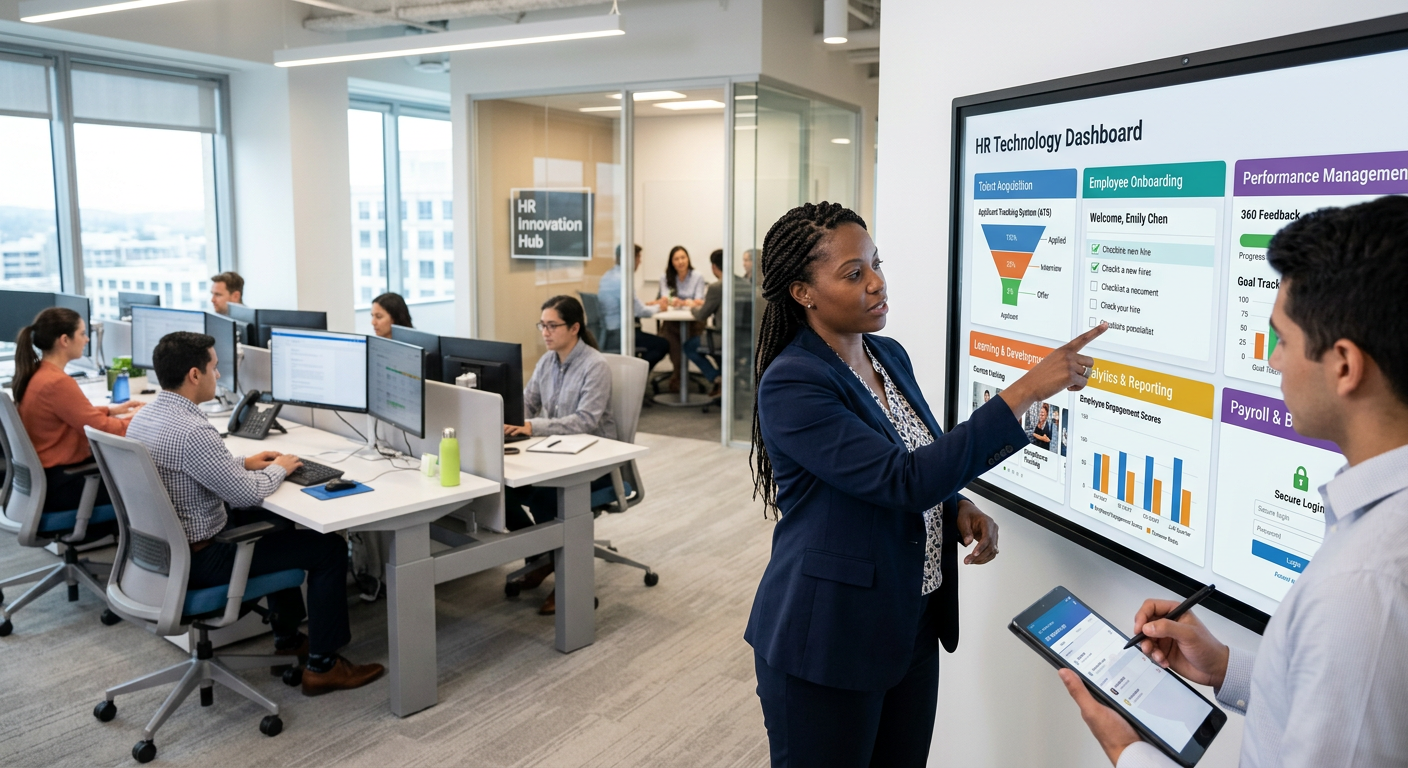
At this stage, HR operations often move beyond basic employee record management and payroll. Businesses typically need HR systems that support:
- structured onboarding and offboarding
- performance management
- workforce analytics and reporting
- multi-state payroll and compliance
- manager self-service tools
- benefits administration
An HRIS designed for mid-size organizations (100–300 employees) helps centralize these functions and supports continued growth.
What Mid-Size Businesses Should Look for in an HRIS
As organizations scale, HR systems must support more structured operations.
Key capabilities mid-size businesses should prioritize include:
Scalable Infrastructure
The system should support workforce growth without requiring the company to replace the platform again in a few years.
Payroll and Compliance Support
As companies expand across states or regions, payroll complexity and compliance obligations increase.
Advanced Reporting
HR teams and executives increasingly rely on workforce data for decision-making, including:
- turnover analysis
- compensation planning
- workforce planning
- compliance reporting
Workflow Automation
Automation becomes increasingly valuable as HR teams manage larger employee populations.
Examples include:
- onboarding processes
- approval workflows
- performance review cycles
- employee lifecycle changes
Popular HRIS Systems for Mid-Size Businesses
Several HR platforms are commonly used by organizations with 100–300 employees.
Paylocity
Overview
Paylocity is a comprehensive HR and payroll platform widely used by mid-size businesses. It provides tools for payroll, workforce management, talent management, benefits administration, and employee engagement.
Pros
- strong payroll processing capabilities
- broad HR feature set in a single platform
- employee engagement tools and surveys
- mobile-friendly platform for employees and managers
Cons
- implementation can take time due to the number of modules
- reporting may require training for advanced use
- pricing may increase as modules are added
Best For
Mid-size companies looking for an all-in-one HR and payroll platform that scales as they grow.
Sources
Paylocity Product Overview - https://www.paylocity.com/our-products/
Gartner HR Software Reviews - https://www.gartner.com/reviews
Paycom
Overview
Paycom is a cloud-based HR and payroll platform designed to allow employees and managers to manage their own HR data through a self-service model.
The system includes payroll, talent management, time tracking, and compliance tools.
Pros
- employee self-service features reduce HR administrative work
- strong payroll and workforce management capabilities
- single-database architecture reduces duplicate data
- mobile-friendly interface
Cons
- implementation can require careful configuration
- pricing may be higher than smaller HR systems
- some users report a learning curve for advanced features
Best For
Organizations that want employees and managers to manage more HR tasks through self-service tools.
Sources
Paycom Platform Overview - https://www.paycom.com/software/
Forbes Advisor HR Software Rankings - https://www.forbes.com/advisor/business/software/best-hr-software/
BambooHR
Overview
BambooHR is widely used by small and mid-size businesses transitioning from basic HR tools to more structured HR processes.
It focuses on employee lifecycle management, reporting, onboarding, and performance management.
Pros
- intuitive user interface
- strong employee record management
- good onboarding and hiring workflows
- solid HR reporting capabilities
Cons
- payroll is limited to the United States
- some advanced features require add-ons
- may require integrations for more complex HR environments
Best For
Organizations moving from manual HR processes to a structured HR platform.
Sources
BambooHR Product Overview - https://www.bamboohr.com/platform/
PCMag HR Software Reviews - https://www.pcmag.com/picks/the-best-hr-software
Rippling
Overview
Rippling has become a popular platform among fast-growing companies because it combines HR, payroll, IT management, and device management.
This allows organizations to manage employee onboarding, payroll, software access, and device provisioning within one platform.
Pros
- strong automation capabilities
- large ecosystem of integrations
- combines HR and IT management
- powerful reporting and workflow customization
Cons
- pricing increases as modules are added
- configuration may require planning
- may be more complex than simpler HR systems
Best For
Organizations that want deep automation and system integration across HR and IT functions.
Sources
Rippling Platform Overview - https://www.rippling.com/platform
Forbes Advisor HR Software Rankings - https://www.forbes.com/advisor/business/software/best-hr-software/
ADP Workforce Now
Overview
ADP Workforce Now is a widely used HR and payroll system designed for mid-size businesses that require strong payroll processing and compliance support.
ADP is one of the largest payroll providers in the world and offers extensive HR tools alongside payroll services.
Pros
- strong payroll and tax compliance support
- comprehensive HR and workforce management tools
- scalable platform for growing companies
- large support infrastructure
Cons
- interface may feel less modern than newer platforms
- reporting tools can be complex for new users
- pricing may be higher than smaller HR systems
Best For
Organizations that prioritize payroll reliability and compliance support.
Sources
ADP Workforce Now Product Overview - https://www.adp.com/what-we-offer/products/adp-workforce-now.aspx
TrustRadius HR Software Reviews - https://www.trustradius.com
HiBob (Bob)
Overview
HiBob is designed for modern mid-size companies that prioritize employee engagement, performance management, and culture alongside traditional HR operations.
The platform offers tools for performance reviews, employee surveys, and workforce analytics.
Pros
- modern and intuitive interface
- strong employee engagement tools
- flexible workflows and integrations
- good performance management capabilities
Cons
- payroll typically requires third-party integration
- pricing may be higher than some HR systems
- implementation may require configuration
Best For
Organizations focused on employee engagement and culture as they grow.
Sources
HiBob Platform Overview - https://www.hibob.com/features/
G2 HR Software Reviews - Best Applicant Tracking Systems (ATS) Reviews 2026 | Compare Tools | G2
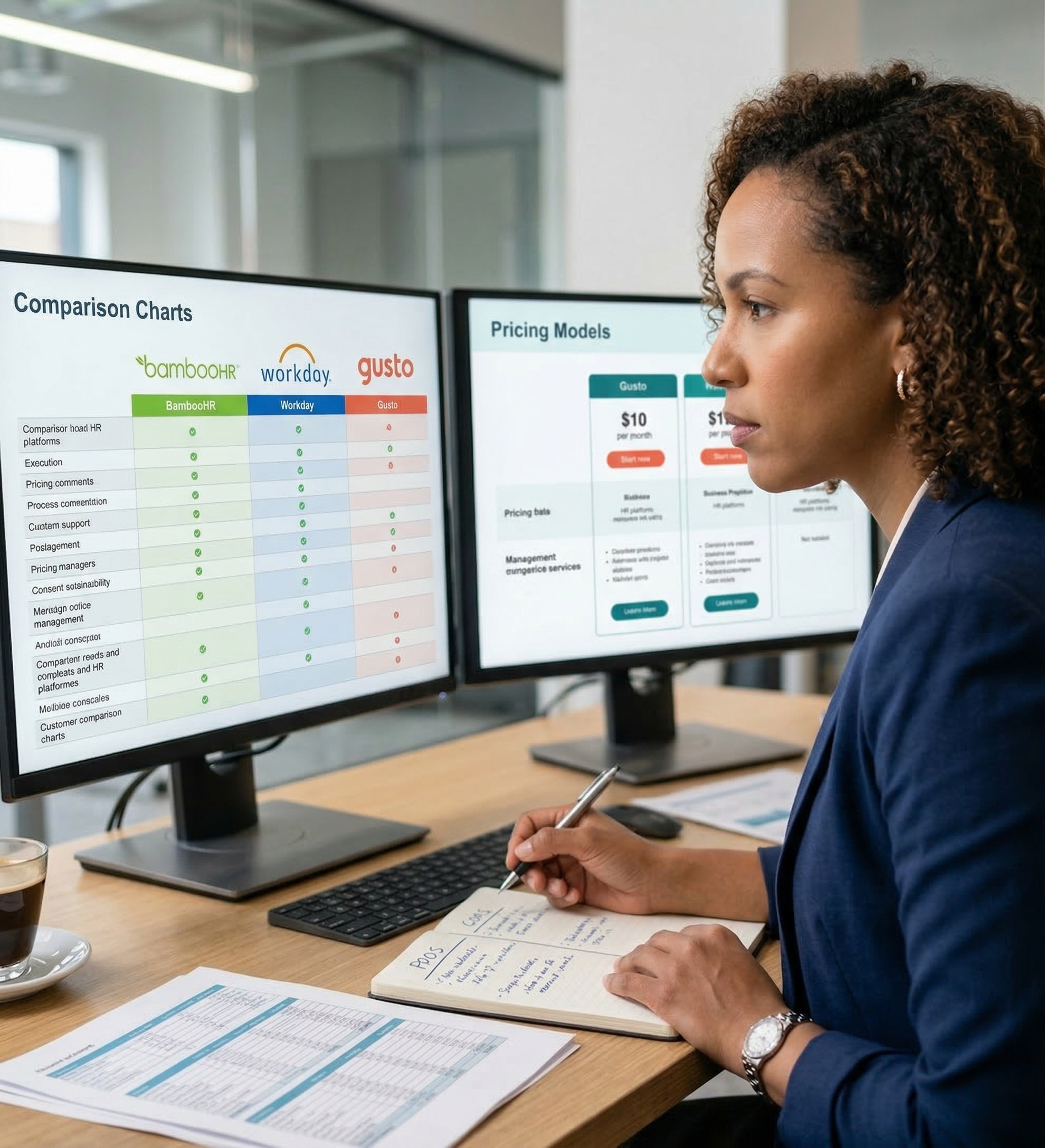
HRIS Comparison for Mid-Size Businesses
Below is a simplified comparison of HR systems commonly evaluated by companies with 100–300 employees.
| HR System | Best For | Key Strength | Potential Limitation |
| Paylocity | All-in-one HR and payroll | Broad HR functionality | Implementation complexity |
| Paycom | Employee self-service HR model | Single database architecture | Learning curve for some features |
| BambooHR | Structured HR management | Strong employee lifecycle tools | Limited international payroll |
| Rippling | Automation and integrations | HR + IT management | Pricing increases with modules |
| ADP Workforce Now | Payroll and compliance | Industry-leading payroll services | Interface complexity |
| HiBob | Employee engagement | Modern HR experience tools | Payroll integrations required |
Why There Is No Single Best HRIS
Many organizations search for the single best HR system.
In reality, the right HRIS depends on factors such as:
- company size
- workforce structure
- compliance requirements
- payroll complexity
- internal HR resources
- growth plans
A system that works well for a 120-person company may not support the needs of a 300-person organization operating across multiple states.
The Importance of HRIS Readiness
One of the most common reasons HR technology implementations struggle is that companies select software before fully understanding their HR processes.
Before choosing a system, organizations should evaluate:
- current HR workflows
- data management practices
- payroll and compliance complexity
- reporting needs
This preparation helps ensure the HR system supports the business rather than forcing the organization to adapt to the software.
How HRLaunch Technology Helps
At HRLaunch Technology, we help growing businesses evaluate and implement HR technology through a vendor-neutral advisory approach.
Our services include:
- HRIS readiness assessments
- HRIS vendor comparison and selection
- implementation planning and support
- HR process alignment
Instead of promoting specific platforms, we help organizations select HR systems that best support their operational needs.
Final Thoughts
As organizations grow beyond 100 employees, HR operations become significantly more complex. The right HRIS can provide the structure, automation, and data visibility needed to support that growth.
Platforms such as Paylocity, Paycom, BambooHR, Rippling, ADP Workforce Now, and HiBob each offer distinct strengths based on the organization’s needs.
Choosing the right system starts with understanding how HR currently operates and selecting technology that aligns with those processes and long-term growth plans.